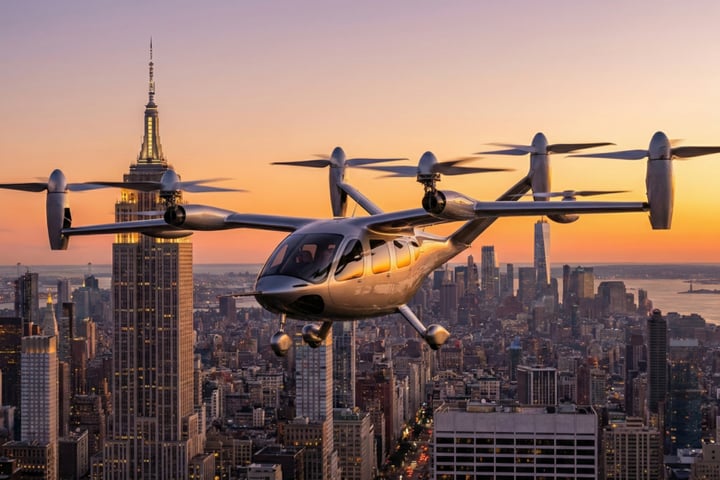
Vertical Aerospace Ltd (NYSE:EVTL) is set to make a significant shift in the aviation industry with its development of hybrid electric flight technology. This initiative aims to replace traditional helicopters with a new generation of aircraft that offer longer range, higher payload capacity, and reduced noise levels. In an exclusive interview with Benzinga, CEO Stuart Simpson emphasized that 2026 will mark a pivotal year for the company, as its hybrid electric aircraft is expected to take its inaugural flight following a gas turbine retrofit on the final prototype.
The hybrid electric model is designed to enhance performance in various sectors, including defense, logistics, medical transport, and other mission-critical applications. Simpson stated that this innovation will create “two assets — two capabilities in the skies in 2026,” positioning Vertical Aerospace as a formidable competitor in urban air mobility, as well as a challenger to established helicopter services.
Transforming Aviation Economics
The introduction of hybrid technology fundamentally changes the economic landscape of aviation. By enabling longer routes, heavier payloads, and uncrewed missions, the hybrid aircraft could significantly outperform the capabilities of current helicopters. Simpson noted that the demand for “long-range, high-payload, quiet aircraft” is on the rise, making the disruption of the traditional helicopter market not just a possibility, but an inevitability.
Looking ahead, the company has ambitious financial projections. By 2035, Vertical expects its hybrid segment to contribute 16% of projected revenues exceeding $10 billion, with battery electric aircraft accounting for 59% and battery replacements making up the remaining 25%. This vision entails a broader application of technology across multiple aviation sectors, rather than focusing solely on niche routes connecting urban rooftops.
Challenges Ahead
Despite this promising outlook, Vertical Aerospace faces substantial technical and financial challenges. The company estimates that certification costs will amount to an additional $700 million through 2028, with profitability not anticipated until 2029 or later. Investors and stakeholders, who have previously celebrated prototypes, will now be looking for tangible results rather than ambitious projections.
The next 18 months will be crucial in determining whether Vertical Aerospace can deliver on its hybrid flight plans as scheduled. Success could dramatically alter the competitive landscape of advanced aviation, while failure could lead to a reassessment of the company’s viability in an industry known for its high stakes. The outcome of these developments will provide critical insights into whether hybrid flight can indeed become the “helicopter killer” or remain an intriguing concept.
Vertical Aerospace’s journey is one to watch closely, as it navigates the intersection of innovation and execution in the rapidly evolving aviation sector.