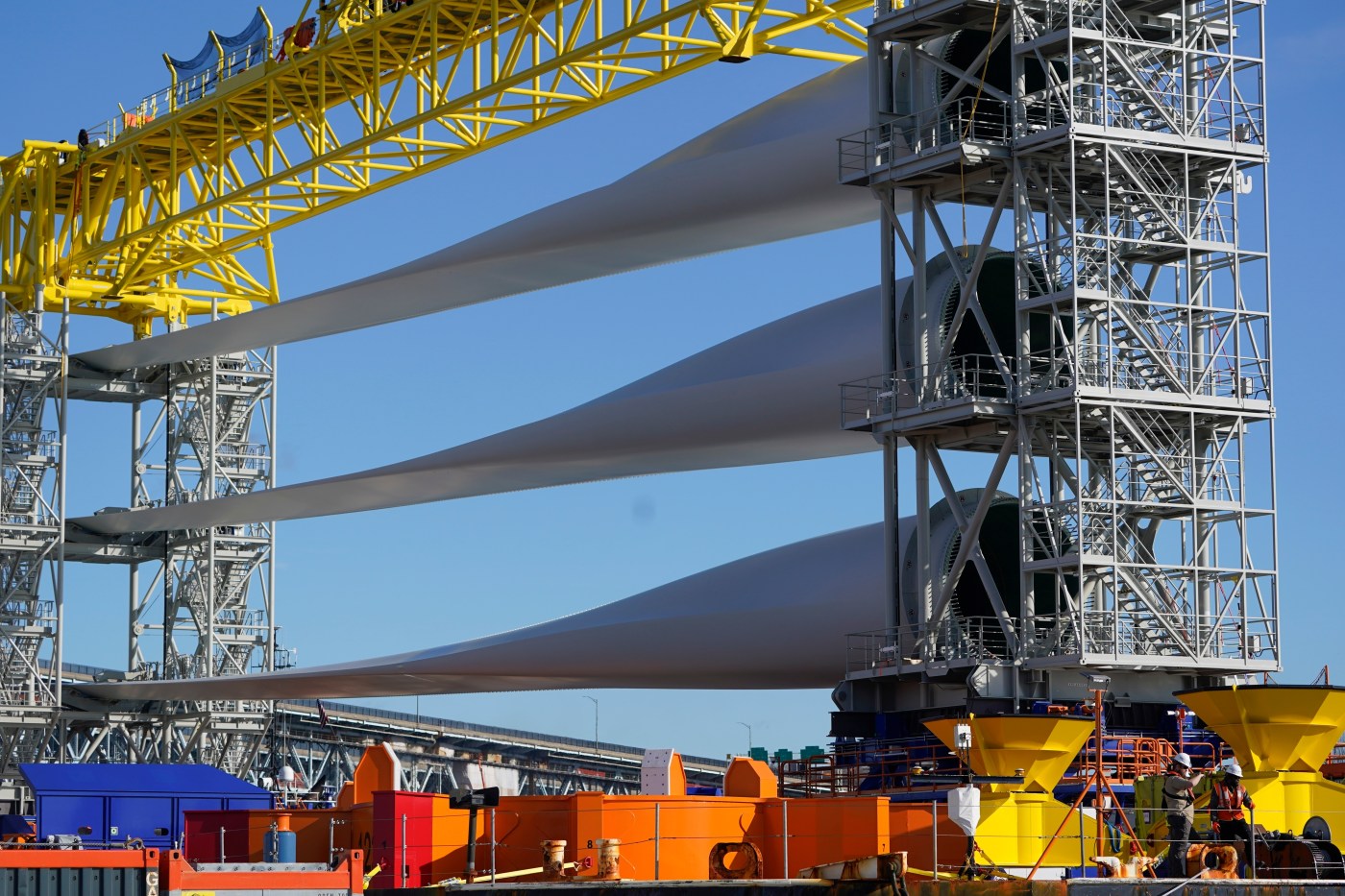
Concerns over wind power costs have intensified following a recent pause in offshore wind farm construction along the East Coast. This decision, made by the Trump administration, was based on security considerations, claiming that large installations could obstruct the detection of potential foreign threats. States like Connecticut and New York have sharply criticized this move, asserting that it undermines efforts to promote renewable energy.
Connecticut Governor Ned Lamont and New York Governor Kathy Hochul have both expressed strong discontent with the administration’s rationale. Lamont accused Trump of “making things up,” while Hochul dismissed the administration’s reasoning as “B.S.” Although the Trump administration’s announcement lacked detailed evidence, critics argue that blue-state politicians are misrepresenting the costs associated with renewable energy.
Governors Hochul and Lamont have claimed that wind power will reduce energy costs and enhance reliability. For instance, Connecticut Attorney General William Tong‘s office asserted that wind energy could save ratepayers “hundreds of millions of dollars.” Nevertheless, these claims have been challenged by various studies and data presented by organizations such as the Institute for Energy Research.
The reality is that blue states have increasingly mandated a reliance on wind and solar energy, often resulting in higher electricity rates. According to federal data, New Yorkers pay, on average, 58% more for their electricity than the national average, largely due to the state’s green mandates. Connecticut residents face even steeper costs, paying nearly double the national average for electricity.
The implications of these policies extend beyond mere economics. As Bjorn Lomborg notes, “global evidence is clear: Adding more solar and wind to the energy supply pushes up the price of electricity.” This trend raises questions about the long-term viability of renewable energy as a cost-effective solution.
Examining international examples, Germany serves as a cautionary tale regarding the reliability of renewable sources. Despite significant investments in solar and wind energy, the country has faced challenges in maintaining a stable energy supply. On days with unfavorable weather conditions, renewable sources can provide as little as 4% of the grid’s needs, resulting in high costs and the necessity of maintaining traditional energy generation systems.
Similar trends are observed in the United Kingdom, where former Prime Minister Rishi Sunak recently paused the transition to net-zero carbon use. Scotland’s government has also reassessed its emissions reduction targets, emphasizing the need for a balanced energy mix. These developments suggest a growing recognition that renewable energy alone may not be a sustainable or affordable solution for energy needs.
In the United States, California has seen its reliance on renewables increase to 39% of its energy mix, contributing to some of the highest electricity rates in the nation. The state’s residents are grappling with rising energy costs, which have led to what some are calling “energy poverty,” particularly among low-income households.
The debate over energy policies has become a focal point in regional elections. In the recent New Jersey gubernatorial race, rising electric bills were a significant issue. Democratic candidate Mikie Sherrill asserted that investments in offshore wind would lower energy costs for families, a claim that was challenged by her opponent, Republican Jack Ciattarelli, who advocated for a more diverse and cost-effective energy mix.
As voters navigate these complex issues, the need for transparency and truthful discourse about energy costs is paramount. While blue-state politicians often tout the benefits of renewable energy, the reality is that the transition comes with significant financial burdens for consumers.
Moreover, the visual impact of offshore wind farms has sparked additional discussions about the aesthetic considerations of energy production. As communities weigh the benefits and drawbacks of renewable energy, it is essential to engage in open, honest discussions about the real costs and consequences.
The recent pause in offshore wind turbine construction may provide an opportunity for a more candid dialogue about the future of energy policy in the United States. As the debate continues, it is vital for citizens to demand factual information from their leaders regarding the implications of renewable energy choices.