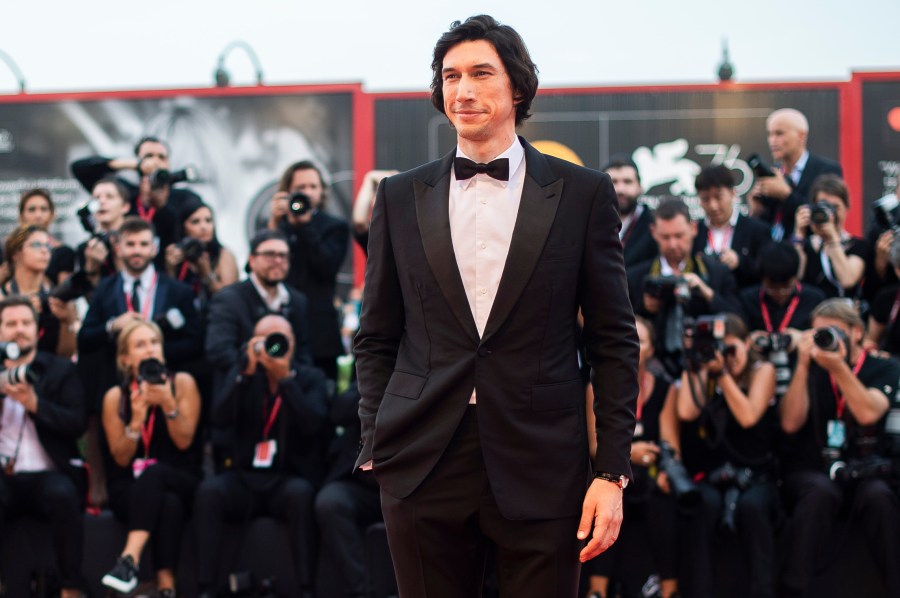
In a recent interview, actor Adam Driver shared insights into his career, discussing his collaborations with notable filmmakers and his passion for storytelling. Amidst a backdrop of personal memorabilia in his Brooklyn office, Driver reflected on his journey in an industry increasingly dominated by franchises.
Driver, now 41, has built a reputation for prioritizing directors who create personal and meaningful films. He has worked with a remarkable array of one-name icons including Martin Scorsese, Francis Ford Coppola, Spike Lee, and Steven Soderbergh. His loyalty to visionary filmmakers has led him to projects like Coppola’s ambitious “Megalopolis” and Michael Mann’s long-cherished “Ferrari.”
This autumn, Driver stars in his third film directed by Jim Jarmusch, titled “Father Mother Sister Brother,” which has already garnered recognition, winning a prize at the Venice Film Festival. He expressed that his commitment to Jarmusch was immediate: “All he needed to do was ask.”
Exploring New Roles and Stories
While promoting “Father Mother Sister Brother” at the New York Film Festival, Driver also spoke about his upcoming role in “Alone With Dawn,” directed by Ron Howard. In this film, he portrays John Chapman, an Air Force combat controller who was killed in Afghanistan in 2002. Driver, a former Marine, finds the film particularly meaningful.
“It deals with character and story,” he noted, connecting it to his admiration for filmmakers who create authentic narratives. “They’re seemingly few and far between and are making films that feel like they were directed by a person.”
Despite his dedication to filmmakers, Driver expressed concern over the industry’s direction, particularly regarding a project he developed with Soderbergh. The two spent two years working on a concept for a new Star Wars film, which was ultimately rejected by Walt Disney Co. Driver stated that he had been interested in reprising his role as Kylo Ren since 2021, emphasizing his desire to explore the character’s journey further.
“I had always said: With a great director and a great story, I’d be there in a second,” Driver shared. He and Soderbergh pitched a narrative that followed Ben Solo after the events of “The Rise of Skywalker,” which saw Kylo Ren’s redemption and apparent demise.
Driver described the script as “one of the coolest scripts I had ever been a part of.” They presented their vision to Lucasfilm executives, who initially showed interest. However, he revealed that when the proposal reached Bob Iger and Alan Bergman, it was ultimately declined. “They didn’t see how Ben Solo was alive. And that was that,” he said.
Frustration with Funding and Filmmaking Vision
As the feature-film landscape of “Star Wars” undergoes significant changes, with Kathleen Kennedy expected to step down, Driver’s frustration with funding for ambitious projects is palpable. He recalled that both “Ferrari” and Coppola’s “Megalopolis” faced significant financial challenges. Despite its substantial $120 million budget, “Megalopolis” was financed entirely by Coppola himself. Driver expressed admiration for Coppola’s willingness to take risks, stating, “The gesture of paying that much money for a film… that to me is moving.”
Driver’s commitment to the craft remains unwavering, underscoring his belief that filmmaking should focus on character-driven narratives. He noted, “Watching filmmakers not get the money they need is frustrating. I’d rather do a Michael Mann anything,” highlighting his loyalty to directors who share his vision.
In reflecting on “Megalopolis,” Driver shared that the experience provided him with a new perspective on character development. “It felt like, in a way, you couldn’t go wrong with character because there was nothing that you could do that was a mistake,” he explained. This sentiment resonates with his approach to future projects, including his collaboration with Jarmusch.
“Father Mother Sister Brother,” set for release by Mubi on December 24, explores the complex relationships between adult children and their parents. Driver, who has a history of not watching his own films, made an exception for Jarmusch’s work, although he still grapples with the discomfort of seeing himself on screen.
“I don’t want to look at my face,” he admitted, laughing. “I don’t want to live with the regret of making a mistake.” This candidness reveals the depth of his commitment to the craft and the emotional weight he carries as an actor.
As Driver continues to navigate the landscape of modern cinema, his emphasis on character, storytelling, and collaboration with passionate filmmakers remains evident. His journey reflects a dedication not only to his craft but to the broader narrative of filmmaking itself, where vision and authenticity can shine amidst industry challenges.