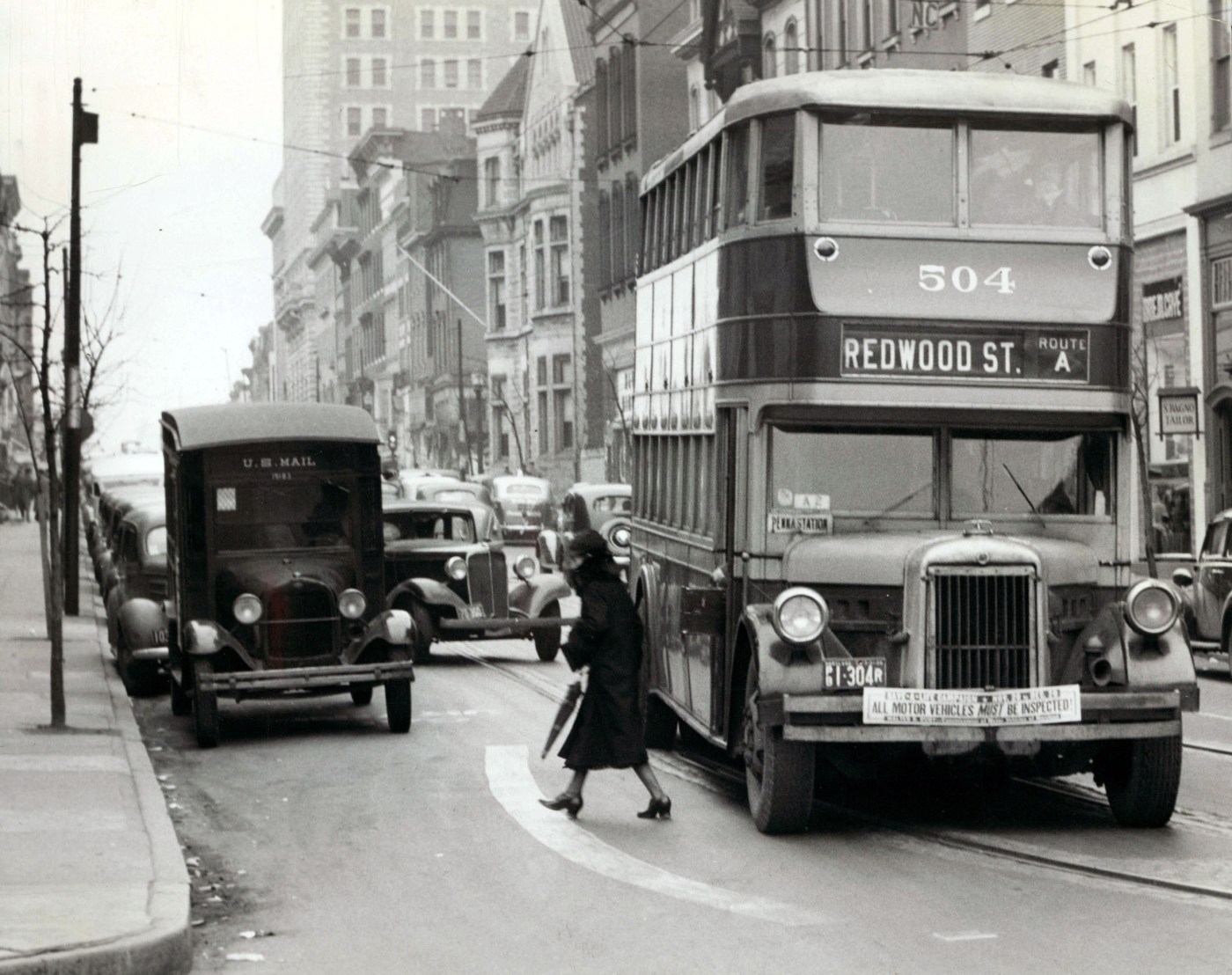
In the early 20th century, Baltimore’s streets were graced by the presence of double-decker buses, offering residents a unique way to navigate the city. Operating from 1921 to 1942, these buses traveled along Charles Street, providing a charming and elevated view of the urban landscape for just a dime. The service became an instant hit, attracting daily commuters and leisure seekers alike.
The double-decker buses featured an open-air upper deck with 29 seats, where passengers could bask in the sun while commuting. As the day transitioned into evening, the roof became a popular rendezvous spot for young couples. A headline from the Evening Sun in July 1922 highlighted the appeal: “Spooners Desert Front Parlor For Top Seats On New Buses.” The article noted, “No more may the love-sick swain over the lack of a [car] to woo his lady in the light of the moon.” The allure of the upper deck was so pronounced that it inspired a musical performed by the Vagabond Theater Co. in 1926, which included the hit song “Love Is A Wonderful Thing.”
The five double-decker buses complemented the existing city bus lines but were limited to their designated thoroughfare. They avoided tree-lined streets with low-hanging branches that could disrupt the experience for passengers seated above. Nevertheless, Charles Street had its share of foliage. Notably, writer F. Scott Fitzgerald, who lived on Charles, described the ride in an essay for Esquire Magazine in 1936. He remarked on the “green branches ticking against each window” as he rode, suggesting that trimming the branches could enhance the scenic views.
The upper deck also attracted smokers, as they were prohibited from smoking inside the buses. An article from the Evening Sun argued for allowing men to smoke in the fresh air provided by the rooftop. Yet, safety concerns began to emerge. In 1922, a gas explosion at Charles and Mulberry streets sent a manhole cover soaring through the air, narrowly missing five students from Goucher College who were seated on the upper level.
As World War II commenced, the double-decker bus service came to an end, despite its popularity. In October 1942, these buses transported 607,396 passengers. Unfortunately, the buses were known as “motorized mastodons,” consuming fuel at an alarming rate of just 1.5 miles per gallon, prompting a shift in resources toward the war effort. By the end of that year, the double-deckers disappeared from the streets of Baltimore, leaving behind a nostalgic memory of a unique chapter in the city’s transportation history.