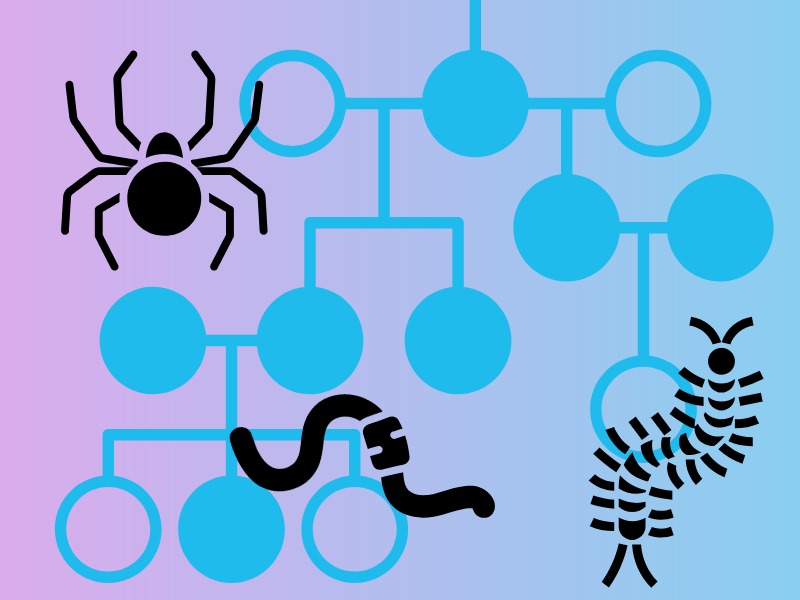
Children often pose intriguing questions about the natural world, particularly when it comes to distinguishing between various creatures. Recently, Wizzie Brown, a program specialist with the Texas A&M AgriLife Extension Service, provided insights into common misconceptions about insects, spiders, and worms. Notably, she clarified that spiders are not classified as insects.
Both spiders and insects belong to the broader category of arthropods, but they are distinct in several key ways. Spiders fall under the subphylum Chelicerata, while insects are categorized in Hexapoda. This classification indicates significant differences in body structure. For example, spiders possess two main body regions known as the prosoma and opisthosoma. They also feature specialized mouthparts called chelicerae, which often contain fangs capable of injecting venom. In contrast, insects have three body regions: a head, thorax, and abdomen, as well as a pair of antennae and three pairs of legs.
Understanding Worms and Their Classifications
The conversation about insects naturally extends to worms, which often confuses many. While some insects have “worm” in their name, such as silkworms and glowworms, they are not true worms. Brown noted that true worms are classified into three categories: segmented worms, flatworms, and roundworms.
Segmented worms, commonly represented by earthworms, have distinct body segments and may possess parapodia, which help facilitate movement. Flatworms, such as tapeworms, have unsegmented bodies and absorb oxygen through their skin. Roundworms are characterized by their tubular shape and have openings at both ends of their bodies, allowing for a continuous flow of food and waste.
Centipedes: Close Relatives to Insects
Centipedes, another source of confusion, are also not classified as insects. While they share a closer relationship with insects than worms do, both centipedes and insects belong to the arthropod family. Centipedes are grouped under Myriapoda and have a body structure that includes a head and a long trunk-like body with numerous legs. This distinguishes them from insects, which have three distinct body regions.
Brown’s explanations help illuminate the fascinating diversity within the animal kingdom. As questions about bugs and other creatures continue to arise, she encourages children and anyone curious about nature to seek answers. For those with inquiries, Brown invites them to submit their questions for further clarification.
The knowledge shared by experts like Wizzie Brown plays a crucial role in fostering understanding and appreciation of the natural world, especially among young learners.