Hawaii’s Governor, Josh Green, has proposed a substantial $10 billion investment from the U.S. Army to address various issues related to military training on state lands. This investment includes $500 million earmarked specifically for cleaning up hazardous military waste. The plan has drawn attention from Native Hawaiian groups, who assert that the local community should take the lead in the cleanup efforts, particularly in areas previously contaminated by military activities.
As the U.S. Army prepares to relinquish parts of the land it currently leases from the state, discussions are intensifying around the future of these lands. The military’s leases are set to expire in 2029, raising concerns about potential uses of eminent domain to reclaim the land without adequate compensation. Community advocates, especially from the organization Mālama Mākua, are particularly vocal about the need for community-led remediation efforts.
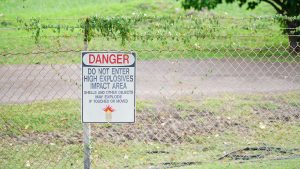
In a letter to Daniel Driscoll, the Secretary of the Army, Governor Green emphasized that the cleanup funding should not only cover the immediate need but also establish an endowment for long-term remediation work. The proposed $500 million for clearing unexploded ordnance (UXO) exceeds the $400 million committed by Congress for the cleanup of Kahoʻolawe, a site that faced extensive military bombardment but remains partly littered with munitions.
The cleanup of UXO has long been a pressing issue in Hawaii, where such dangerous remnants have rendered large areas of land unusable. William Aila of Mālama Mākua expressed that the organization is prepared for a long-term approach to remediation, estimating that the process could take at least 50 years. He underscored the importance of community involvement in the cleanup, stating, “It’s not a five-year plan we envision.”
Community Control Over Cleanup Efforts
The negotiations between the state and the military are still in their early stages, with significant discussions taking place regarding the cleanup responsibilities. Aila, who serves on Green’s newly appointed lease negotiation committee, noted that while he was not consulted on the $500 million figure, it could serve as a foundation for future efforts.
Green’s correspondence with military officials hinted at a willingness to explore the establishment of an endowment for UXO clearance. This would provide a sustainable funding source for community-led projects, an idea that resonates strongly with local advocates.
The urgency for remediation arises from the presence of numerous military sites across Hawaii. According to ProPublica, 18 of the 115 active or abandoned military sites in Hawaii are classified as high risk, with an estimated cleanup cost of $2.8 billion needed to address hazards statewide. The Waikoloa Maneuver Area, a former training site on the Big Island, is projected to require around $1 billion for its cleanup by 2062.
The history of military cleanup in Hawaii has been fraught with challenges. The cleanup efforts on Kahoʻolawe serve as a cautionary tale. Although the island was returned to the state in 1993 with a promise of funding, much of the land remains contaminated. Michael Naho’opi’i, executive director of the Kaho’olawe Island Reserve Commission, emphasized that lessons learned from past cleanups must inform future efforts to ensure community involvement and effective remediation.
Long-Term Vision for Remediation
The military’s activities in the Makua Valley have ceased since 2004, yet the area still bears the scars of years of live-fire training. Advocates from Mālama Mākua are committed to ensuring that local community members are trained in the removal of munitions, believing this approach will yield better results than previous military-led cleanups.
Naho’opi’i, who has consulted with Mālama Mākua, expressed optimism about the potential for future cleanup efforts to benefit from advancements in technology. He noted that the presence of infrastructure on Oʻahu would ease the logistics of the operation compared to the isolated Kahoʻolawe.
The long-term vision includes not just the physical cleanup of the land but also the restoration of community ties to it. Aila pointed out the generational resentment towards land seizures and the importance of returning the valley to the community for rehabilitation. “The only way it’s going to go away is for the valley to come back and for us to rehabilitate it — not the Army, not anybody else, not the state,” he said.
In conclusion, the discussions around the cleanup of military waste in Hawaii reflect a complex interplay of environmental responsibility, community engagement, and historical context. As negotiations continue, the emphasis on local leadership in remediation efforts is likely to shape the future of these lands and their significance to the Native Hawaiian community.