A recent incident involving an agent from U.S. Immigration and Customs Enforcement (ICE) has ignited controversy, particularly following remarks made by renowned sports commentator Stephen A. Smith. The agent shot Renee Good, an American citizen and poet, in the head during a neighborhood operation in Minnesota. Eyewitnesses reported that the situation escalated unexpectedly, as Good was seated in her vehicle when the agent fired. In a chilling final statement, Good expressed, “I’m not mad at you,” before being shot. Following the incident, the agent reportedly referred to her using a derogatory term, and ICE later claimed that Good used her vehicle as a weapon, a narrative contradicted by video evidence.
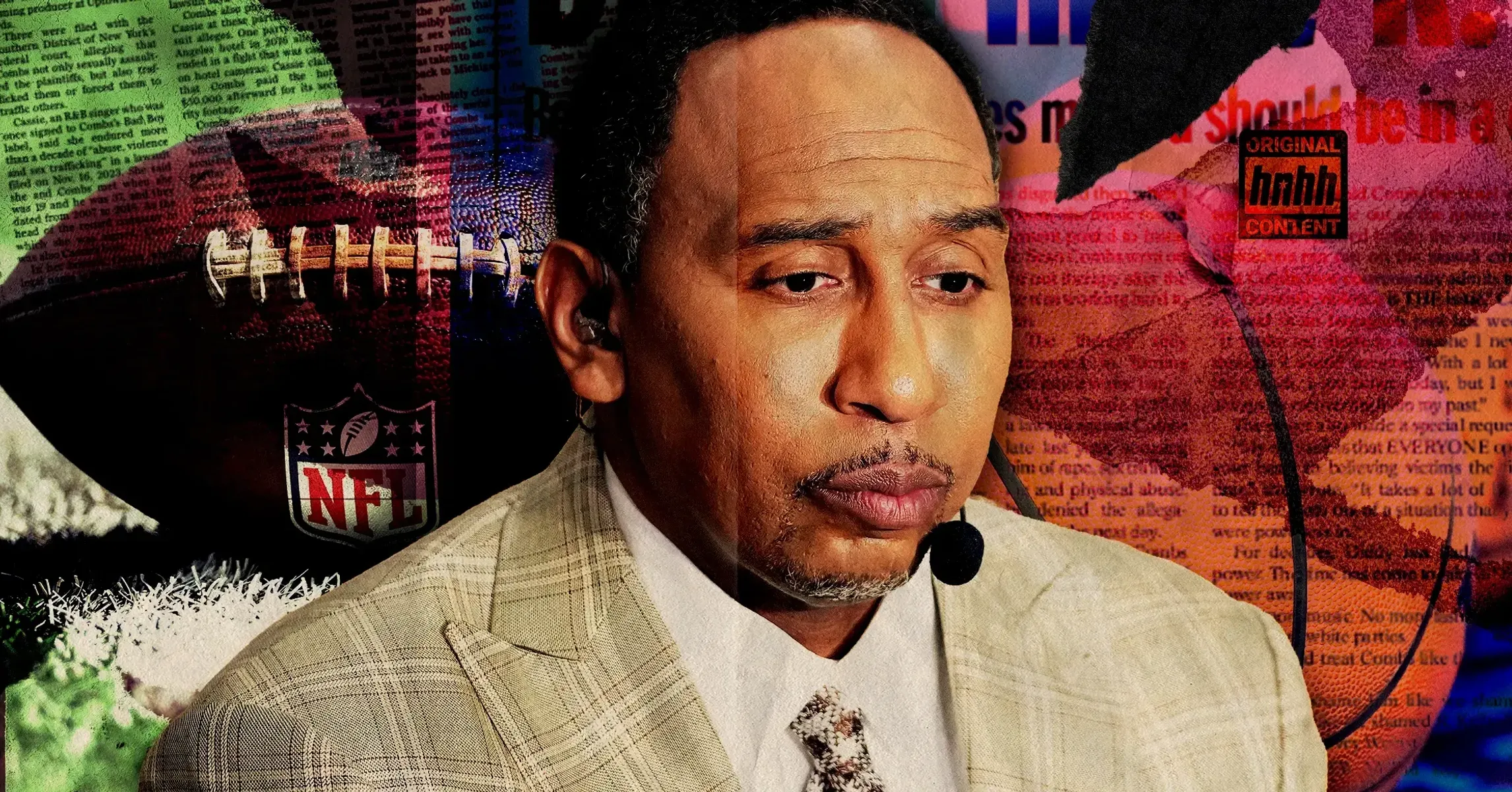
As protests erupted across the country in response to the shooting, Smith took to his national platform to comment on the event. He described the agent’s actions as “completely justified” from a legal perspective. While Smith acknowledged the potential for alternative actions, such as de-escalation and vehicle disabling, he ultimately sided with law enforcement. This response has drawn significant criticism, as it aligns with a pattern of Smith’s commentary that often favors institutional power over the voices of marginalized communities.
History of Controversial Commentary
Smith’s pattern of commentary has been scrutinized for years, particularly in instances where he has chosen to question the methods of Black activists rather than the systems they protest against. For example, during the 2016 national anthem protests led by Colin Kaepernick, Smith focused on Kaepernick’s actions rather than the underlying issues of police violence and systemic racism. He labeled Kaepernick a “flaming hypocrite” for his decision not to vote in the presidential election, redirecting the conversation away from the significant message behind the protest.
Similarly, when Congresswoman Jasmine Crockett made a strong statement during a televised hearing, Smith dismissed her remarks as “for the streets,” a phrase that resonated with condescension. His later apology did little to mitigate the implications of his original comments, which many perceived as an example of respectability politics.
Smith’s critique of Vice President Kamala Harris further exemplifies this trend. After Harris released a memoir detailing her first 107 days in office, Smith’s response was dismissive: “Who cares what she has to say?” This remark overshadowed not only her position as the first Black, South Asian, and female vice president but also the historical significance of her role.
Impact of Commentary on Community Dynamics
Smith’s commentary often reflects a concern for how Blackness is perceived in mainstream culture rather than addressing the systemic injustices that affect these communities. His remarks following the release of security footage of NFL player Ray Rice assaulting his then-fiancée illustrated this tendency. Instead of focusing on the issue of domestic violence, Smith suggested women should avoid provoking such incidents, leading to criticism and a suspension from ESPN.
More recently, Smith faced backlash for comments regarding Shohei Ohtani, a baseball star who uses an interpreter. His assertion that Ohtani’s need for an interpreter could hinder his leadership in the sport drew accusations of xenophobia, prompting another apology from Smith.
As his platform has expanded, so too has the impact of his words. Smith’s commentary has shifted toward a more politically charged tone, as exemplified by his criticisms of the Democratic Party for being “too woke” and his praise for Donald Trump’s communication style. While he has stated that he does not support Trump, his choice of language can inadvertently bolster narratives that perpetuate harm against marginalized groups.
In a media landscape where words can quickly turn into weapons, Smith’s influence is significant. His comments often circulate widely, reinforcing systems of control and authority. When he labels the shooting of Renee Good as “justified,” he sends a message to viewers who may already believe that such force against civilians is acceptable.
In navigating the complexities of cultural commentary, Smith’s history illustrates the fine line between being provocative and being irresponsible. The debate surrounding diversity of thought within Black communities highlights the necessity for nuanced discussions. While it is acknowledged that Black individuals span the political spectrum, there is a distinction between being controversial and being careless.
Ultimately, Stephen A. Smith occupies a unique position as a prominent Black commentator in sports media. His responsibility extends beyond simply voicing opinions; he must consider the historical implications of his statements and their potential impact on the communities he represents. The legacy of those who have questioned authority versus those who have reinforced it will be remembered, and Smith’s role in this narrative is increasingly scrutinized. In moments that call for moral clarity, his choices reflect a broader commentary on the responsibilities of prominent voices in shaping public discourse.