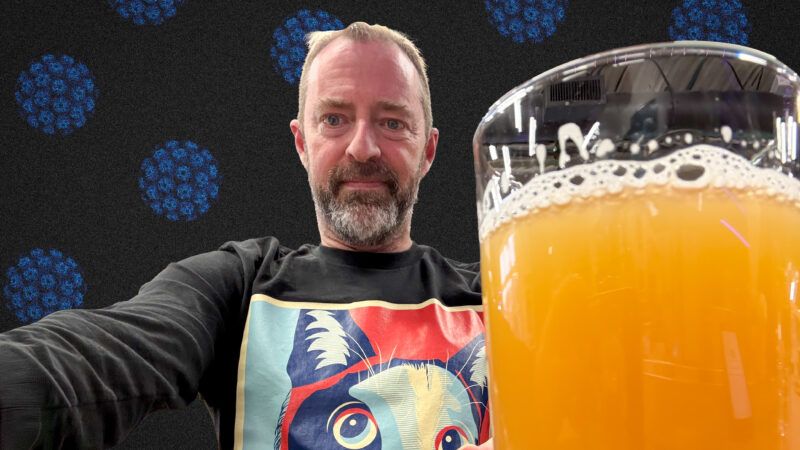
Christopher Buck, a researcher at the National Cancer Institute, has taken an unconventional approach to vaccine development by brewing a beer that may provide immunity against the BK virus, also known as human polyomavirus. This innovative method allows individuals the opportunity to home-brew their own vaccines, potentially bypassing the lengthy approval process set by the Food and Drug Administration (FDA).
Buck’s journey aligns him with a legacy of pioneering scientists who have self-experimented with vaccines. Historical figures such as Charles Jules Henri Nicolle, who inoculated himself against typhus, and Jonas Salk, who tested his polio vaccine on himself, represent a tradition of bold experimentation. In March 2020, a group of researchers from Harvard created a DIY nasal vaccine for COVID-19, demonstrating the capacity for rapid innovation in the face of public health crises.
At the National Cancer Institute, Buck’s primary focus is on preventing organ transplant rejection associated with polyomavirus infections. He has contributed significantly to the field, discovering four of the thirteen known polyomaviruses that infect humans. Despite the prefix “polyoma” suggesting a connection to tumors, most healthy individuals experience little to no adverse effects from human polyomavirus 1. However, for organ transplant patients with suppressed immune systems, the virus can reactivate and lead to severe complications.
To create his beer-based vaccine, Buck engineered brewer’s yeast to produce a protein that encapsulates the BK virus. When consumed, the immune system recognizes this foreign protein, prompting it to generate antibodies. Buck mixed this yeast with a Flash Hefeweizen beer kit, along with hop tea made from Saphir hop pellets. Over a period of months, he consumed one to two pints of his creation on a regular basis, alongside booster doses, and monitored his health through regular blood tests. He reported no adverse effects and remarked, “It was one of the best homebrews I ever made.”
While Buck’s experiment is based on a single subject—himself—he claims that his immune system successfully produced antibodies against several strains of the BK polyomavirus. He envisions this research as a gateway to developing inexpensive vaccines, potentially delivered in everyday food products. Given that the ingredients used in his beer are already deemed safe for consumption, he argues that these food-based vaccines would not fall under the FDA’s stringent vaccine regulations.
To ensure clarity around his project, Buck established the Gusteau Research Corporation, a nonprofit organization where he serves as the sole employee. His brother, inspired by the same culinary ethos, founded Remy LLC to market food-grade engineered yeast products. The namesake of both entities draws from the film Ratatouille, which champions creativity in cooking.
Vaccines have historically played a vital role in public health, having saved an estimated 154 million lives globally since 1974. Buck has raised concerns about the increasing skepticism surrounding traditional vaccines in the United States, where officials have begun imposing restrictions on access. He argues that the current legal framework could simplify the process of developing food-based vaccines, allowing free-market forces to balance regulatory scrutiny.
Buck is calling on fellow scientists to explore the potential of his polyomavirus vaccine approach for other viral threats, such as bird flu and emerging COVID-19 variants. He emphasizes the importance of innovation, reminding researchers that “anyone can cook—but only the fearless can be great.”
Through his unique blend of science and homebrewing, Christopher Buck not only seeks to challenge the status quo of vaccine development but also aims to empower individuals with the knowledge and tools to take charge of their health.