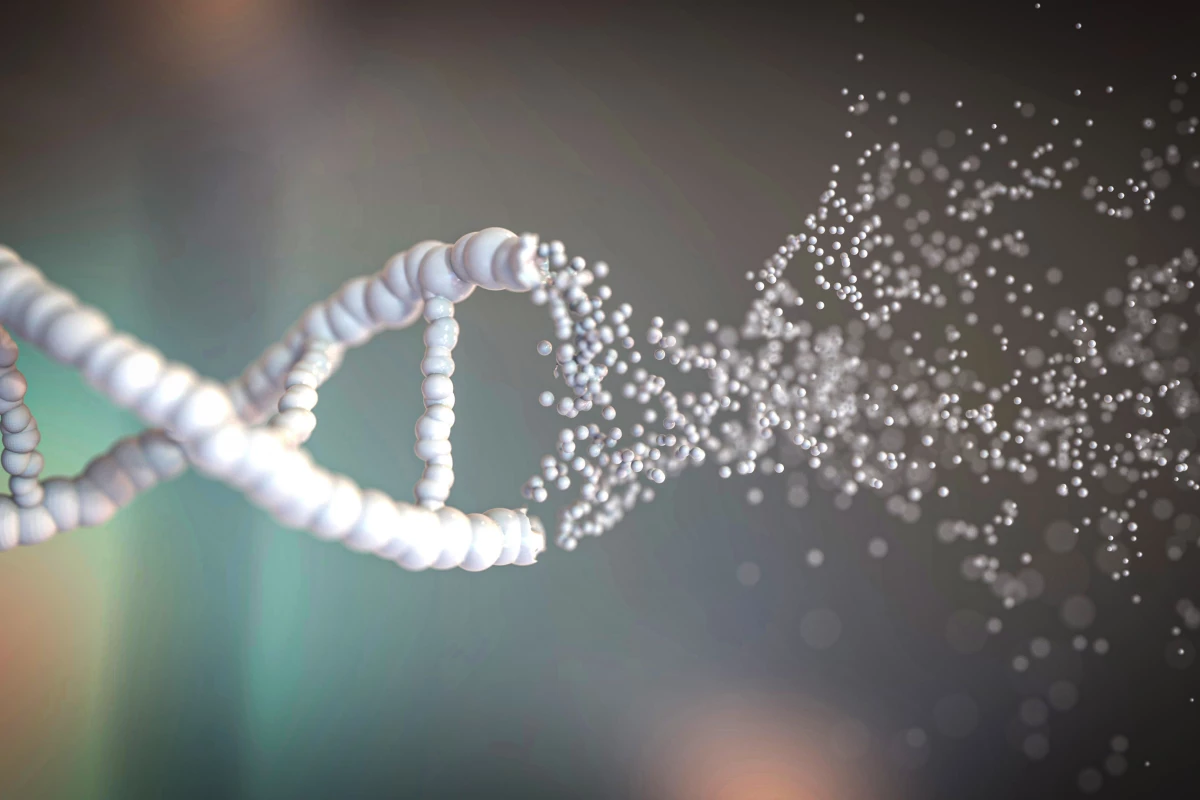
Researchers at Utrecht University have developed innovative glowing sensors capable of detecting DNA damage and repair processes in real time. This breakthrough addresses a critical issue in cellular biology: the ability to monitor how cells respond to damaging events, particularly double strand breaks, which are among the most severe types of DNA damage.
Double strand breaks can trigger immediate cellular responses, and understanding how cells repair this damage is essential for preventing diseases that arise from genomic instability. Traditionally, scientists have relied on methods that provide only static snapshots of these complex processes. The new sensors, however, allow for continuous observation, significantly enhancing our understanding of DNA repair mechanisms.
Introducing a Groundbreaking Tool
Lead researcher Tuncay Baubec emphasizes that the new sensor is distinct because it utilizes components derived from natural proteins already present in cells. This design enables the sensor to attach and detach from damage sites autonomously, providing genuine insights into cellular behavior without interference. Baubec states, “Our sensor is different… what we see is the genuine behavior of the cell.”
The sensors have been tested on both fixed and live cells. By employing Cas9 technology to induce DNA breaks at specific locations, researchers demonstrated that the sensor can effectively detect individual breaks even within densely packed regions of chromatin known as heterochromatin. This versatility makes the tool applicable for studying DNA repair across various chromatin environments.
Real-Time Monitoring of DNA Repair
The glowing tag linked to a small protein domain allows the sensor to briefly bind to broken DNA without disrupting the natural repair process. This feature enables researchers to track DNA damage in living cells and even in whole organisms, such as common model organisms like worms. The effectiveness of the sensor in these living systems indicates its potential for broader applications beyond laboratory settings.
In addition to monitoring the repair process, the sensor can be connected to other molecules, allowing scientists to map the locations of DNA breaks and observe the response of proteins to these sites. This capability can transform the way DNA damage and repair are studied, providing insights into the dynamics of these critical biological processes.
Baubec illustrates the potential impact of this tool on medical research, particularly in cancer treatment. Current methods often rely on antibodies to assess DNA damage, which can be time-consuming and costly. The new sensors could streamline this testing process, making it cheaper, faster, and more accurate. “Our tool could completely upend medical research methods,” Baubec notes.
The findings of this research have been published in the journal Nature Communications, paving the way for further exploration of DNA repair mechanisms and the development of new therapeutic strategies. The ability to observe DNA damage and repair in real time represents a significant advancement in molecular biology, with promising implications for medical research and treatment methodologies.