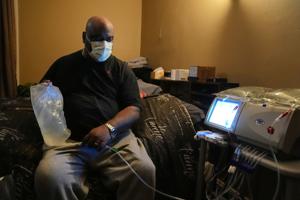
In a groundbreaking effort to secure living kidney donors, a new pilot program in Pennsylvania is leveraging social networks to connect patients with potential donors. The initiative has already brought hope to individuals like Fernando Moreno, who has spent the past two years on dialysis, waiting for a kidney transplant. Moreno’s treatment facility in Philadelphia introduced him to this innovative program, which has paired him with “angel advocates” — volunteers who use their social media platforms to share his story and raise awareness about his need for a kidney.
Launched in May 2023, the pilot program involves 15 patients across three hospitals in Pennsylvania. Its goal is to determine whether motivated volunteers can enhance the chances of finding a life-saving match for those with limited social connections. Moreno, now 50, expressed his gratitude for the initiative, stating, “This process is great. I’m just hoping there will be somebody out there that’s willing to take a chance.”
Innovative Approach to a Critical Need
The program, dubbed the Great Social Experiment by its creator, filmmaker David Krissman, aims to amplify traditional outreach methods. “We know how this has always been done, and we’re trying to put that on steroids and really get them the help that they need,” Krissman explained. Many patients, he noted, often lack the energy or skills to advocate for themselves effectively.
The pilot is supported by the Gift of Life Donor Program, which serves as the organ procurement network for eastern Pennsylvania, southern New Jersey, and Delaware. The organization has provided more than $100,000 in funding to support the initiative. Early results are promising: two of the five patients at Temple University Hospital have found living donors, and one is preparing for surgery. Additionally, one of the five patients at the University of Pittsburgh Medical Center has successfully undergone a transplant.
Richard Hasz Jr., chief executive of the Gift of Life Donor Program, acknowledged the pilot’s innovative nature, stating, “This is the first of its kind that I’m aware of.” The initiative seeks to establish a blueprint for future programs that combine storytelling with social media outreach, potentially reshaping how patients connect with donors.
Addressing the Kidney Transplant Crisis
Currently, approximately 90,000 individuals in the United States are on the waiting list for a kidney transplant. While nearly 28,000 kidneys were transplanted in the last year, most came from deceased donors. Living kidney donations, which totaled around 6,400 last year, are harder to secure but offer a better match and lower rejection risk for recipients.
Krissman’s personal experience with illness inspired him to tackle the challenging issue of increasing living kidney donations. After his recovery from a debilitating condition, he produced a podcast on kidney transplantation, which led him to recruit patients through social media. His previous pilot program in North Carolina successfully matched all three participating patients with living donors.
The initiative has garnered enthusiasm among health professionals. Becca Brown, director of transplant services at UPMC-Harrisburg, remarked on the potential of the program, noting, “There’s potential for this to really snowball.”
Potential living donors are thoroughly screened for health issues before being approved to donate. Many choose to make “directed donations,” specifying the recipient of their kidney. Others opt for nondirected donations, allowing their organ to be matched with a patient in need.
The program has also inspired individuals like Francis Beaumier, a double living donor from Green Bay, Wisconsin. He views the angel advocate initiative as a way for people to make a significant impact. “It’s a great little way for everyone to make a small difference,” Beaumier said.
As the pilot program moves forward, the focus remains on harnessing the power of social media to create a broad support network for patients awaiting transplants. At a recent event in Harrisburg, Krissman elaborated on the strategy to engage potential donors while encouraging community members to consider the life-saving impact they could have.
Ahmad Collins, a 50-year-old city government worker who has been on dialysis for ten hours a night since late last year, highlighted the urgency of such initiatives. “They can be a superhero, so to speak,” Collins said. “They can have the opportunity to save somebody’s life, and not too many times in life do you have that opportunity.”
As the pilot program continues to evolve, it holds promise for transforming how kidney patients connect with living donors, potentially saving countless lives in the process.