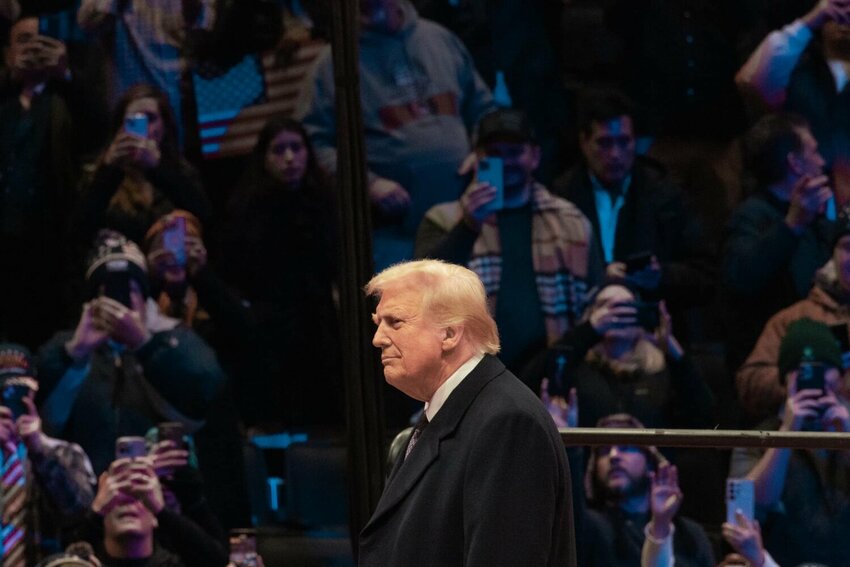
President Donald Trump presented a framework for health care reform to Congress on March 2, 2023, urging lawmakers to approve significant policy changes “without delay.” While Trump emphasized the need for direct financial support to Americans to alleviate health care costs, his proposal notably omitted any reference to the enhanced tax credits that expired at the end of 2025. These credits had previously helped millions afford health insurance under the Affordable Care Act (ACA).
In a five-minute video, Trump reiterated his desire for Congress to provide direct payments to Americans for health insurance and care. He stated, “The government is going to pay the money directly to you. It goes to you, and then you take the money and buy your own health care.” No specifics were provided regarding income limits for these payments or the exact amount lawmakers should allocate.
The expiration of enhanced tax credits has left approximately 22 million Americans facing higher premiums. Earlier in March, the House attempted to extend these credits for another three years, but the bill has encountered obstacles in the Senate, where bipartisan negotiations are ongoing.
Lowering Drug Prices and Ensuring Transparency
Trump also called for legislation that would enforce a “most favored nation” policy for prescription drug pricing, ensuring that Americans pay the lowest prices available globally. “Instead of Americans paying the highest drug prices in the world, we will now be paying the lowest cost paid by any other nation,” he stated, highlighting a key element of his health care strategy.
Under his plan, which he has dubbed “The Great Health Care Plan,” health insurance companies would be mandated to disclose clear information about their pricing and profit margins. Trump asserted that transparency would lead to lower costs, saying, “As the saying goes, sunlight is the best disinfectant.” He emphasized the need for insurers to reveal their claims denial rates and the outcomes of appeals, aiming to empower consumers in their health care choices.
The proposal also includes requirements for hospitals and insurers that accept Medicare or Medicaid to display pricing information prominently. Although a similar rule was introduced in 2019, Trump aims to reinforce these transparency measures.
Path Forward for Congressional Approval
A brief outline of the proposal published on the White House website did not specify whether Trump intends for Congress to use budget reconciliation or pursue a bipartisan approach for approval. A senior official indicated that the administration believes the proposals enjoy broad public support, suggesting that bipartisan agreement is possible.
“We want to make progress,” the official stated, noting that the absence of reference to the expired tax credits was not intended to hinder ongoing discussions in the Senate. “It does say that we have a preference that money goes to people, as opposed to insurance companies,” the official added.
Dr. Mehmet Oz, Administrator of the Centers for Medicare & Medicaid Services, emphasized that the administration’s four pillars for reform include solidifying drug pricing, lowering health insurance costs, ensuring transparency from insurers, and enhancing pricing information from health care providers. He expressed optimism about bipartisan support for some of the proposals, stating, “Having Congress say, ‘This is how it’s going to be,’ is important.”
The administration’s approach aims to ensure that drug companies remain engaged, promoting stability in the pharmaceutical market while encouraging the FDA to expedite the transition of prescription drugs to over-the-counter availability. With ongoing discussions in Congress, the future of Trump’s health care proposals remains uncertain as lawmakers navigate the intricate landscape of health policy reform.