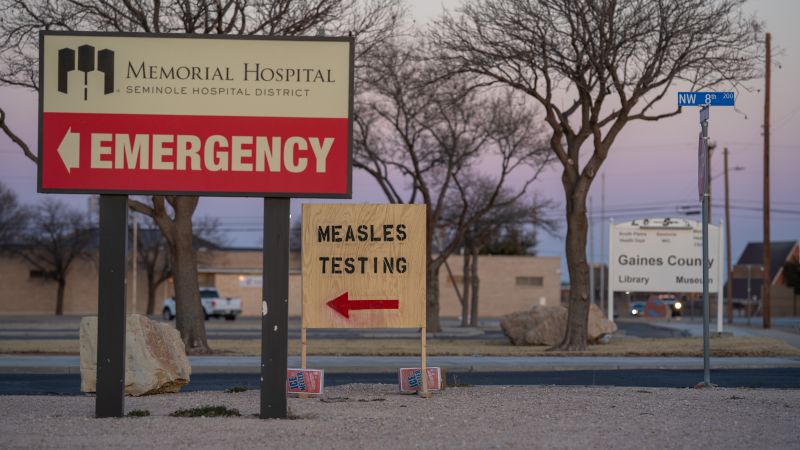
The United States is experiencing a significant resurgence of measles, with over **2,200 confirmed cases** reported in 2025 alone, the highest number since the disease was declared eliminated in 2000. This alarming trend follows a major outbreak in **West Texas** that began one year ago, which ultimately resulted in **more than 760 cases** and the deaths of two children. Although Texas declared the outbreak over in August 2025, new cases have emerged weekly across the nation, raising concerns about the potential loss of the country’s measles elimination status.
In addition to Texas, outbreaks have been reported in **South Carolina** and along the borders of **Utah** and **Arizona**, each contributing hundreds of cases. The first two weeks of **2026** have seen some of the worst numbers yet, with exposures occurring in various public spaces, including schools, churches, and airports. Dr. Caitlin Rivers, an epidemiologist at the **Johns Hopkins Bloomberg School of Public Health**, stated, “Now we’re seeing in a single week what we might have seen in an average year,” highlighting a significant shift in the presence of this preventable disease.
The risk of losing measles elimination status is compounded by low vaccination rates. Data from the **Centers for Disease Control and Prevention (CDC)** reveals that **more than 95%** of measles cases in 2025 were among individuals who had not received the recommended two doses of the measles-mumps-rubella (MMR) vaccine. The CDC notes that **171 cases** have already been reported in early **2026**, nearly matching the average annual total in the 25 years since the elimination status was granted.
Experts indicate that improving vaccination coverage is essential for reversing this trend. Dr. Demetre Daskalakis, former director of the CDC’s National Center for Immunization and Respiratory Diseases, expressed deep concerns about the public health system, stating, “Measles elimination is a vital sign of our public health system. That public health system is blue in the ICU.” He emphasized that the challenges facing vaccination efforts have been growing for years.
The increase in vaccine exemptions among kindergartners marks a troubling trend. The CDC reported that a record share of children had exemptions for required vaccinations during the last school year, with coverage rates for the MMR vaccine falling below the federal target of **95%** for five consecutive years. A recent survey revealed that many parents seeking exemptions cited philosophical or personal belief objections as their primary reasons.
Dr. Paul Offit, director of the Vaccine Education Center at the **Children’s Hospital of Philadelphia**, noted that the success of vaccines has led to a diminished awareness of diseases like measles. He recalled a conversation with Dr. Maurice Hilleman, a key figure in vaccine development, who expressed concern that the return of the virus might be necessary to instill a sense of urgency about vaccination. Offit lamented, “It’s an enormous defeat for us to once again see children be exposed to something that could kill them.”
Despite significant efforts to increase vaccination uptake, particularly in communities affected by outbreaks, challenges persist. In South Carolina, where a mobile vaccination clinic has been deployed, state epidemiologist Dr. Linda Bell reported that response has been “disappointing.” Outbreaks tend to occur in under-vaccinated communities, which may include those tied by shared beliefs, particularly against vaccination.
The spread of anti-vaccine messaging complicates the vaccination landscape. Daskalakis pointed out the emergence of virtual communities that promote vaccine skepticism, leading to a decline in public trust in vaccination. The **Department of Health and Human Services (HHS)** has stated that individuals should consult their healthcare providers regarding vaccination, while also acknowledging that misinformation has contributed to increasing doubts about vaccine safety.
Looking forward, the potential for large outbreaks remains a pressing concern. The **Pan American Health Organization**, part of the **World Health Organization**, is set to formally assess the United States’ measles elimination status in April 2026, with a comprehensive review of epidemiological data required. Experts fear that a formal loss of status would reflect deeper public health issues rather than an isolated incident.
Dr. Rivers emphasized that raising vaccination rates is crucial for minimizing cases and preventing severe outcomes. She noted that with appropriate attention and policy changes, such as strengthening school entry requirements, vaccination coverage could increase rapidly. “We have all the pieces in place. We just need families to understand how important it is,” she stated.
As the US confronts these challenges, public health officials continue to advocate for vaccination as the most effective means of preventing measles. The rising number of cases serves as a stark reminder of the importance of maintaining high vaccination rates to protect public health and prevent unnecessary illness and death.