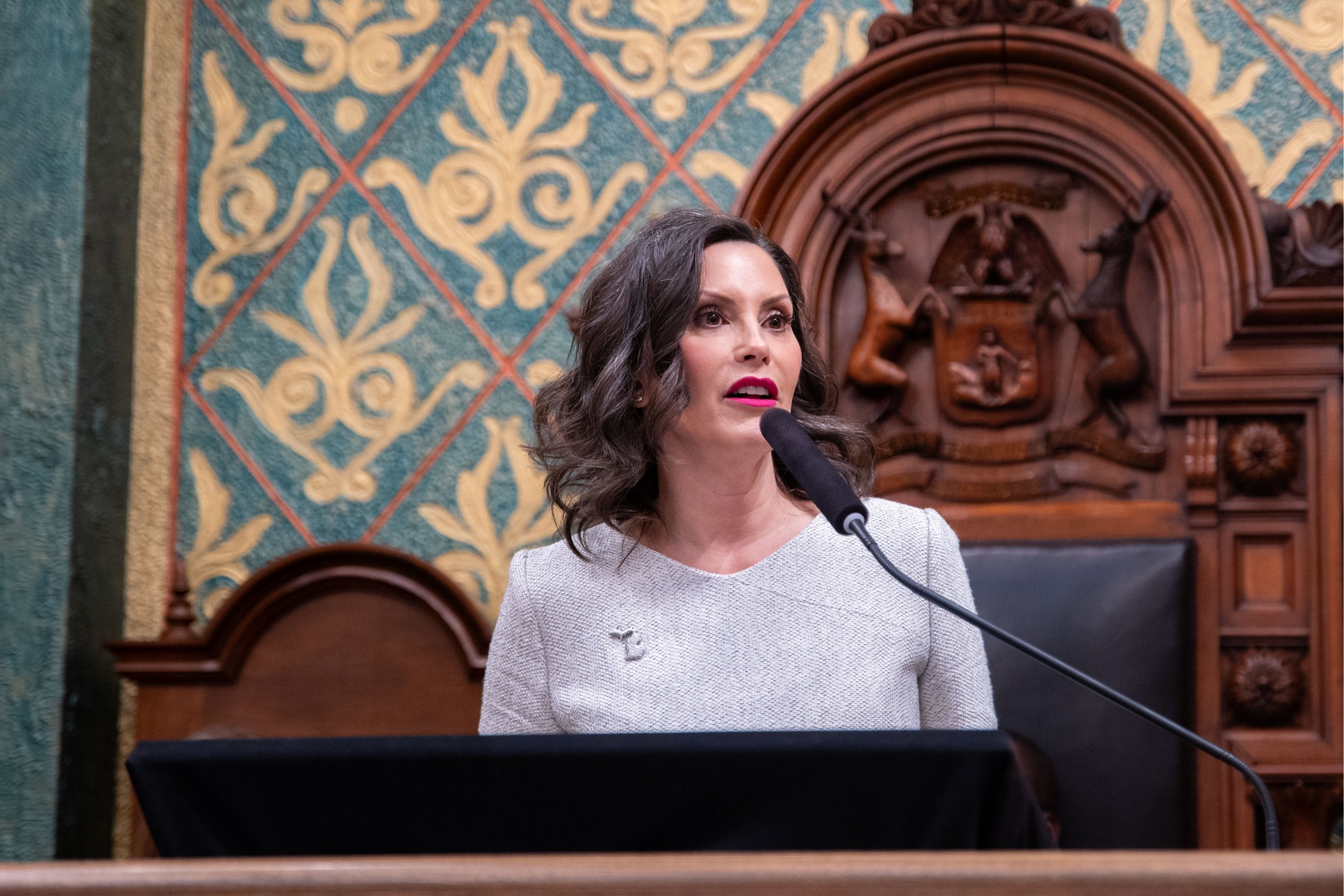
Governor Gretchen Whitmer delivered her eighth and final State of the State address on January 25, 2026, from the Michigan State Capitol’s House Chamber. In this significant address, Whitmer reviewed her accomplishments over the past two terms and outlined her goals for the remaining year of her governorship. She expressed pride in the progress made in Michigan, citing improvements in wages and GDP, a reduction in crime and overdose deaths, and initiatives like free pre-kindergarten and community college programs.
In her opening remarks, Whitmer stated, “Over the last seven years, we’ve delivered on the kitchen table issues.” She emphasized that taxes on retirement income, tips, overtime, and Social Security have been eliminated. She also noted significant infrastructure improvements, including the repair of roads and the replacement of lead pipes, while highlighting that more people have moved to Michigan from other states than at any time since the early 1990s.
Despite these achievements, Whitmer identified three key areas needing attention: increasing literacy rates, enhancing affordable housing, and addressing medical debt. She called for bipartisan cooperation to tackle these issues amid a politically charged environment. “We’re all exhausted by the endless division,” she remarked. “But despite these national challenges, Michiganders can show the way forward.”
Literacy Initiatives and Investments
A central focus of Whitmer’s address was the state of literacy in Michigan. Currently, fourth graders rank 44th nationally for reading scores, with boys lagging behind girls across all age groups. Whitmer emphasized the urgent need to improve literacy, stating, “Literacy is a national challenge.” She highlighted her proposed fiscal year 2027 budget, which includes $625 million for literacy support, marking the largest investment in targeted literacy efforts in Michigan’s history.
Her plan, titled Every Child Reads, aims to implement early reading instruction using proven methods and provides additional support for students who need it. “We start teaching reading earlier,” she explained, noting the critical developmental phase for young minds. “Potential is universal, but opportunity is not,” she added, underscoring the need for equitable access to educational resources.
Addressing Housing Affordability
Whitmer then shifted her focus to the pressing issue of housing affordability, citing that the median age for first-time home buyers has now risen to an all-time high of 40. Drawing on her own experience as a homeowner, she acknowledged the frustrations many Michiganders face. “In the ’90s, I bought my first house as a 28-year-old,” she reflected. “A lot has changed since then.”
She attributed the rising housing costs partly to international tariffs imposed during the previous administration, which have increased construction costs. Following the recent U.S. Supreme Court decision to strike down these tariffs, she expressed optimism for future housing initiatives. “Tariffs have raised the cost of a house by upwards of $17,000,” Whitmer noted, reinforcing the need for strategic trade policies.
To combat the housing crisis, she proposed a new affordable housing tax credit aimed at incentivizing developers to construct more affordable homes. “With a state credit, we can build thousands more homes every year,” she asserted, emphasizing that Michigan is currently the only state in its region lacking such a program.
State Representative Ann Bollin, a Republican from Brighton, expressed support for Whitmer’s proposed tax credit but also suggested exploring additional strategies to promote home ownership. “Home ownership has always been the crown jewel in the United States,” she stated, advocating for reducing bureaucratic barriers to housing development.
Healthcare Reforms and Medical Debt Relief
In addition to education and housing, Whitmer addressed the challenges in healthcare following the passage of the One Big Beautiful Bill Act in July 2025, which significantly cut funding for Medicaid and the Supplemental Nutrition Assistance Program. She urged Congress to renew subsidies under the Affordable Care Act to mitigate the impact of these cuts. “The domino effect of higher premiums and reduced services will impact us all,” she cautioned.
Whitmer proposed measures to alleviate medical debt burdens, including capping interest rates on medical debt and preventing such debt from affecting credit reports. “In Michigan, we believe that being sick or getting hurt shouldn’t also mean going broke,” she said, stressing the need for comprehensive financial assistance programs in hospitals.
Throughout her address, Whitmer reiterated her commitment to bipartisan collaboration, recalling her early experiences in a divided Michigan House of Representatives. “We’re fixing the damn roads, everywhere, thanks to the biggest bipartisan roads deal in state history,” she stated. Her message emphasized the importance of working across party lines to address the critical issues facing Michigan residents.
As Whitmer prepares to conclude her tenure, her final State of the State address serves as a reflection of her administration’s priorities and a call to action for future leaders.