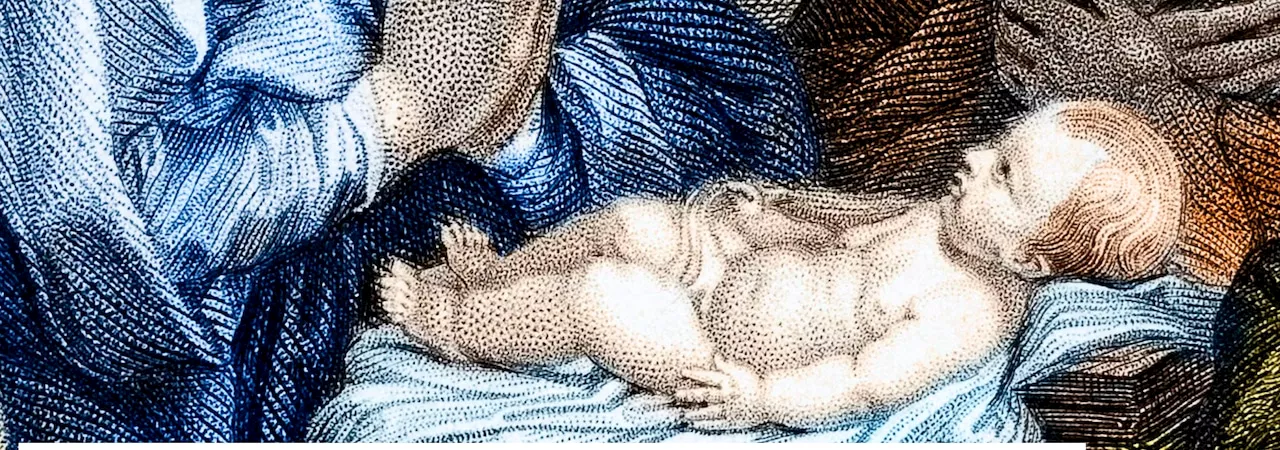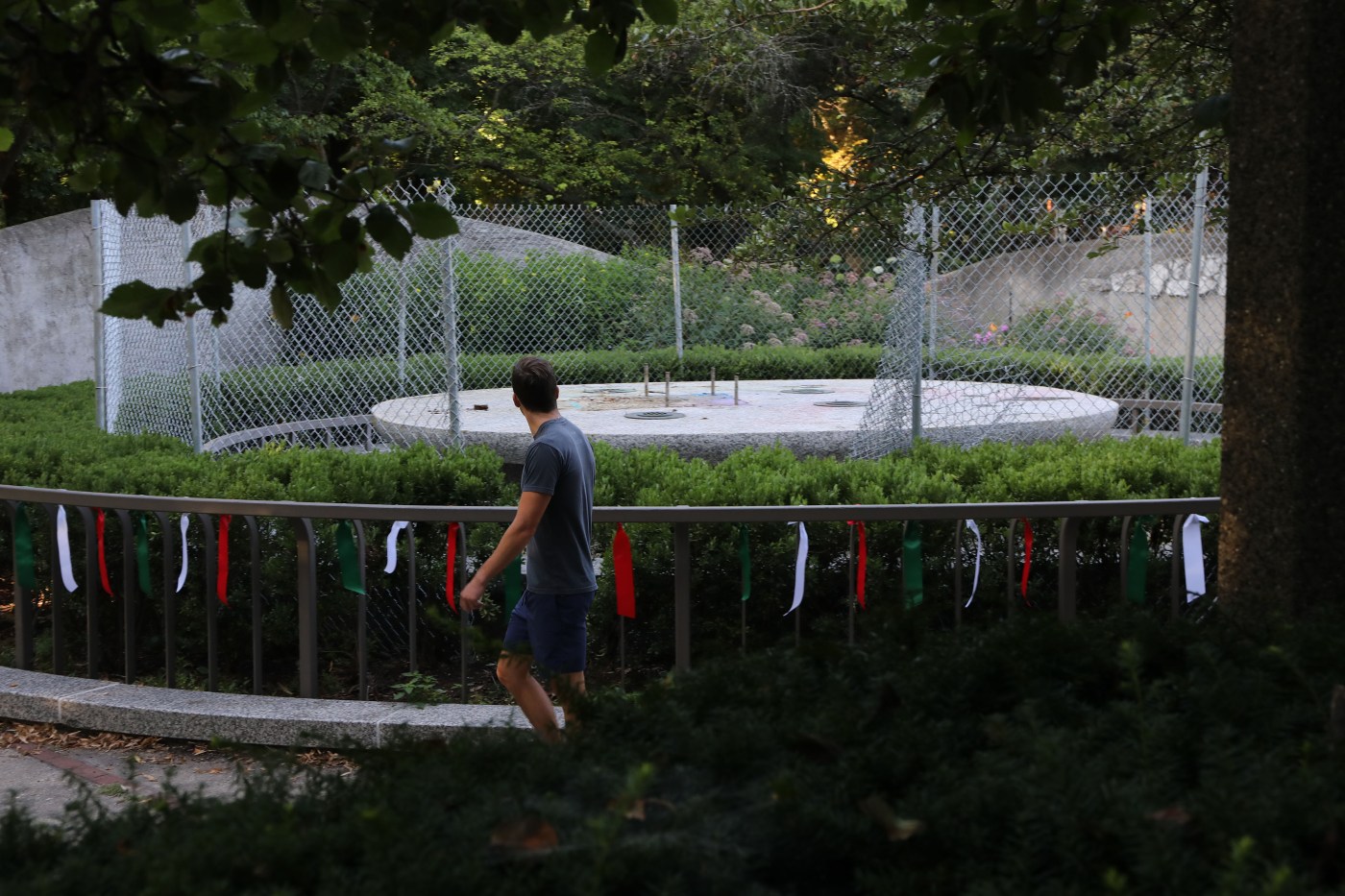
A statue of Saint Frances Xavier Cabrini will replace the removed statue of Christopher Columbus at Arrigo Park in Little Italy, according to an announcement made by city officials and the Chicago Park District on Wednesday. This decision follows a public process that saw Cabrini receiving significant support from voters as the preferred candidate for the replacement statue.
Mayor Brandon Johnson expressed his enthusiasm for Cabrini’s contributions, highlighting her legacy of founding schools, orphanages, and hospitals that served Italian immigrants in Chicago over a century ago. “Mother Cabrini really embodies what I call the soul of Chicago,” he stated during a news conference. Johnson emphasized the importance of ongoing discussions about honoring cultural heritage in the city’s diverse neighborhoods.
Cabrini, canonized in 1946, is known for her founding of the Missionary Sisters of the Sacred Heart of Jesus. Before her death in 1917 in Chicago, she established 67 orphanages, schools, hospitals, and missionary orders. The city plans to initiate a search for artist proposals for the new statue in the coming two weeks.
The removal of the Columbus statue at Arrigo Park, along with another at Grant Park, was carried out under the directive of former Mayor Lori Lightfoot amid widespread racial justice protests in 2020. Following years of political indecision regarding the future of these statues, Johnson announced in May that they would not be reinstated, opting instead for a replacement that reflects “our collective humanity.”
As part of the agreement to resolve a lawsuit filed by the Joint Civic Committee of Italian Americans regarding the Arrigo Park statue’s removal, Johnson also mentioned plans to loan the Cabrini statue to a proposed Italian immigrant museum. The larger Columbus statue’s base at Grant Park will be dismantled as part of this arrangement.
While the agreement was welcomed by some, it faced criticism from the Italian American Human Relations Foundation of Chicago, whose president, Lou Rago, described it as “cultural treason.” He argued that the deal effectively hides the statue of Columbus, representing a “burial” of its legacy rather than a return to public view.
In selecting Cabrini, Johnson defended the process as transparent and inclusive. City officials also evaluated memorials for other notable individuals, including Renato Dulbecco, Enrico Fermi, Phillip Mazzei, Maria Montessori, Florence Scala, Antonin Scalia, and Amerigo Vespucci.
The decision to honor Cabrini and replace Columbus at Arrigo Park reflects shifting perspectives on historical figures and their legacies in the context of contemporary values and community sentiments.