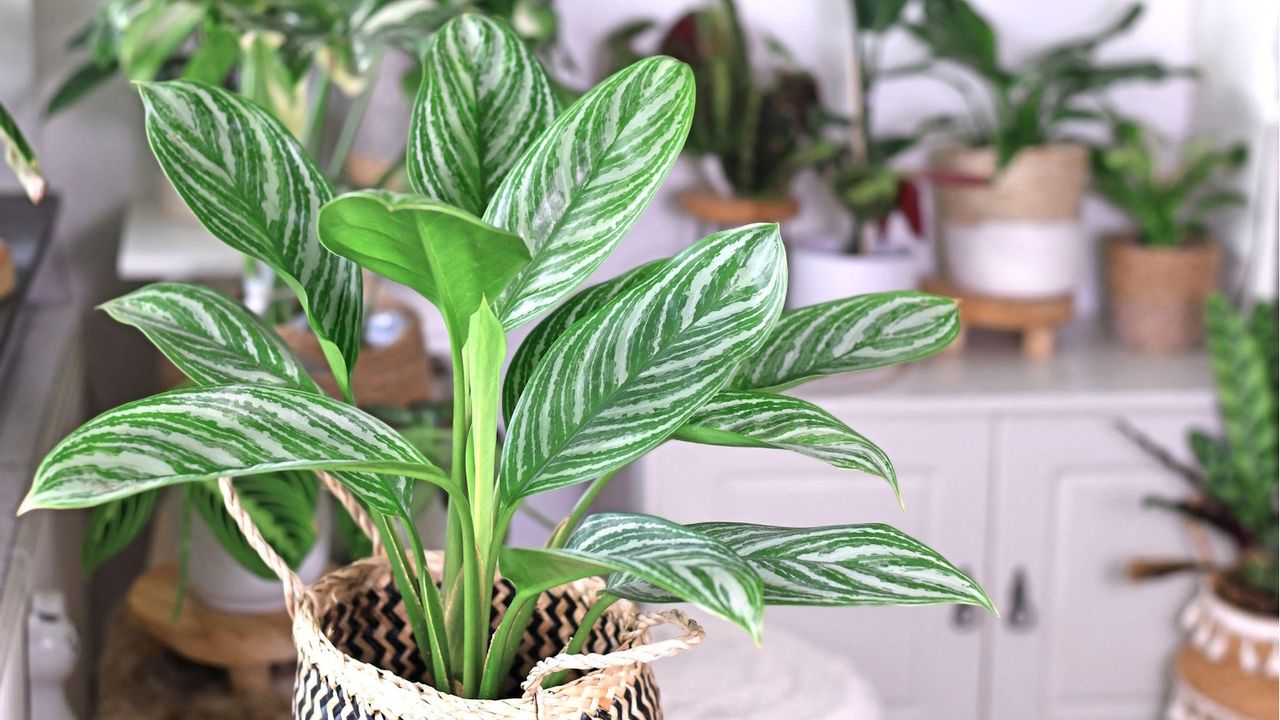
The Chinese evergreen, scientifically known as Aglaonema, is celebrated for its resilience in low-light environments and minimal care requirements. This houseplant has become a favorite among gardening enthusiasts for its ability to thrive in challenging conditions. Propagating this plant can enhance indoor green spaces, making it easy to fill darker corners of homes with lush foliage through two straightforward methods: division and cuttings.
Propagation by Division: A Quick and Effective Method
One of the most efficient ways to propagate a Chinese evergreen is through division. This method is not only quick but also yields immediate results, producing a new plant within minutes. Division is particularly beneficial if the original plant shows signs of being pot-bound, such as yellowing leaves.
To successfully divide a Chinese evergreen, the plant should be at least three years old, exhibiting multiple shoots and a well-established root system. Additionally, this process is best undertaken during the warmer months of spring and summer, as attempting it in colder conditions may reduce the chance of success.
The division process involves several key steps:
1. **Remove the Plant from Its Pot**: Gently lift the Chinese evergreen from its container. If the roots are tightly bound, carefully twist the base to loosen it, using a garden trowel if necessary. Remove excess potting soil by shaking the plant and brushing the roots.
2. **Loosen the Root Ball**: Squeeze the root ball gently to identify natural separations where individual shoots can be divided. This step is crucial for ensuring each new section has a robust root system.
3. **Separate the Clumps**: Divide the root ball at its natural separations, ensuring each clump retains a shoot or two along with a healthy root system. If the roots are tangled, use a garden knife to make cuts between sections, taking care to minimize damage.
4. **Prune Damaged Roots and Foliage**: Use sharp pruning tools to remove any damaged roots or yellowed leaves. Adhering to the one-third pruning rule for each section helps avoid shocking the plant.
5. **Pot Up Each Section**: Place each section into pots that are a couple of inches wider than the root ball. Water each plant thoroughly and position them in a bright, warm location to facilitate recovery, keeping the soil consistently moist.
Taking Cuttings: An Alternative Approach
For those with smaller Chinese evergreens, taking cuttings can be a viable propagation method. This technique can also be performed in spring and summer but may require additional warmth during the fall and winter months, possibly by using a heat mat or grow light.
The steps for propagating through cuttings are as follows:
1. **Take a Healthy Cutting**: Select firm shoots with two to three leaves, cutting about an inch below a leaf node. Ideally, the cutting should measure between four and six inches.
2. **Prepare the Cutting**: Strip the lower leaves from the stem while leaving the top leaves intact. Applying a rooting hormone can stimulate root growth, which can be found in powder or gel form.
3. **Plant the Cutting in Soil**: While water propagation is possible, rooting in soil tends to be more reliable. Fill a nursery pot with well-draining potting soil and insert the cutting, ensuring the bottom leaf node is buried. Water the base thoroughly and secure the cutting upright.
4. **Maintain Optimal Conditions**: Place the cutting in a warm, bright location and monitor moisture levels. Roots should develop within a few weeks, which can be assessed by gently tugging on the stem.
These propagation methods can be applied to various types of Chinese evergreens, including popular varieties like the classic Crystal Bay and the vibrant Wishes. By following these straightforward techniques, enthusiasts can expand their collection of this hardy houseplant, bringing greenery to their indoor spaces.