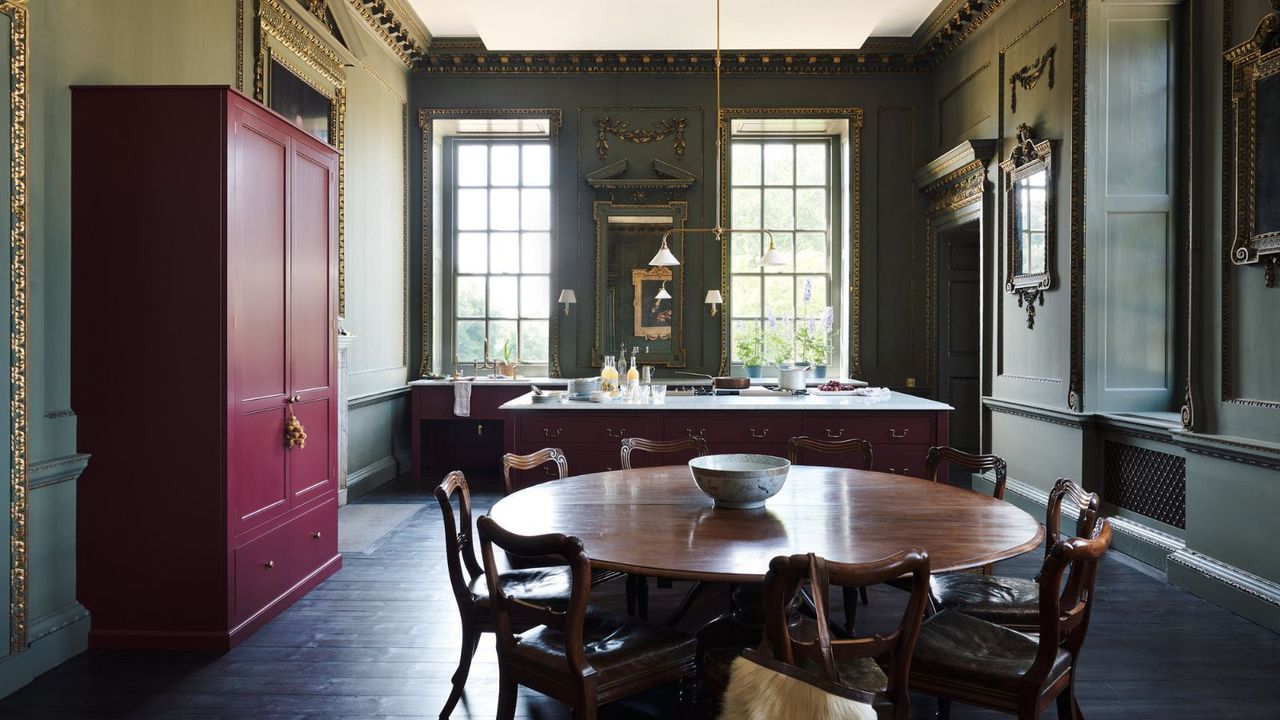
In a remarkable renovation, the kitchen of the historic Raynham Hall in England has been transformed to harmonize modern functionality with the home’s storied past. The project, led by Francesca Froggatt, head kitchen designer at deVOL Kitchens, demonstrates how to effectively incorporate two of 2026’s leading color trends while respecting the property’s heritage.
Raynham Hall, classified as a Grade I listed building, has interiors largely unchanged since the 1700s. This unique project began with a kitchen that had previously served as an occasional function room, requiring a complete redesign to create a family-friendly space for owners Octavia and Tom.
Preserving History While Embracing Modern Needs
The kitchen’s renovation faced strict limitations due to its listed status. As Froggatt explains, “The decoration is part of the listing, meaning every surface, including intricate gilding, ornate carvings, grand fireplaces, and wall paintings, had to remain untouched.” The original green paint color on the walls was carefully restored with the help of experts from Edward Bulmer Paint to ensure historical accuracy.
With the green walls providing a dramatic backdrop, Froggatt and her team selected a deep red for the cabinetry, named Refectory Red. This choice adds warmth without clashing with the room’s historic features. “The combination feels both bold and harmonious, bridging the old and the new in a way that feels completely natural within the setting,” she notes.
The fusion of colors creates a cozy atmosphere, countering the grandeur of the room with an inviting and functional design. The rich green walls and deep red cabinetry enhance the kitchen’s intimacy, transforming it from a ceremonial space into a welcoming area for family gatherings.
Innovative Solutions for a Historic Space
The design team faced additional hurdles, such as the inability to attach cabinetry or appliances to the historic woodwork or stone walls. Everything had to be free-standing, ensuring the original fabric of the home remained intact. Froggatt recalls, “Every piece of cabinetry had to be designed to sit sympathetically within the room without disturbing its historic fabric.” The family opted to keep their large refrigerator and freezer in an adjoining pantry, which preserved the kitchen’s unobtrusive aesthetic.
With limited wall space for cabinetry due to decorative features, the design incorporated a freestanding breakfast cupboard, allowing the kitchen to maintain an intentionally minimal and elegant layout. This strategic approach allows the room’s historic detailing, such as gilded carvings and expansive windows, to remain prominent and appreciated.
Froggatt emphasizes, “The Shaker cabinet design, painted in rich tones, brings a sense of functionality and calm to the room.” This balance between simplicity and opulence ensures that the kitchen not only serves modern family life but also respects the character of Raynham Hall.
Lighting played a critical role in shaping the kitchen’s inviting atmosphere. The team introduced warm tones and strategically placed fixtures to make the vast space feel intimate. “By introducing warm tones, carefully considered furniture placement, and beautiful lighting, we helped to bring the scale down and make it feel more intimate,” Froggatt explains.
The overall design achieves a masterful balance, allowing the kitchen to feel less like a traditional cooking space and more like a cozy gathering area. The round dining table, surrounded by antique chairs, invites family interaction, making it a curated, welcoming environment.
In this historic renovation, Raynham Hall showcases how thoughtful design can bring together unexpected color combinations while maintaining a deep respect for the past. With careful consideration of both aesthetics and functionality, the kitchen stands as a testament to the successful blending of history and modernity, inviting the family to enjoy a space that is at once timeless and contemporary.