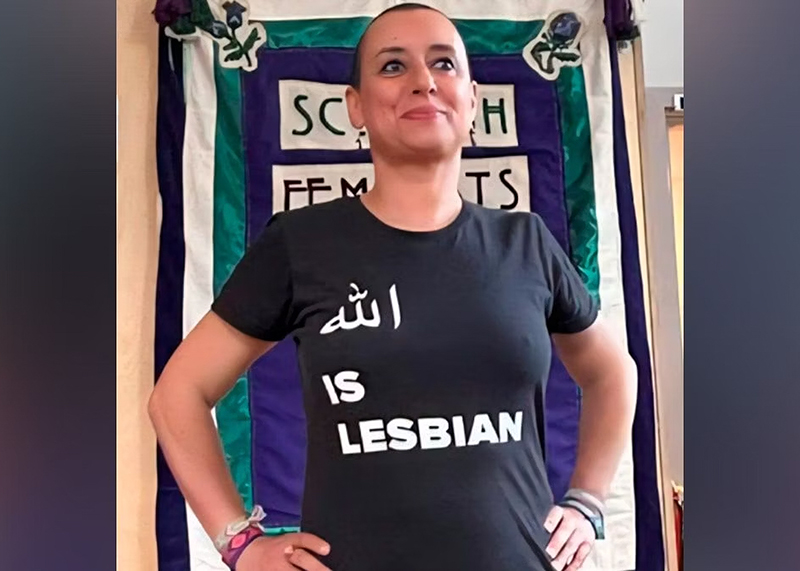
Ibtissame “Betty” Lachgar, a Moroccan lesbian activist, is facing the possibility of having her arm amputated due to deteriorating health conditions while incarcerated. The 50-year-old was sentenced to two-and-a-half years in prison in September 2022 after posting a photo on Facebook wearing a T-shirt that read “Allah is a lesbian.” Authorities deemed the post offensive to Islam, prompting significant backlash from conservative factions in the country.
Lachgar’s provocative statement, intended as a form of protest, ignited outrage among religious conservatives, some of whom called for her imprisonment or even death. The Moroccan legal system criminalizes insults to Islam and has strict penalties for such actions, which can include up to five years in prison and fines of up to 500,000 dirhams (approximately $136,130).
Despite these legal pressures, Lachgar’s lawyers contend that her conviction violates Morocco’s 2011 constitution and international treaties that safeguard freedom of expression. A notable aspect of her situation is her medical history; Lachgar is a survivor of bone cancer and uses a prosthesis. Reports indicate that she has sustained a fractured elbow while incarcerated at Salé prison, located just outside Rabat.
Health Deterioration and Human Rights Concerns
Human rights organizations, including Amnesty International, have raised alarms about the treatment of prisoners at Salé prison, alleging physical abuse and torture by guards. Family members and legal representatives of Lachgar assert that her medical needs are not being adequately addressed, raising fears that she may require amputation without proper medical intervention.
“She has spent six months sleeping on a cold floor with a broken window and no mattress,” stated a representative from Avaaz, a nonprofit organization that has launched a petition calling for her release. The petition has amassed nearly 400,000 signatures, marking it as one of the largest movements targeting Moroccan authorities in the last decade.
“The decline in Ibtissame Lachgar’s health is alarming,” said Ghizlane Mamounti, one of her lawyers. “Her prosthesis has completely dislodged and she is only being treated with paracetamol for her injuries, despite requiring complex surgery.”
Lachgar, a psychologist and a co-founder of the Alternative Movement for Individual Freedoms, has long been an advocate for personal liberties, including women’s rights and LGBTQ+ equality. Her activism has frequently placed her in conflict with Moroccan authorities. The T-shirt that led to her blasphemy conviction was worn in solidarity with two LGBTQ activists in Iran who were sentenced to death for promoting homosexuality and communicating with foreign media.
Calls for Justice and Inhumane Treatment
Lachgar’s legal team argues that her solitary confinement and the conditions of her detention are punitive and violate both Moroccan law and international human rights standards. “By keeping Betty in solitary confinement, she is being treated like a violent criminal when her only ‘crime’ is having worn a T-shirt bearing a slogan in support of two Iranian women sentenced to death,” Mamounti emphasized.
Her sister, Siham Lachgar, expressed the broader implications of her sister’s imprisonment, stating, “This punishment isn’t about her actions, but about what she stands for. It shows that, even today, you can be jailed simply for thinking differently.” Each day Lachgar spends behind bars is viewed as another injustice and a setback for freedom in Morocco.
As international attention grows regarding Ibtissame Lachgar’s plight, calls for her urgent release continue to escalate. Advocates emphasize that her case is not only about her personal freedom but also reflects broader issues of human rights and freedom of expression within Morocco.