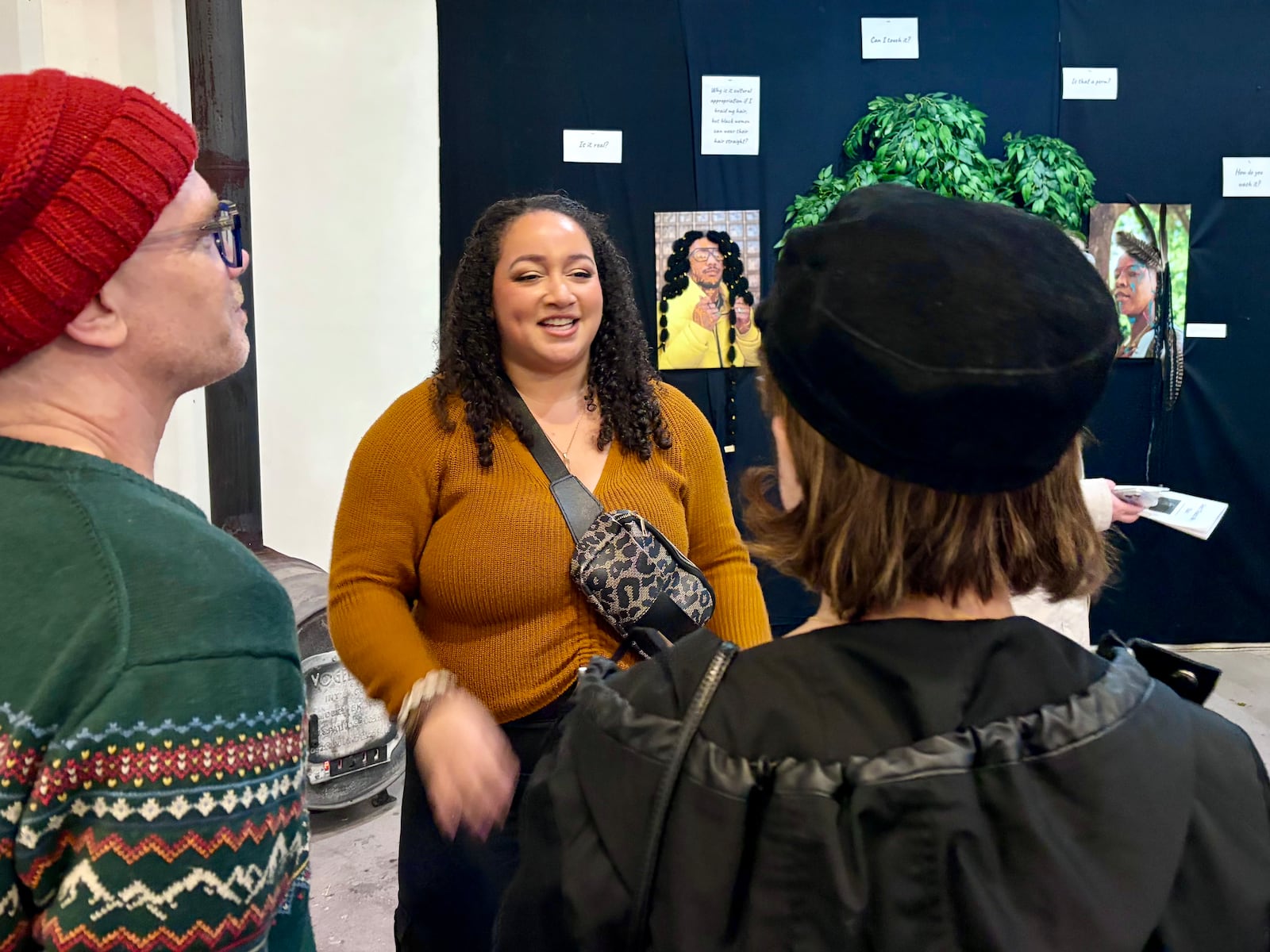
Ashland artist Crystal Proffitt has launched a provocative exhibition titled “Don’t Touch My Hair: An Interactive Crowned Experience” at the Langford Art Gallery in southern Oregon. Debuting on January 3, 2024, the installation invites visitors to engage with the artwork in a manner that directly contradicts its title—urging them to touch carefully arranged strands of hair attached to portraits of local Black models.
The exhibit features six models whose hair is styled in braids and locs. As gallery-goers handle these artworks, they also listen to the models’ voice recordings. The recordings explore the cultural significance of hair as an ancestral practice tied to identity and resilience. One model described hair as “my soul signature,” while others shared experiences of scrutiny and unsolicited touching by strangers. Proffitt’s installation aims to facilitate a critical dialogue about the often-overlooked beauty of textured hair and the ongoing challenges surrounding identity and cultural visibility.
Art as Activism
Proffitt, who has experienced the complexities of managing her own textured hair, emphasizes that hair is a personal crown, not merely a subject for public curiosity. She notes that many people perceive textured hair as unprofessional, which can lead to career disadvantages. “Hair that can make a person feel beautiful, important, attractive, and loved is often dismissed,” she stated.
Supported by a grant from the Oregon Cultural Trust to the Black Alliance & Social Empowerment (BASE) organization, Proffitt’s installation has gained traction as a vital platform for discussing hair bias. Vance Beach, founder and executive director of BASE, expressed that Proffitt’s work invites viewers to “come with care and a willingness to grow” in their understanding.
The exhibition runs until January 24, 2024, before joining BASE’s third annual Black Cultural Legacy Series, celebrating Black History Month from January 17 to February 27 at the Rogue Gallery & Art Center in Medford.
A Multi-Sensory Experience
A central feature of the installation is an Ancestor Tree, which illuminates when viewers interact with it using the attached braids. Proffitt explained that through this interaction, hair becomes a medium to express identity and resilience. “The illumination isn’t created magic,” she said, “but rather referencing truths our ancestors knew.”
Proffitt’s installation is not only visually striking but also serves as an educational tool. It connects to broader cultural narratives found in art, literature, and music, including songs by Nina Simone and Solange Knowles that address the policing of Black hair. The urgency of these conversations has gained momentum, particularly since the passage of the CROWN Act in Oregon, which aims to protect individuals from bias based on their natural hairstyles.
Despite legislative progress, many still face discrimination; a 2023 study by the CROWN Coalition revealed that two-thirds of Black women modify their hairstyles for job interviews, often opting for straightened hair. This ongoing bias underscores the relevance of Proffitt’s art as a form of activism.
Through her artistic vision, Proffitt collaborates with photographer Ally White and multimedia artist Micah Blacklight to create an immersive experience that combines visual elements with audio narratives. The models in the portraits maintain a direct gaze, inviting viewers into their experiences.
During a discussion at the gallery, White remarked on her approach to capturing the models’ authenticity, while Blacklight added that his enhancements to the portraits were meant to reinforce Proffitt’s message of empowerment.
As visitors engage with the installation, they hear stories from the models, including Jaalen Owens, who recalls the impact of messages like “Don’t Touch the ‘Fro” during his school years. Another model, CJ Thomas, reflects on a moment when her hair was misidentified and touched without consent, highlighting the emotional weight of these interactions.
Proffitt’s innovative approach to the subject matter seeks to spark conversation and encourage reflection on the importance of hair as a cultural marker. “This erosion is part of the meaning,” she stated, referring to the wear that the hair will accumulate from visitor interaction. “It’s a quiet reminder of what happens to things that are meant to be treated with care, yet are not always handled as such.”
The exhibition is free and open to the public, although some special events may have a cover charge. For those in the area, “Don’t Touch My Hair: An Interactive Crowned Experience” offers a unique opportunity to engage with the complexities of identity and the significance of cultural expression through hair. The Langford Art Gallery is located at 4850 S. Pacific Highway in Phoenix, Oregon.