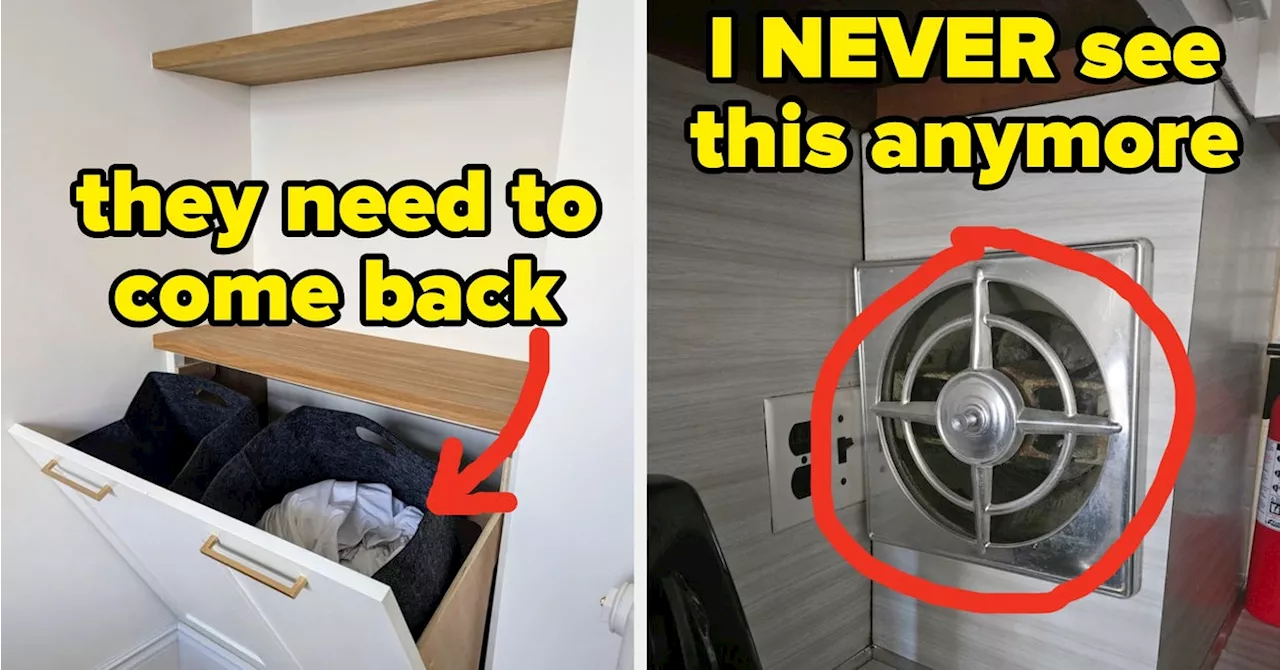
There is a growing call among homeowners to revive certain home design trends from the past, with many arguing that these features offer superior functionality compared to contemporary styles. Readers have expressed their preferences for elements such as built-in clothes hampers, Formica countertops, and dedicated laundry rooms. They believe these older trends enhance ease of use and practicality in everyday life.
One of the most frequently mentioned features is the built-in clothes hamper, which allows users to conveniently toss dirty clothes into a hidden compartment before showering. This design not only saves floor space but also eliminates the need to move a standalone hamper for cleaning purposes. As one reader noted, “Just toss your dirty clothes in before your shower. Plus, it doesn’t take up floor space or have to get moved for mopping.”
Another feature gaining traction is the classic Formica countertop. Many readers argue that while modern stone surfaces are visually appealing, they can be prohibitively expensive and require maintenance to keep them safe for food preparation. “Formica is inexpensive, easy to clean, and requires no maintenance,” one commenter stated. They emphasized that kitchens should prioritize functionality and ease of cleaning over aesthetic luxury.
The discussion also highlighted the appeal of traditional layouts with separated rooms. Readers reminisced about homes from the 1950s that featured distinct living areas, allowing for privacy and comfort. “When I’m relaxing with a book in the living room or watching TV in the family room, I don’t want to see the kitchen,” a reader explained, advocating for walls and doors that create defined spaces.
Dedicated laundry rooms are also a priority for many, as they facilitate the separation of dirty clothes from living areas. In one reader’s experience, access to a mudroom made it easy to remove soiled items before entering the main part of the house. “In USR, the laundry room opened onto the kitchen, and the garage was attached; it was easy to remove dirty clothes and put them in the washing machine,” they shared.
The trend towards larger, open showers has also drawn criticism. Many readers prefer smaller, more manageable shower spaces, which are easier to clean and maintain. “These huge showers for, like, eight people are drafty, cold, and ridiculous to clean,” one reader remarked. They suggested that a shower should be spacious enough for two people or accessible for those with mobility challenges, but not excessively large.
The desire for front-of-house living rooms has also surfaced, with some lamenting the trend of converting these spaces into bedrooms. “My dream is to have my Christmas tree visible from the front window, and there just aren’t houses made like that anymore,” a reader expressed, highlighting the nostalgic value of such designs.
Additional features mentioned include walk-in pantries for ample storage, wood-burning fireplaces for warmth and ambiance, and spacious porches that invite outdoor living. “Old farmhouses had pantries off the kitchen with a plethora of space to store canned and dried goods,” one participant noted, emphasizing the practicality of these features.
The demand for built-in storage solutions has also been a focal point. Many readers shared experiences from their childhood homes, which featured cleverly designed storage spaces that eliminated the need for external storage units. “If a house has built-in storage, such as real closets and drawers, you don’t need storage units,” one commenter mentioned, reinforcing the importance of thoughtful design.
As discussions about these outdated yet beloved design features continue, it is clear that many homeowners are advocating for a return to practicality over luxury. The appeal of features that offer functionality, ease of maintenance, and comfort resonates strongly with those who cherish the values of past home designs.
Overall, the conversation reflects a desire for homes that are not only aesthetically pleasing but also genuinely livable. Readers are encouraged to share their thoughts on which outdated home design trends they believe deserve a comeback.