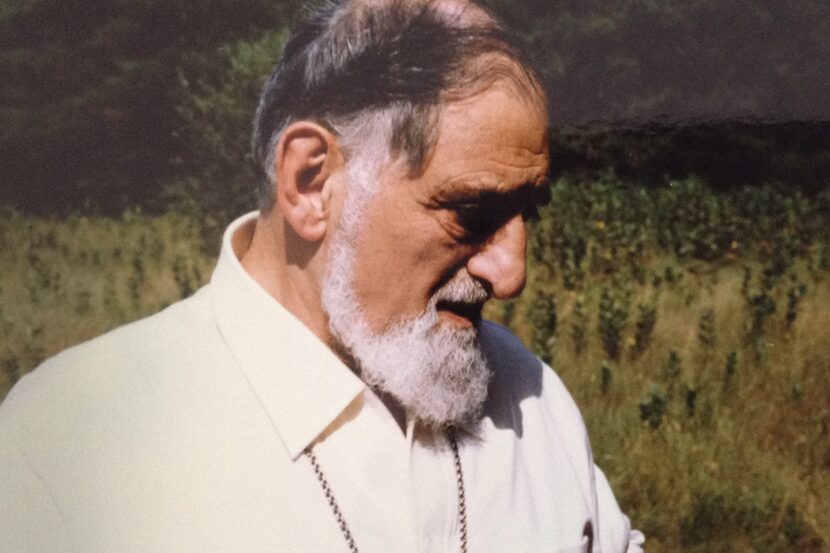
Father Joseph Raya, a renowned Melkite Catholic priest and advocate for peace, played a pivotal role in bridging divides in the Middle East and the United States. Born in 1951 and baptized shortly thereafter, he became a godfather figure to many, sharing Lebanese cultural traditions through food and faith. His journey began in Lebanon’s Zahlé, where he was the seventh of eight children born to Almez and Mikhail Raya.
Raya studied in Paris and was ordained a priest in Jerusalem on July 20, 1941. His early career took him to Cairo, Egypt, where he was expelled by King Farouk for defending women’s rights. Eventually, he moved to the United States, becoming an assistant pastor at St. Ann’s Melkite Catholic Church in Woodland Park, New Jersey. It was during a church picnic that he met the family of his future godchild, establishing a bond that would last a lifetime.
As discussions around liturgy in the language of the people emerged, Father Raya played a crucial role. He guided the translation of the Greek liturgy into what became the widely used Byzantine Daily Worship in Melkite churches across the nation. His commitment to social justice continued as he became pastor of St. George’s Melkite Church in Birmingham, Alabama. During this time, he marched alongside civil rights leader Rev. Martin Luther King Jr. and faced violence from the Ku Klux Klan for his activism, enduring brutal beatings for standing up for equality.
On October 20, 1968, Father Raya was elevated to the position of Archbishop of Akko, Haifa, Nazareth and All Galilee. In Israel, he tirelessly worked to reconcile the divide between Arab and Jewish communities, emphasizing a message of love and unity. His efforts to promote spiritual renewal and forgiveness, while impactful, led to tensions with Vatican leadership and some members of both communities.
During a lecture at Madonna House in Ontario, Archbishop Raya expressed his belief in the power of peacemakers, saying, “Do you know what the Lord says about peacemakers in the world? They are children of God.” His advocacy for beauty, art, and compassion underscored his message that those who alleviate suffering are participating in the divine work of God.
Raya’s spirit was evident in his interactions with children. His godchild recalls the warmth of his visits, where laughter and joy filled their home. “I am home,” he would declare as he entered, bringing with him not only Lebanese delicacies but also a sense of belonging and love.
Today, the world faces significant challenges, including deep-rooted racial prejudices and socio-economic inequalities. The struggles between Arab and Jewish communities continue, as does the fight for women’s rights globally. Reflecting on his godfather’s life, one can draw inspiration from his commitment to love and unity.
During a lecture in St. Paul and Minneapolis, Archbishop Raya passionately stated, “Those who acknowledge goodness, or re-create it, are acknowledging and singing that God is real and permanently present.” His call for kindness and togetherness remains relevant.
As we navigate a world filled with division, the legacy of Father Joseph Raya encourages us to foster understanding and compassion. The invitation to embrace one another, share cultural traditions, and engage in meaningful dialogue is a testament to his enduring message. His life exemplifies the possibility of unity in diversity, reminding us that we can all strive to welcome each other into our homes and hearts.
In the spirit of Archbishop Raya, we are challenged to keep trying, to giggle and laugh together, and to build bridges of love that transcend barriers.