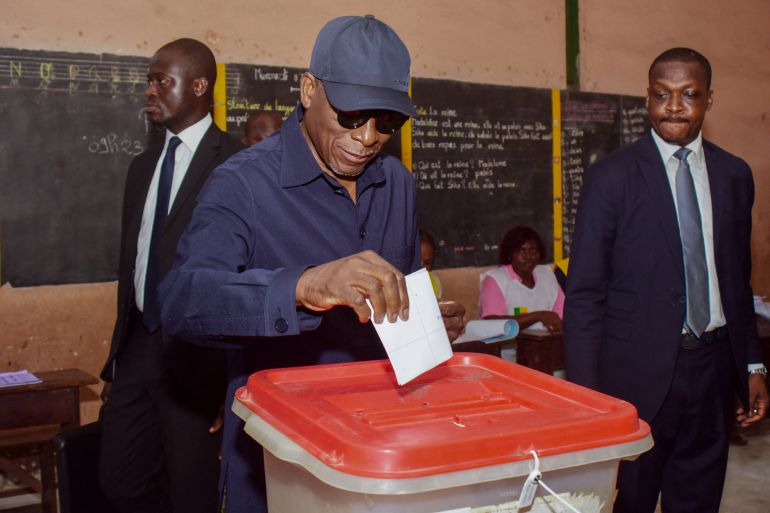
Provisional results from Benin’s recent legislative elections indicate that President Patrice Talon’s ruling alliance has gained complete control of the National Assembly. Announced by the electoral commission on Saturday, January 11, the results reveal that only two out of five participating parties secured seats: the Progressive Union for Renewal and the Republican Bloc, both aligned with Talon.
The Progressive Union for Renewal will occupy 60 seats, while the Republican Bloc will hold 49. Under a new electoral code, parties must achieve at least 20 percent of the national vote and 20 percent in each of the 24 electoral districts to qualify for seat allocation. The main opposition party, The Democrats, garnered approximately 16 percent of the vote, failing to meet the required thresholds.
This outcome significantly enhances the presidential bloc’s position ahead of the upcoming presidential election scheduled for April. Although Talon, who has governed the nation for a decade, cannot seek re-election due to term limits, his chosen successor, Romuald Wadagni, the current finance minister, is expected to assume leadership.
The Democrats find themselves in a precarious situation, as they are unable to participate in the presidential election after failing to secure sufficient signatures for registration. This restriction has also prevented them from contesting the local elections that coincided with last week’s legislative polls.
According to Guy Mitokpe, spokesperson for The Democrats, “These results confirm the struggle that [The Democrats] party has been waging for about two years. We denounced this electoral code, saying that it heavily favoured parties aligned with the president. It’s an exclusionary electoral code.” Mitokpe emphasized that, as a result, the party will not have a candidate in the presidential election, highlighting the ongoing challenges they face.
Voter turnout for the elections was recorded at 36.7 percent, comparable to the 37 percent turnout during the previous legislative elections in 2023. This recent vote followed a brief but deadly military coup attempt on December 7, 2023, which authorities reported had been successfully thwarted.
The legislative elections also occurred in the context of a constitutional reform enacted in November, which extended the presidential term to seven years while maintaining a two-term limit. As the political landscape in Benin continues to evolve, the implications of this electoral outcome will likely shape future governance and electoral dynamics in the country.