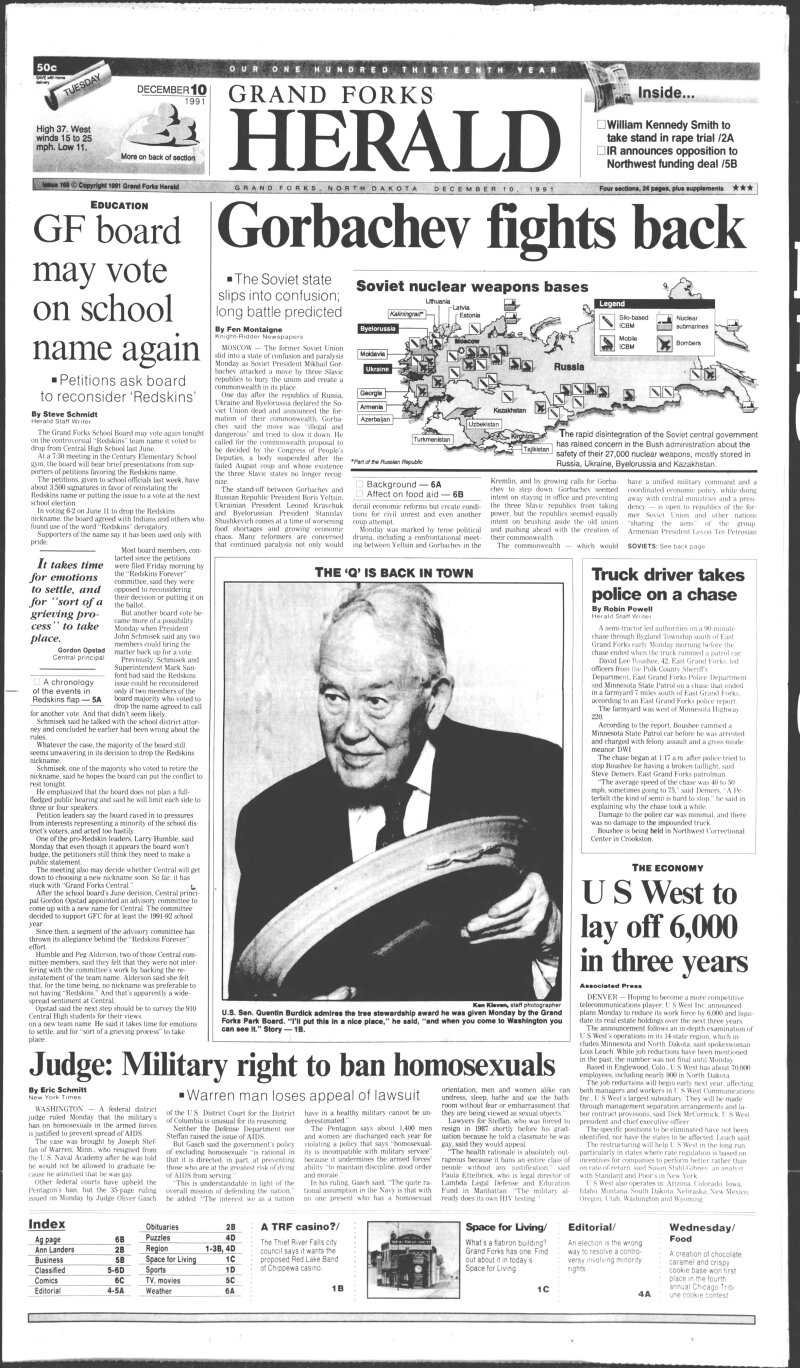
President George H.W. Bush faced increasing pressure to enhance aid to the struggling Soviet Union during a turbulent period in its history. On December 10, 1991, John White, the leader of the Illinois Farm Bureau, emphasized the significance of supporting Soviet farmers, highlighting the Soviet Union’s value as a crucial market for American agriculture, particularly corn.
In his address to approximately 3,000 attendees at the Farm Bureau’s 77th annual meeting, White underscored that the Soviet Union had previously been a substantial customer, purchasing up to $17 billion worth of corn in the 1970s and 1980s. He stated, “In some years, nearly 30 percent of corn exports went into this market.” His remarks were intended to persuade President Bush to take decisive action to provide more assistance to the faltering economy.
The International Wheat Council also expressed alarm over the potential consequences of withholding aid. The organization warned that a refusal to extend $19.4 billion in credit assistance could jeopardize vital export channels for grain and other food imports. The council noted that the prospect of total economic collapse in the Soviet Union could create even more severe financial challenges for exporting nations. “A refusal to extend further help could mean the loss of the exporting nations’ most important outlet,” the council stated.
White argued that the long-term aim of providing aid should focus on creating conditions that allow for a transition to market systems, emphasizing the need for unsubsidized credit and commercial sales. He believed that supporting Soviet agriculture was not only an act of humanitarian aid but also an investment in stabilizing a critical trading partner.
Nevertheless, some critics voiced strong opposition to the idea of prioritizing foreign aid over domestic agricultural concerns. David Senter, the director of the American Agriculture Movement, criticized President Bush for allocating significant funds to the Soviets while simultaneously threatening to veto even a minimal increase in domestic dairy support. “He has not put one plan forward to deal with domestic problems in America,” Senter remarked. “He is disengaged. He doesn’t care about domestic programs, particularly in rural America.”
As the debate unfolded, the urgency of the situation in the Soviet Union became increasingly clear. With the nation facing severe economic hardship and the potential for destabilization, the call for additional support from the United States highlighted the complex interplay between international humanitarian efforts and the pressing needs of American farmers. The outcomes of these discussions would have lasting implications not only for the Soviet Union’s agricultural future but also for the landscape of American agriculture in the years to come.