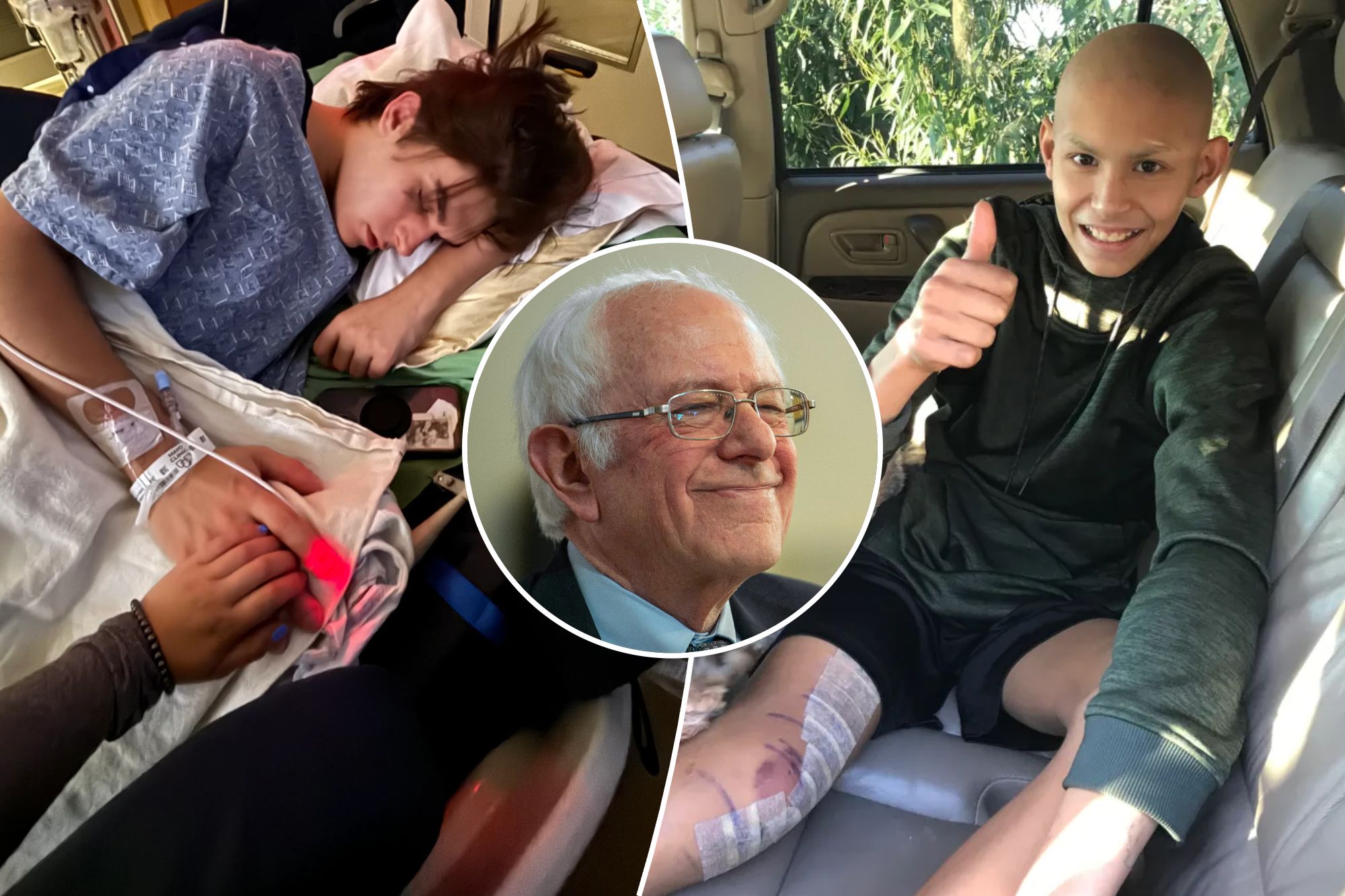
Young cancer patients are appealing to Senator Bernie Sanders to support the passage of the Mikaela Naylon Give Kids a Chance Act, a vital piece of legislation aimed at improving access to treatment and clinical trials for children battling cancer. The bill, which passed unanimously in the House, was unexpectedly blocked in the Senate by Sanders, causing frustration among advocates and families affected by pediatric cancer.
Jacob Knudsen, an 18-year-old student at California State Long Beach, is among those advocating for the bill. Recently diagnosed with potential lung cancer, Knudsen has spent the past seven years fighting osteosarcoma, a type of bone cancer. He has undergone 21 surgeries and extensive chemotherapy, and he is determined to prevent other children from experiencing similar struggles. “I’m willing to do anything just to survive,” he said, reflecting on the challenges he has faced.
The Mikaela Naylon Give Kids a Chance Act is named after a young cancer patient who passed away last year. The legislation is designed to ensure that pediatric cancer patients have access to innovative treatments and can participate in clinical trials. According to Nancy Goodman, executive director of Kids V Cancer, the bill would facilitate the conduct of promising clinical studies and incentivize pharmaceutical companies to develop new, potentially curative drugs.
Despite its bipartisan support, the bill faced an unexpected hurdle when Sanders insisted on attaching additional conditions related to funding for community health centers. Critics have labeled Sanders’ actions as “evil,” arguing that they delay critical support for children suffering from cancer. Goodman expressed her disappointment, stating, “How can we say Congress is functioning if it can’t pass the easiest bill that one can ever imagine?”
In the wake of the setback, Knudsen and other young advocates are urging Sanders to reconsider. “You have a chance to be a hero,” he implored, emphasizing the urgency of the situation. The emotional weight of their plea is underscored by the harsh realities faced by pediatric cancer patients.
Another young advocate, Anderson Coy, 21, who is battling a rare brain cancer known as Diffuse Intrinsic Pontine Glioma (DIPG), echoed Knudsen’s sentiments. Diagnosed last summer, Coy and his mother, JuliAn Coy, are committed to supporting the legislation. JuliAn expressed frustration over the lack of progress in treatment options since the 1960s, noting that the survival rate for DIPG is less than 2%. “It’s been extremely devastating for our family,” she said, highlighting the critical need for legislative support.
Throughout his battle with cancer, Knudsen has remained resilient. He graduated from high school on time and managed to obtain his driver’s license after multiple attempts. His determination is now focused on ensuring that the Mikaela Naylon Give Kids a Chance Act becomes law, which he describes as an investment in the future. “The sooner we pass acts like this, the more lives we save,” he stated passionately.
The bill’s potential to advance medical research and provide hope to young patients has rallied support from various quarters. Families like those of Knudsen and Coy are calling on lawmakers to prioritize the health and well-being of children facing life-threatening illnesses. As discussions continue in Congress, advocates remain hopeful that renewed efforts will lead to the bill’s passage, ultimately saving lives and improving outcomes for pediatric cancer patients across the country.