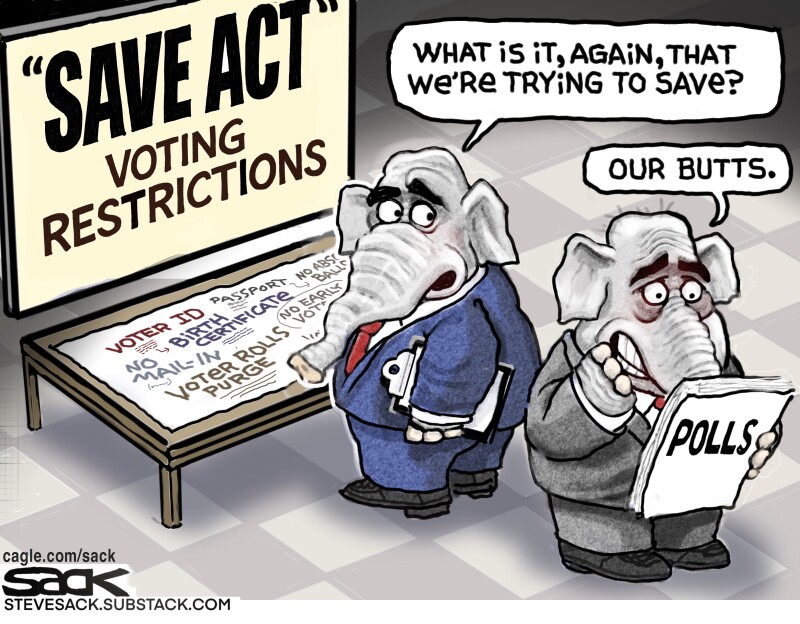
Concerns over the constitutionality of the proposed Safeguard American Voter Eligibility (SAVE) Act are intensifying as it moves closer to a vote in the Senate. The legislation, which has garnered support from President Donald Trump, has passed the House and reportedly has backing from 50 senators. Critics argue it poses significant risks of voter suppression.
Claims of Voter Fraud Under Scrutiny
President Trump has repeatedly asserted that U.S. elections suffer from widespread fraud, particularly claiming that noncitizens are participating in the voting process. However, this assertion lacks support from election officials across the nation. According to various studies, including one conducted by the Heritage Foundation, there is no substantial evidence to substantiate claims of noncitizen voting.
In a recent interview on the Dan Bongino Show, Trump expressed his belief that the Republican Party should nationalize voting procedures. Yet, the facts indicate otherwise. Julie Wise, King County Elections Director, noted that in a review of 12 potential voter fraud cases in the 2024 presidential election, none involved noncitizens casting votes. This highlights the unfounded nature of claims regarding noncitizen voter participation.
Impact of the SAVE Act on Voter Registration
The SAVE Act would impose new requirements for voter registration, mandating that individuals provide either a birth certificate or a U.S. passport to verify citizenship. Critics argue this is not a measure to enhance election integrity, but rather a strategy to suppress voter turnout. Approximately 49% of Americans do not possess passports, and the costs associated with obtaining necessary documents could deter eligible voters from registering.
Military families would also face challenges under the new legislation, as they would need to present citizenship documentation each time they re-register after moving. In Washington alone, the impact could be significant, given that around 2.8 million residents lack passports. Additionally, 1.6 million women in Washington who have changed their surnames may not have identification that matches their birth certificates, creating further barriers.
Concerns extend beyond access. Julie Wise emphasized that the implementation of such changes would be costly and nearly impossible to execute in time for the upcoming August primaries. “There’s zero funding to do this,” she stated, reflecting on budget cuts that affected her department last year.
Members of Congress who view their election as valid and free from fraud are urged to consider the implications of the SAVE Act. Maintaining the integrity of the existing voting system is crucial for upholding democratic processes. The Seattle Times Editorial Board, which has expressed opposition to the legislation, encourages lawmakers to reject the bill to preserve accessible voting for all citizens.