The US Court of Appeals for the Second Circuit has remanded a significant Digital Millennium Copyright Act (DMCA) case involving photographer Elliott McGucken and digital media platform Shutterstock Inc.. The court dismissed McGucken’s claims related to a lack of scienter but vacated a summary judgment concerning his copyright infringement allegations. This decision, issued on February 10, 2026, emphasizes the complexity of DMCA safe harbor protections and the responsibilities of service providers.
McGucken, a professional photographer, discovered that hundreds of his copyrighted images had been uploaded to Shutterstock through three user accounts. These accounts generated over $2,000 in licensing revenue before the images were removed. Shutterstock acted quickly, removing the photographs within four days of receiving takedown notices and terminating the accounts responsible for the uploads. Despite this, McGucken filed a lawsuit, citing copyright infringement under 17 U.S.C. § 106 and false copyright management information (CMI) under 17 U.S.C. § 1202.
Initially, the district court ruled in favor of Shutterstock, granting summary judgment on all claims. McGucken then appealed the decision, prompting the Second Circuit to review the case. The court agreed with the lower court that McGucken had not established a triable issue regarding Shutterstock’s scienter in relation to the CMI claim. Specifically, the court noted that Shutterstock’s practice of watermarking images did not indicate any knowledge of false CMI being affixed to McGucken’s works for the purpose of enabling infringement.
Additionally, the court highlighted that Shutterstock’s automated process for removing CMI from uploaded images, aimed at preventing malware and protecting personal information, did not suggest that the platform knowingly stripped McGucken’s CMI without permission. Consequently, the court upheld the dismissal of the false CMI claim under § 1202.
Safe Harbor Status Under Scrutiny
Regarding the copyright infringement claims, the Second Circuit acknowledged that Shutterstock qualifies as a “service provider” under the DMCA. The court affirmed that Shutterstock maintains a repeat infringer policy and does not interfere with standard technical measures. Crucially, the court found that Shutterstock lacked actual or “red flag” knowledge of the infringement and acted promptly upon notification.
However, the court identified unresolved issues regarding two significant elements of the DMCA’s safe harbor provision, particularly under § 512(c)(1). The first issue pertains to whether the storage of images was “at the direction of the user.” The court indicated that a determination is necessary to understand if Shutterstock’s review processes involved “substantive and discretionary control” over the content on its platform. This includes assessing the aesthetic or editorial judgment applied when deciding which images to accept.
The second issue involves whether Shutterstock had the “right and ability to control” the infringing activities. The court clarified that safe harbor protections could be forfeited if the provider exercises “substantial control” over users’ activities. This means that if Shutterstock’s decisions about permissible content extend beyond merely promoting or demoting material, it may not qualify for safe harbor protections. The court also noted that such control could be implied if Shutterstock selectively reviews only a portion of user-submitted content.
Given these open questions, the Second Circuit vacated the summary judgment on the copyright claim and sent the case back to the district court for further examination.
Implications for Service Providers and Copyright Owners
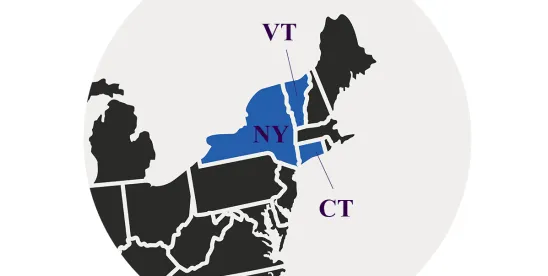
The Second Circuit’s articulation of the concepts “at the direction of a user” and “right and ability to control” will be closely monitored as the case proceeds in the US District Court for the Southern District of New York. The outcome may have significant implications for both online service providers and copyright owners, potentially reshaping the landscape of DMCA safe harbor protections.
As the case develops, stakeholders in the digital content space should remain vigilant about how these standards are interpreted and enforced, as they could influence future litigation and operational practices regarding copyright management and user-generated content.