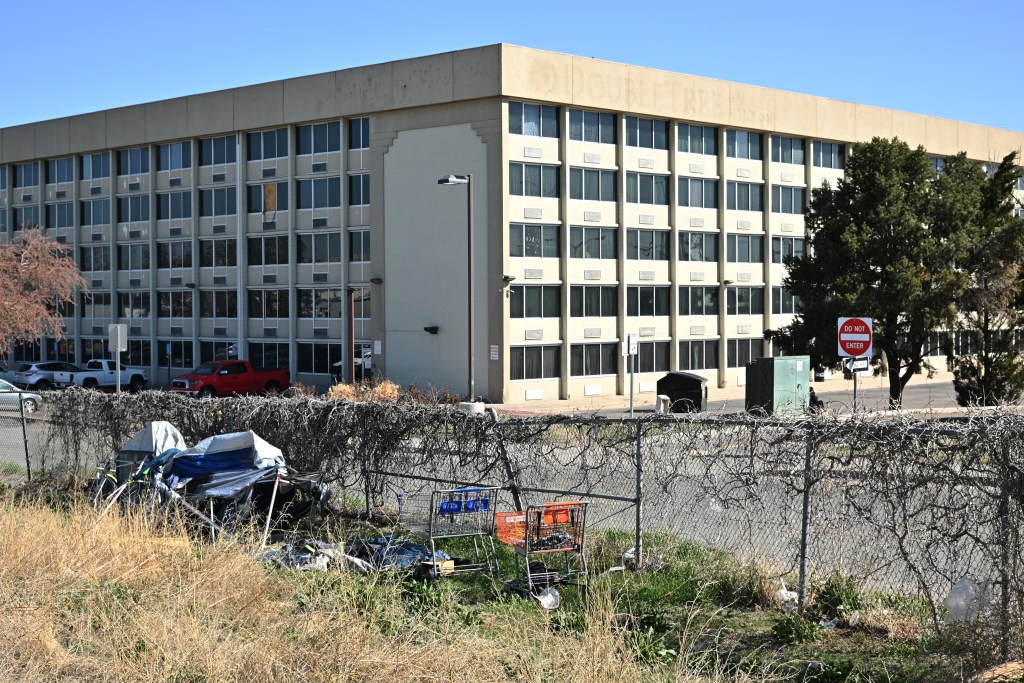
One of the largest emergency shelters in Denver has reopened to provide refuge from extreme cold temperatures. On Friday, December 8, 2023, Mayor Mike Johnston announced the opening of the Aspen, a former DoubleTree hotel, despite the City Council’s recent rejection of a contract to utilize the space as a cold-weather shelter. The facility can accommodate up to 250 individuals in its ballroom, a critical resource as temperatures in the Mile High City are expected to plunge near zero degrees Celsius over the weekend.
The decision to open the Aspen comes after the city’s other four emergency shelters reached capacity on Thursday night, coinciding with the onset of the cold snap. According to city officials, the freezing conditions could lead to frostbite in less than 30 minutes for those inadequately dressed. City spokesman Jon Ewing stated, “With life-threatening cold settling over the city and people at risk of suffering serious injury or death, Mayor Johnston informed Council this morning that we will be opening the ballrooms at 4040 Quebec (St.) for temporary emergency cold weather shelter.”
The situation highlights ongoing tensions between the mayor’s office and City Council members, who have expressed frustration over the handling of cold-weather sheltering. During a council meeting on December 8, 2023, 11 of the 13 council members voted against a contract to use the Aspen for cold-weather shelter. Councilwoman Shotel Lewis, who represents the district containing the shelter, criticized the mayor for not adhering to previous commitments regarding its use. She remarked, “My district is already overrepresented with shelters, with eight of them. This is ridiculous.”
Only Councilmen Kevin Flynn and Darrell Watson supported the contract, while another agreement with Bayaud Works allows for short-term emergency use of the ballroom space, which facilitated the mayor’s decision to open the shelter. Ewing explained that the city had not anticipated the council’s rejection of the contract, leaving little time to secure alternative shelter locations as winter approached.
“The real emergency is that it is 5 degrees outside and people are going to die if we don’t get them inside,” Ewing stated. He emphasized that the Aspen was the most suitable option due to its existing infrastructure, including cots, showers, and bathrooms, and its familiarity among the homeless population in the area.
Despite the immediate need for shelter, Councilwoman Lewis has urged the mayor to diversify the locations of homelessness services across the city. She expressed concern that the current approach is reactive rather than strategic, saying, “Johnston has failed to run the city with a long-term strategy.” Lewis suggested that the Aspen’s ballroom should serve as a navigation center providing resources to the homeless rather than as a cold-weather shelter.
Johnston’s administration has acknowledged the increased demand for shelter since a policy change in 2023, which mandates the opening of emergency shelters when temperatures drop below 25 degrees Celsius, a shift from the previous threshold of 10 degrees Celsius.
While temperatures are expected to rise slightly on Monday, the rift between the mayor’s office and some council members shows no signs of thawing. Councilwoman Lewis articulated her dissatisfaction, stating, “It’s the mayor’s responsibility to run the city as the executive, and if he doesn’t run the city as the executive, then … we might need to switch seats.” In response, Ewing defended the administration’s actions, asserting, “It is not fair to cause a disruption and then blame us for scrambling to solve that issue.”
As the city grapples with its homelessness crisis, the reopening of the Aspen serves as a temporary solution amidst a broader discussion on the management of services for those in need.