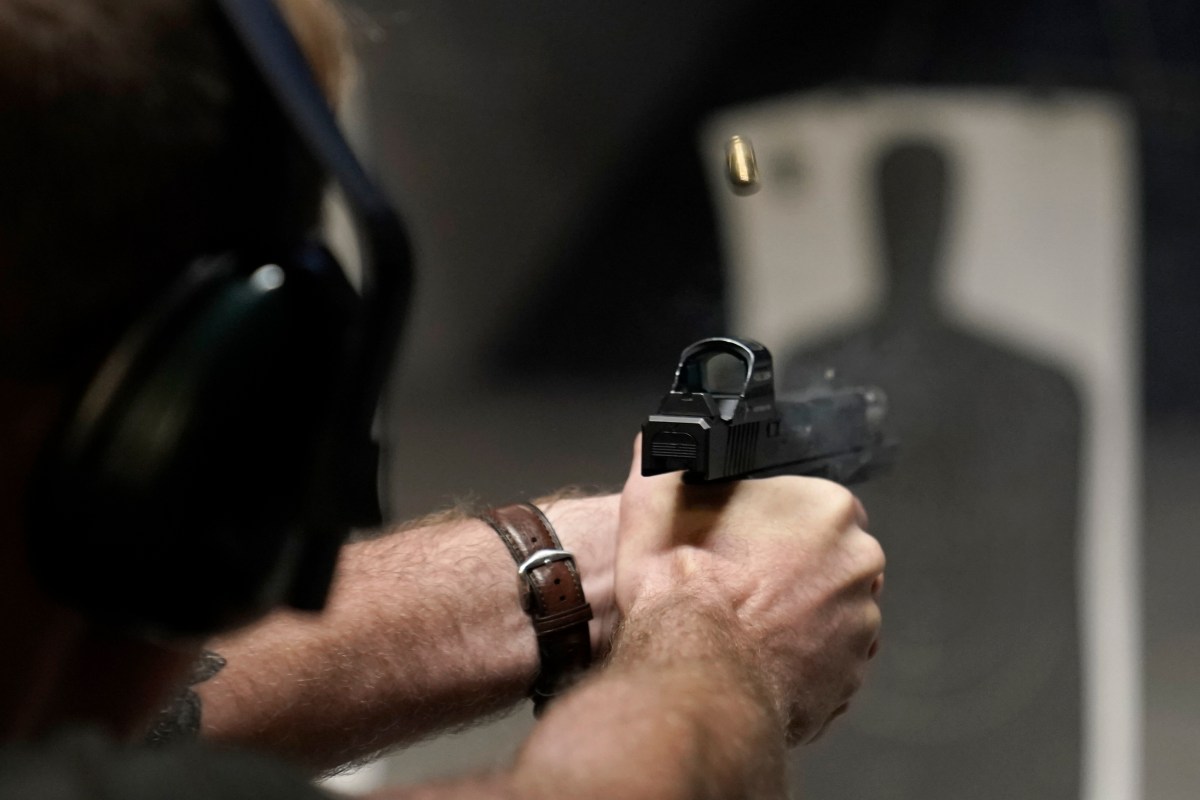
A federal appeals court has invalidated California’s prohibition on openly carrying firearms in most parts of the state, ruling that the ban infringes upon the Second Amendment. On September 29, 2023, the 9th U.S. Circuit Court of Appeals delivered a 2-1 decision siding with gun owner Mark Baird. The court determined that California’s restriction on open carry in counties with populations exceeding 200,000 residents is unconstitutional. Approximately 95% of Californians reside in these counties, which have been regulated by some of the strictest gun-control laws in the nation.
This ruling partially reverses a 2023 lower court decision that had upheld the ban, which Baird challenged back in 2019. While the panel agreed with Baird’s main argument, it did not support his related challenge against licensing requirements in smaller counties that can issue open-carry permits.
Legal Interpretation and Historical Context
Circuit Judge Lawrence VanDyke, appointed by former President Donald Trump, authored the majority opinion, citing the U.S. Supreme Court’s pivotal 2022 decision in New York State Rifle & Pistol Association v. Bruen. This landmark ruling established that gun regulations must align with the country’s historical practices surrounding firearm regulation. “This case unquestionably involves a historical practice — open carry — that predates ratification of the Bill of Rights in 1791,” VanDyke stated. He pointed out that over 30 states permit open carry and noted that California itself allowed citizens to carry holstered handguns for self-defense until 2012.
The judge emphasized that the historical record clearly supports open carry as a significant aspect of American tradition. “Open carry is not a recent innovation,” he wrote. “It is a tradition that the Constitution protects.”
In dissent, Judge N. Randy Smith, appointed by former President George W. Bush, argued that the majority’s interpretation was only partially correct. He contended that all of California’s restrictions align with the Supreme Court’s standards.
Broader Implications for Gun Regulations
This decision is part of a larger trend of legal challenges to contemporary gun laws following the Bruen ruling, which invalidated New York’s concealed-carry restrictions. The ruling underscores the ongoing ramifications of Bruen on state gun regulations and might lead to further appeals. California could seek a review from the full 9th Circuit or potentially petition the Supreme Court for clarification on the extent of state authority in regulating public carrying of firearms.
Gun-rights advocates hailed this ruling as a significant victory, arguing that California’s restrictions were among the most stringent in the country. Conversely, supporters of the open-carry ban have long asserted that such limitations help reduce intimidation and allow law enforcement to differentiate between lawful gun owners and potential threats.
Despite this ruling, California will continue to enforce other gun-control measures, including background checks, waiting periods, and prohibitions on certain assault-style weapons. A separate panel from the 9th Circuit upheld a state law in September 2023, which prohibits individuals with concealed-carry permits from bringing firearms into “sensitive places” such as bars, parks, zoos, stadiums, and museums.
As the legal landscape surrounding gun ownership continues to evolve, the implications of this ruling may resonate across the nation, shaping future discussions about firearm regulations and constitutional rights.