Governor Maura Healey and U.S. Attorney Leah Foley are embroiled in a public dispute regarding whether Massachusetts officials notified federal authorities about alleged fraud within the Supplemental Nutrition Assistance Program (SNAP). This contention arises following the announcement of a significant fraud case on Tuesday, in which over 100 stolen identities were reportedly used to acquire more than $1 million in SNAP and Public Unemployment Assistance (PUA) benefits.
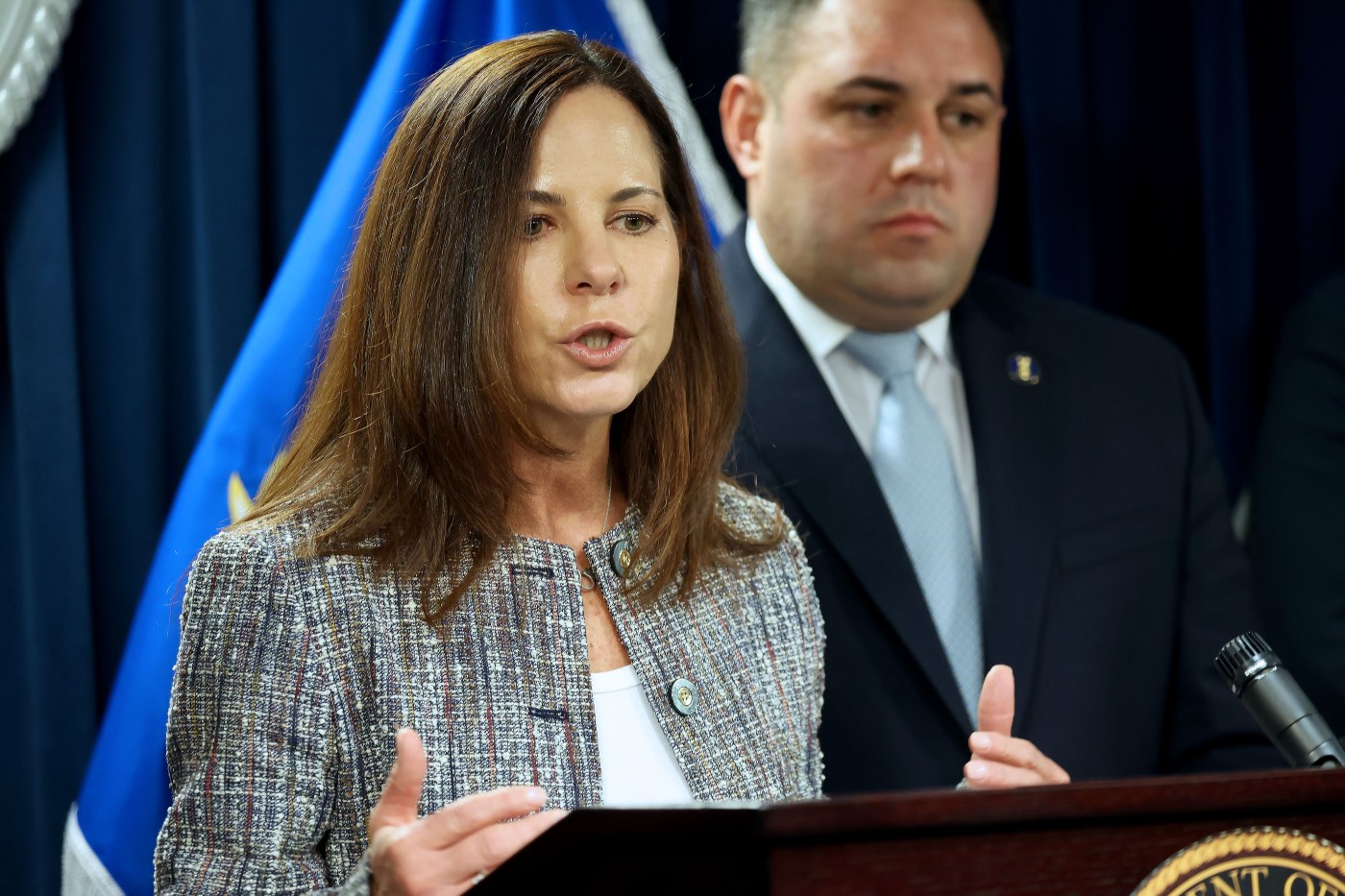
During her press conference, Foley stated that no Massachusetts agency or official had referred any fraudulent activity to her office or federal authorities, directly contradicting Healey’s claims. Healey, while addressing reporters, sidestepped a question on whether she would comply with a request from the Trump administration to submit the names of SNAP recipients, instead asserting that her office had tipped off federal officials regarding a separate $7 million SNAP fraud scheme discovered by Foley’s team in December.
Foley responded to Healey’s assertions, emphasizing that the U.S. Attorney’s Office had charged six individuals with more than $8 million in SNAP benefit fraud in recent months. “Yesterday, the Governor stated that these cases were referred by Massachusetts authorities to the U.S. Attorney’s Office for investigation and prosecution. That is simply inaccurate,” Foley said. She further criticized Healey for only deactivating Electronic Benefit Transfer (EBT) cards flagged for fraud, without pursuing any prosecutions against individuals linked to those benefits.
The Department of Transitional Assistance (DTA), under Healey’s administration, countered Foley’s claims by providing evidence they say demonstrates Massachusetts alerted federal investigators to fraudulent activities within the SNAP program. A spokesperson for the DTA asserted that they take allegations of fraud seriously, stating, “These cases were identified and reported by the state of Rhode Island to Massachusetts DTA and the USDA’s Office of Inspector General.”
In support of their claims, the DTA shared a screenshot of an email dated November 2024, in which a fraud investigator alerted the USDA to suspicious activity at a Boston store. This email was not acknowledged by Foley’s office during her subsequent comments.
Despite the back-and-forth, Foley reiterated her position on the Howie Carr Show, insisting that no referrals had been made by the Massachusetts Governor’s Office to her office, even under Healey’s tenure as Attorney General. “Absolutely not. No referral from the Massachusetts Governor’s Office or administration came to the U.S. Attorney’s Office in Massachusetts,” she stated.
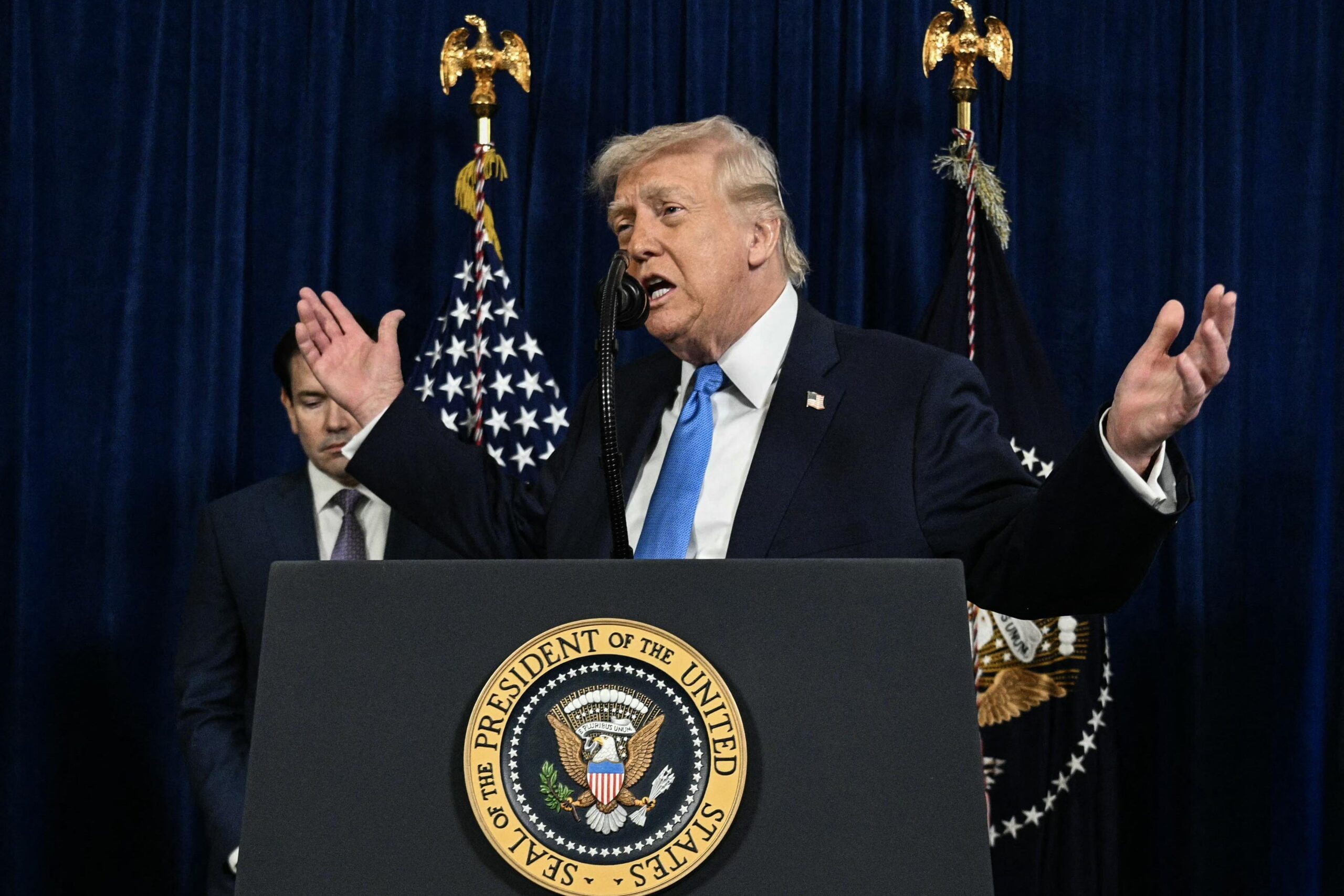
As tensions escalate, Massachusetts Republicans have seized the opportunity to criticize Healey’s handling of the fraud issue. Mike Minogue, a Republican gubernatorial candidate, accused Healey of prioritizing politics over accountability. “The entrenched political establishment and Healey administration continue to put politics ahead of accountability,” he said, emphasizing that Healey’s actions do not align with the will of the public.
Other Republican candidates echoed these sentiments, with John Deaton asserting that fraud is rampant in Massachusetts due to inaction from elected officials. “This tells you all you need to know about the need for change in MA,” he remarked, underscoring a belief among some that the state’s political landscape is contributing to ongoing issues with public assistance fraud.
In response to the fraud allegations, the White House has also urged Healey to provide the USDA with information on SNAP recipients to assist in addressing waste and fraud. White House Spokeswoman Liz Huston stated, “Governor Healey must stop protecting fraudsters and start putting her constituents first.”
Foley detailed that the alleged fraud scheme involved a naturalized citizen from the Dominican Republic, two illegal immigrants, and a green card holder who stole identities from U.S. citizens across several states, including New York and Florida. The scheme was uncovered shortly after the state Auditor’s Office reported identifying nearly $12 million in public assistance fraud for the fiscal year ending June 30, with SNAP accounting for over $4.1 million of that total.
As the situation develops, it remains to be seen how the ongoing tensions between Healey and Foley will impact efforts to combat fraud within Massachusetts’ public assistance programs and restore public trust in the state’s ability to manage such critical resources.