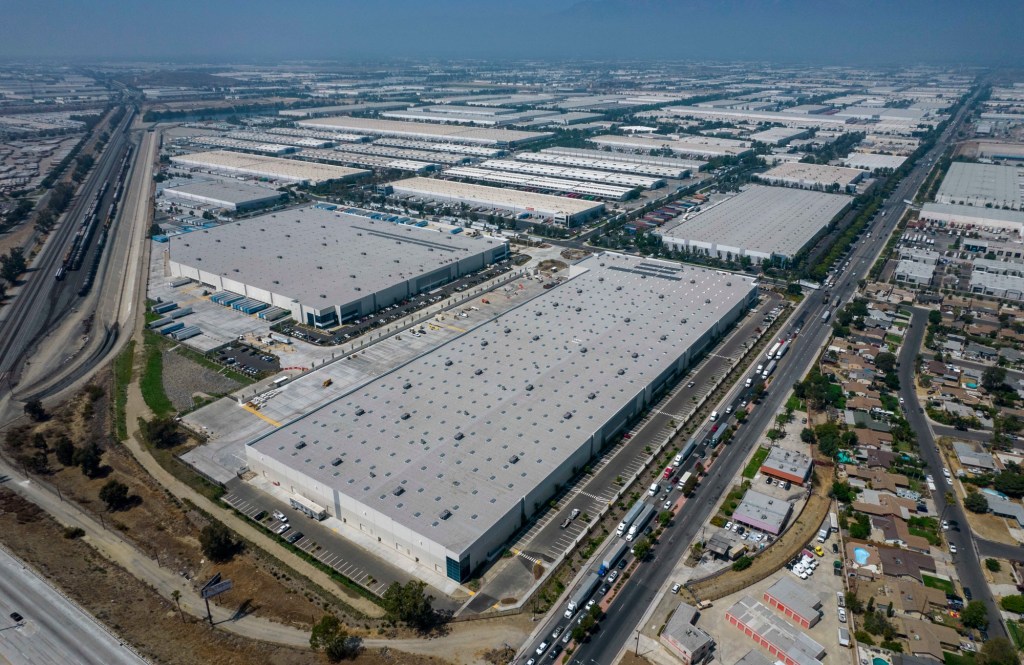
Residents of Riverside and San Bernardino counties are expressing serious concerns about potential plans to convert local warehouses into immigration detention centers. The idea, once considered unlikely, has gained traction following reports that the Trump administration is exploring options to repurpose warehouses across the United States for this purpose.
Eddie Torres, policy director for the Inland Coalition for Immigrant Justice, highlighted the anxiety within the community, stating, “We’re very concerned about this.” The Inland Empire is home to approximately 1 million immigrants, and its extensive logistics industry includes numerous vacant warehouses. Torres emphasized fears that U.S. Customs and Immigration Enforcement (ICE) may target these facilities due to the region’s proximity to the border.
Moreno Valley Mayor Ulises Cabrera also acknowledged local worries. With about one in four of the city’s 216,000 residents being foreign-born, the potential transformation of warehouses into detention centers has added to the community’s anxiety. Cabrera remarked on the abundance of warehouses in the area, underscoring the widespread apprehension among residents.
While rumors persist about the conversion of these warehouses, official responses have been largely noncommittal. Representatives from Fontana, Ontario, Perris, and San Bernardino have stated they are unaware of any concrete plans. Similarly, unincorporated areas of Riverside and San Bernardino counties, as well as land near March Air Force Base, have not been identified as potential locations by local officials.
A report from the Washington Post on February 13 indicated that ICE intends to allocate $38.3 billion towards purchasing warehouses in 22 states, aiming to establish 16 short-term detention centers and eight larger facilities capable of accommodating between 7,000 and 10,000 detainees. According to internal ICE documents, this new strategy is designed to streamline the process of detaining immigrants awaiting deportation.
In December, the same publication noted plans to convert warehouses nationwide to house over 80,000 immigration detainees. Notably, California, a state known for its strong resistance to the Trump administration’s immigration policies, was not included in the proposed locations shared by the Post.
Critics of ICE’s detention practices have raised alarms about potential human rights abuses. Allegations of overcrowding, physical and mental abuse, and inadequate access to food and medical care have been reported at various facilities, including the ICE detention center in Adelanto, California. Following a recent visit to the facility, Rep. Raul Ruiz, a Democrat from Palm Desert, described it as “essentially a prison.”
The fear of increased immigration enforcement is palpable among many Inland residents, particularly within Latino communities. Luz Gallegos, executive director of the TODEC Legal Center, noted that individuals are increasingly hesitant to engage in everyday activities, from working to attending school or visiting a doctor. She stated that converting warehouses into detention centers would only exacerbate existing fears, leading to significant disruptions in local economies as workers might vanish from job sites and families could lose income.
Despite concerns about the adequacy of existing warehouse facilities, it is unclear who would oversee necessary upgrades to meet detention standards. County spokesperson Felisa Cardona clarified that local development rules would not apply if the federal government proceeded with such plans in unincorporated areas of Riverside County.
In California, where Democrats hold all statewide offices and possess a legislative supermajority, opposition to ICE’s initiatives is anticipated. Diana Crofts-Pelayo, a representative from Governor Gavin Newsom‘s office, emphasized the potential human and economic consequences of these actions, criticizing the federal government for attempting to bypass local input.
As the situation develops, community advocates, including Torres, remain vigilant for any federal paperwork indicating formal detention center plans. Mayor Cabrera expressed his strong opposition to the use of warehouses for immigration detention, asserting that he would stand against such initiatives with the support of the community.
The Inland Empire’s residents continue to grapple with the implications of these developments, as the prospect of ICE detention centers looms over their daily lives.