Members of the U.S. Congress called for immediate legislative action on January 3, 2026, to prevent President Donald Trump from escalating military actions in Venezuela. This demand arose following Trump’s threats of a “second wave” of attacks and his assertion that the U.S. would indefinitely control the South American nation’s government.
Rep. Greg Casar (D-Texas), chair of the Congressional Progressive Caucus (CPC), emphasized the urgency of the situation. “Congress should vote immediately on a War Powers Resolution to stop” President Trump, he stated, highlighting the administration’s unauthorized military actions, which included bombings of vessels in international waters. “Trump has no right to take us to war with Venezuela. This is reckless and illegal,” Casar added.
Another CPC member, Rep. Rashida Tlaib (D-Mich.), condemned the actions, describing them as indicative of a “rogue state.” Tlaib asserted that Trump’s military actions and the reported abduction of Venezuela’s president represent severe violations of both international law and the U.S. Constitution. “The American people do not want another regime change war abroad,” she expressed on social media.
The calls for action resonated beyond the progressive wing. Prominent establishment Democrats, including Sen. Adam Schiff of California, also urged Congress to intervene. “Without congressional approval or the buy-in of the public, Trump risks plunging a hemisphere into chaos,” Schiff warned. “We must speak for the American people who profoundly reject being dragged into new wars.”
Sen. Tim Kaine (D-Va.) announced plans to push for a bipartisan War Powers Resolution in the Senate next week. He raised concerns about where further military actions could lead, questioning potential deployments to other regions such as Iran or Gaza. “It is long past time for Congress to reassert its critical constitutional role in matters of war,” Kaine stated. “My bipartisan resolution stipulating that we should not be at war with Venezuela absent a clear congressional authorization will come up for a vote next week.”
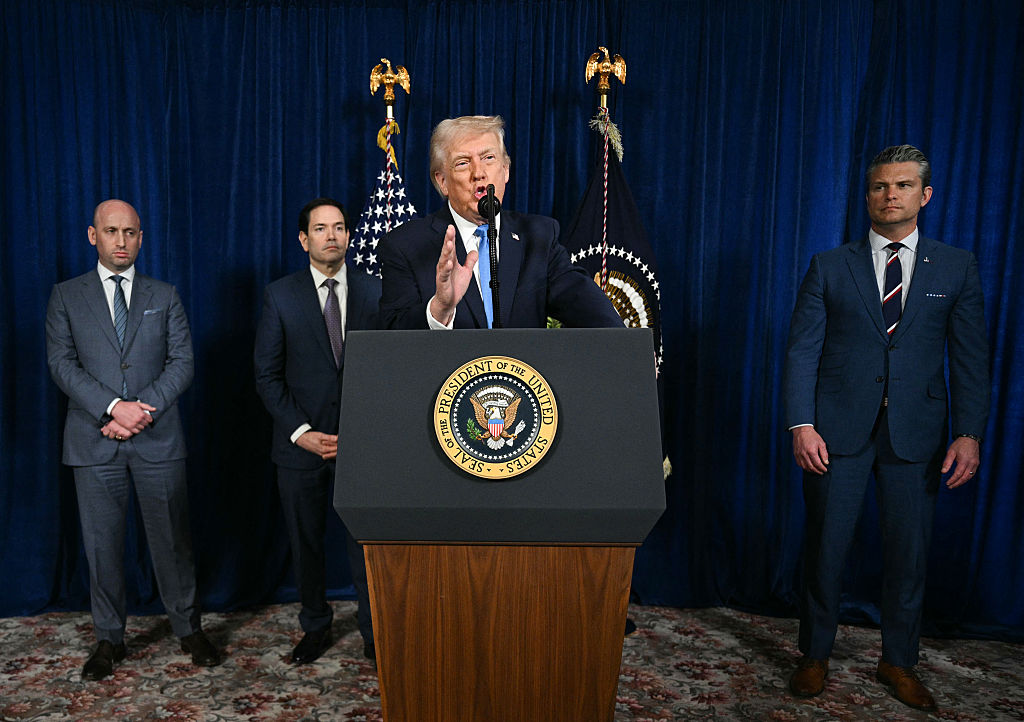
These legislative efforts came as President Trump signaled intentions to deepen U.S. involvement in Venezuela’s internal affairs. During a press conference, he stated that the U.S. “is going to run” Venezuela and hinted at potential troop deployments. He mentioned, “We’re not afraid of boots on the ground,” indicating a willingness to escalate the situation further.
The response from the Republican-controlled Congress remains uncertain. Some members have supported Trump’s actions, characterizing them as necessary and justified. House Speaker Mike Johnson (R-La.) and Senate Majority Leader John Thune (R-SD) described the military interventions as “decisive.”
Prior to the recent military actions, the Republican majority had rejected War Powers Resolutions aimed at curbing Trump’s authority to engage in military actions in Venezuela without congressional consent. Notably, Sen. Mike Lee (R-Utah), who initially raised constitutional concerns, appeared to align with the administration after discussions with Secretary of State Marco Rubio.
Rep. Andy Kim (D-NJ) expressed skepticism about the administration’s assurances, stating, “I didn’t trust them then, and we see now that they blatantly lied to Congress.” He criticized the administration for sidestepping the constitutionally required approval process for military conflict, reflecting a broader concern among lawmakers regarding the implications of unilateral military decisions.
As Congress prepares to address the situation, the discussion surrounding U.S. military involvement in Venezuela continues to escalate, highlighting the tension between executive authority and legislative oversight in matters of war.