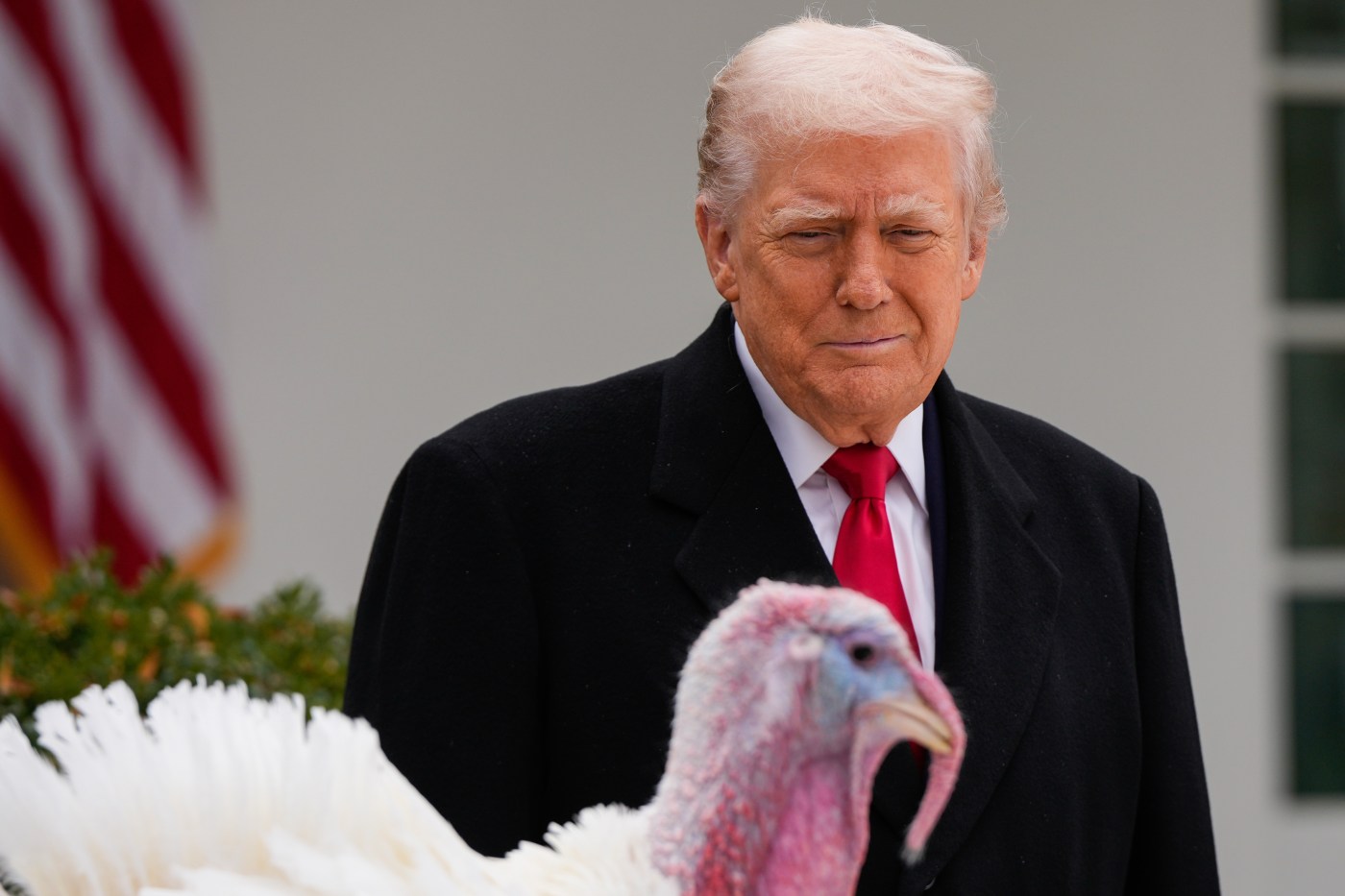
President Donald Trump continued the annual Thanksgiving tradition of pardoning two turkeys on November 21, 2023. This year, the chosen birds, named Gobble and Waddle, were spared from being served at the holiday table. However, not all entities in Washington, D.C. deserve such leniency, particularly the lawmakers who failed to effectively resolve the recent government shutdown, jeopardizing food assistance for millions of families reliant on the Supplemental Nutrition Assistance Program (SNAP).
Democratic lawmakers, particularly from Massachusetts, were criticized for their inaction during a time when urgent decisions were needed to prevent disruption of vital services. Congresswoman Katherine Clark acknowledged the potential suffering of families, stating, “Of course there will be families that are going to suffer, but it is one of the few leverage times we have.” This perspective has drawn considerable backlash, with many questioning the ethics of using vulnerable populations as bargaining chips in political negotiations.
As the shutdown lingered, speculation arose that it could extend beyond Thanksgiving, a thought that highlights the disconnect between lawmakers and their constituents. While families faced uncertainty regarding food assistance, some politicians appeared more focused on partisan gains rather than the immediate needs of the citizens they represent.
The recent shutdown serves as a stark reminder of the consequences of political gridlock. History has shown that government shutdowns can lead to dire outcomes, yet legislators allowed a standoff over funding to escalate into a situation that left many Americans in distress. The Beltway, often perceived as insulated from the struggles faced by ordinary citizens, has become a symbol of this disconnect.
While many lawmakers engaged in typical partisan bickering, a few stood out for their proactive measures. Senate Majority Leader John Thune proposed legislation aimed at ensuring pay for more than 1 million military service members affected by the shutdown. His initiative underscores the importance of prioritizing the needs of those who serve the nation, contrasting sharply with the inaction of many others.
The focus in Washington has now shifted to the extension of Affordable Care Act (ACA) tax credits, a contentious issue that has further polarized both parties. With critical programs set to expire in the coming months, the potential for another standoff looms large. Donald Trump has indicated plans to address escalating healthcare costs, which remain a pressing concern for many Americans, especially those with employer-sponsored insurance.
As Congress prepares for what could be another significant battle over healthcare, the recent shutdown highlights a troubling pattern of ineffective governance. Lawmakers should consider this episode a critical learning opportunity on negotiation strategies and the importance of prioritizing the public’s needs over political maneuvering. Voters, too, must reflect on the implications of the shutdown and recognize the necessity of holding their representatives accountable.
The upcoming months will be pivotal as the country grapples with the fallout from the recent government shutdown and the looming expiration of essential services. The actions taken by lawmakers during this time will undoubtedly shape public perception and influence the political landscape as the nation moves forward.