President Lee Jae Myung concluded a two-day visit to Japan on Wednesday, signaling a renewed commitment to strengthen economic cooperation between South Korea and Japan. The visit included a summit with Japanese Prime Minister Sanae Takaichi in Nara, where the leaders discussed a range of pressing issues, including supply chain stability and historical grievances related to Korean forced laborers.
During the summit held on October 24, 2023, Lee and Takaichi conducted their second meeting in a little over two months, amid a backdrop of escalating tensions in the region. These tensions have been exacerbated by recent comments from Takaichi regarding Taiwan and China’s new export restrictions on dual-use items that could disrupt Japan’s access to essential materials like rare earth minerals.
Both leaders emphasized the need for “future-oriented cooperation” in key areas, such as supply chains and artificial intelligence (AI). They also made what Lee described as “small but meaningful progress” in addressing historical issues. Specifically, they agreed to conduct DNA analysis on remains found at the Chosei undersea coal mine in Yamaguchi Prefecture, where a devastating flood in 1942 claimed the lives of 183 individuals, including 136 Korean laborers.
Strengthening Bilateral Relations
The summit highlighted an intentional effort to establish enduring top-level engagement, often referred to as “shuttle diplomacy.” This approach is particularly significant as both nations navigate complex diplomatic waters amid growing regional tensions. Concerns had circulated regarding the potential deterioration of relations under Takaichi, a conservative leader with a reputation for hawkish views on historical matters. Lee’s recent visit, however, has sparked cautious optimism regarding the potential for collaboration and economic growth.
During discussions, South Korea reiterated its interest in joining the Comprehensive and Progressive Agreement for Trans-Pacific Partnership (CPTPP). Previous attempts to join the trade pact had stalled due to a ban on seafood imports from eight Japanese prefectures following the 2011 Fukushima nuclear disaster. The current talks have raised hopes for renewed consultations and progress in this area.
Collaborative Initiatives and Security Cooperation
Supply chain resilience was a focal point in the discussions, with both leaders underscoring the importance of cooperation in this domain. While details on Beijing’s export controls were not disclosed, the need for stable supply chains remains a priority for both nations.
In a notable effort to balance relations with China, Lee emphasized the necessity for Seoul, Tokyo, and Beijing to identify shared interests and collaborate on regional challenges. Beyond economic issues, the leaders agreed to initiate working-level consultations on AI and intellectual property rights, as well as to enhance joint responses to transnational crimes.
Security matters were also at the forefront of the summit, with both countries reaffirming their commitment to the complete denuclearization of the Korean Peninsula. Lee stated, “The two countries share the importance of trilateral cooperation among Seoul, Washington, and Tokyo.”
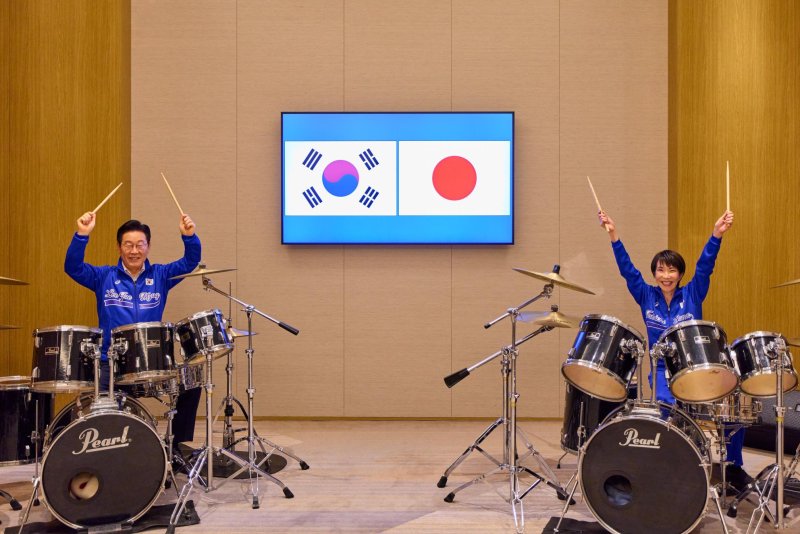
The summit featured a carefully curated atmosphere designed to enhance rapport between the leaders. Lee and Takaichi exchanged gifts, participated in musical activities, and toured an ancient temple, underscoring a commitment to fostering a positive bilateral relationship.
In summary, President Lee Jae Myung’s visit to Japan marks a significant step in advancing economic ties and addressing historical issues, while also laying the groundwork for future cooperation amid a challenging geopolitical landscape.