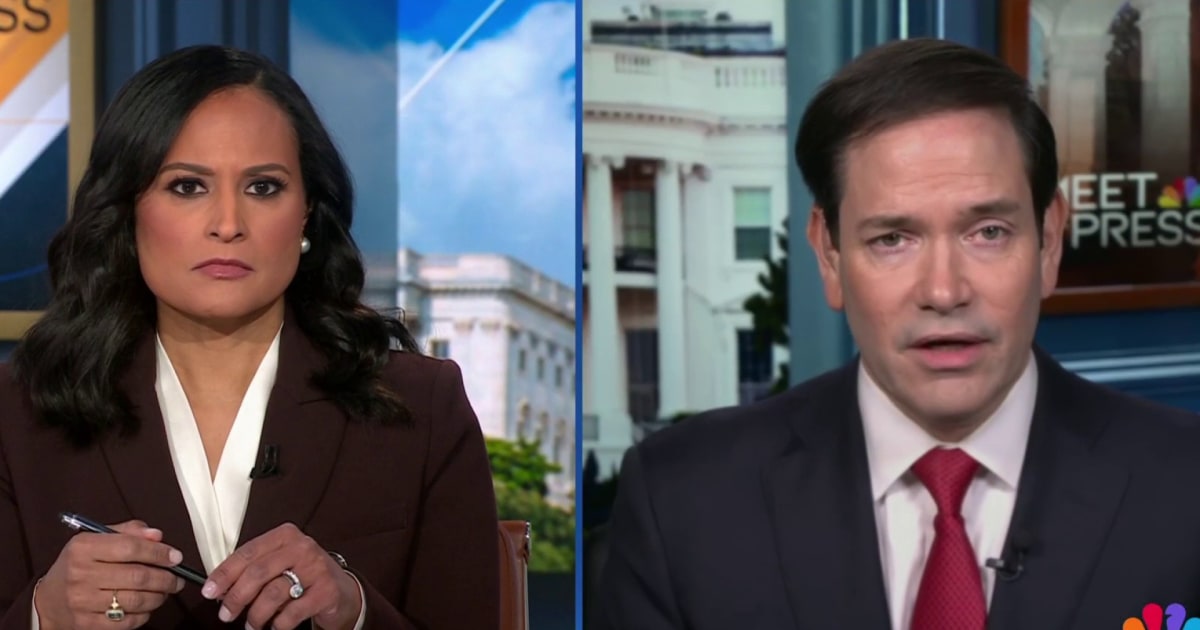
Marco Rubio, the United States Secretary of State, has expressed concerns regarding the timing of elections in Venezuela, stating that they would be “premature at this point.” His comments came during an appearance on Meet the Press on January 4, 2026, following the recent capture of President Nicolás Maduro.
Rubio emphasized the “immediate reality” facing Venezuela, highlighting that the “vast majority of the opposition is no longer present inside of Venezuela.” This statement reflects the ongoing challenges for the Venezuelan political landscape, particularly following the potential rise of opposition leader María Corina Machado, who has been mentioned as a possible successor to Maduro.
The situation in Venezuela remains complex, with the political opposition facing significant hurdles. With many opposition figures either exiled or imprisoned, the prospect of free and fair elections appears increasingly distant. Rubio’s comments underscore the cautious approach the U.S. government is taking in response to the evolving dynamics in the country.
During the interview, Rubio noted the necessity of a stable political environment before any elections could be considered. He stated, “It’s crucial that we recognize the conditions which currently exist in Venezuela. Without a robust opposition presence, any electoral process would be inherently flawed.” This perspective aligns with broader international concerns regarding the legitimacy of Maduro’s regime and the need for democratic reforms.
Venezuela has experienced years of political turmoil, economic collapse, and widespread humanitarian crises. The capture of Maduro has added a new layer of uncertainty, prompting discussions among international observers about the future of governance in the country. The United States and other nations have called for a transitional government that can pave the way for democratic elections.
The potential candidacy of Machado is seen as a pivotal point for the opposition. Her leadership could galvanize support and provide a viable alternative to Maduro’s government. Nevertheless, Rubio’s caution serves as a reminder of the intricate challenges that lie ahead for Venezuela’s political future.
As Venezuela stands at a crossroads, the international community watches closely. The U.S. position, as articulated by Rubio, reflects a careful balance between supporting democratic aspirations and recognizing the harsh realities on the ground. The coming months will likely be critical in shaping the trajectory of Venezuelan politics and the prospects for its citizens.