The Healey-Driscoll Administration in Massachusetts is actively exploring the possibility of expanding hunting opportunities within the state. Key areas under consideration include the potential legalization of Sunday hunting, allowing the use of crossbows, and adjusting the setback distances that currently restrict hunting near residential buildings and roads. The state’s Division of Fisheries & Wildlife (MassWildlife) is engaging the public through a series of listening sessions aimed at gathering feedback on these proposed changes.
Governor Maura Healey emphasized the historical significance of hunting in Massachusetts, noting its role in supporting families and local economies while helping to maintain healthy deer populations. She stated, “Hunting has always been woven into Massachusetts’ history.” The administration’s initiative seeks to modernize hunting practices while ensuring safety and ecological balance.
Public Engagement and Listening Sessions
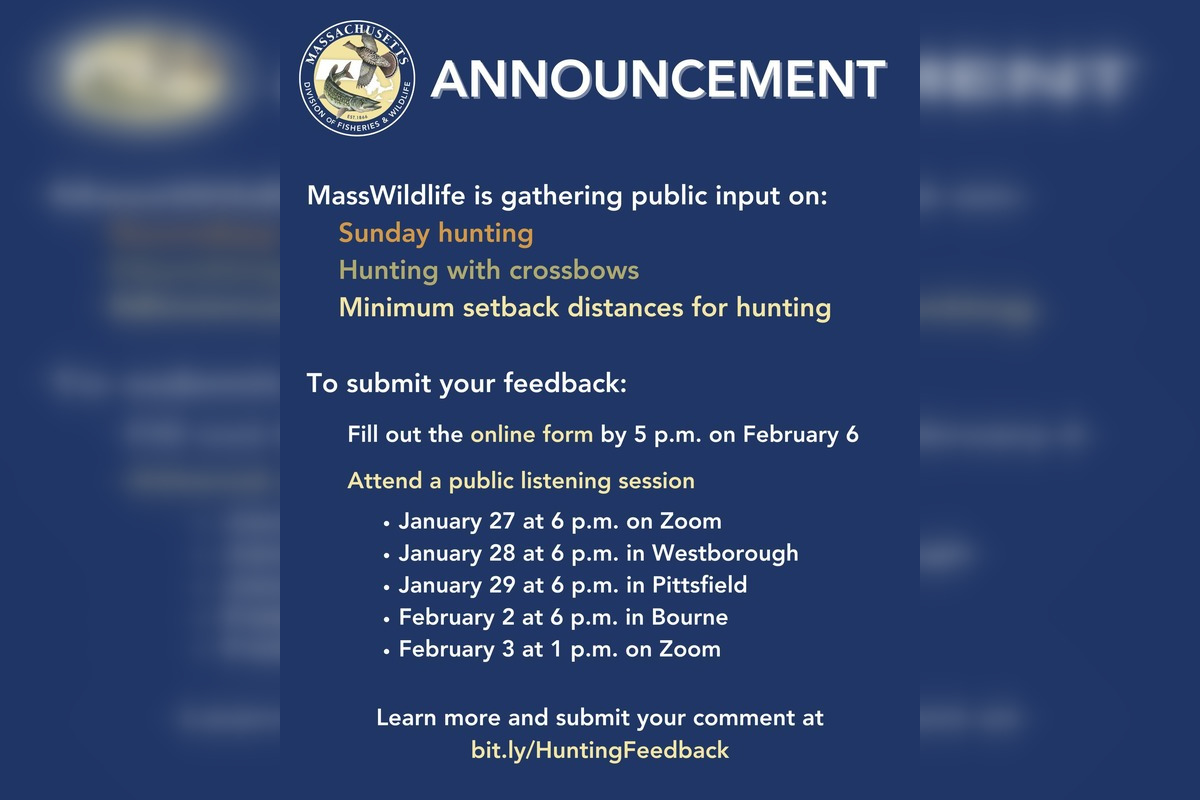
To facilitate community input, MassWildlife is hosting several listening sessions. These sessions will provide a platform for residents to discuss topics such as Sunday hunting, crossbow use, and the proposed reduction of setback limits, which currently prohibit hunting within 500 feet of occupied buildings or 150 feet from roads. According to Tom O’Shea, Commissioner of the Department of Fish & Game, public participation is vital. He encouraged residents to share their perspectives on these matters, adding, “We encourage the public to take part in these upcoming listening sessions.”
The sessions will take place on various dates: virtually on January 27 and February 3, and in-person on January 28 at the MassWildlife Field Headquarters, January 29 at Berkshire Community College, and February 2 at Massachusetts Maritime Academy. Individuals wishing to provide input must submit their comments by 5 p.m. on February 6, 2026.
The state also aims to address accessibility concerns surrounding hunting regulations, particularly regarding crossbow use, which is currently restricted to those with permanent disabilities. This initiative raises questions about inclusivity and practicality in hunting practices.
Conservation and Community Impact
The importance of hunting extends beyond recreation; it plays a critical role in conservation efforts and community well-being. Eve Schlüter, Deputy Director of MassWildlife, stressed the impact hunters have on local ecosystems and food security. She highlighted the “Hunters Share the Harvest” program, which has donated over 90,000 meals to those in need in recent years. Such initiatives illustrate the broader benefits of hunting beyond the individual.
The proposed changes also include evaluating the impacts of reduced setback limits, which some supporters argue are overly restrictive compared to neighboring states. This discussion is crucial as the state grapples with rising deer populations and related ecological issues, including the spread of tick-borne diseases and habitat degradation.
MassWildlife is committed to consolidating feedback from these sessions to inform future recommendations regarding wildlife management. The current discussions build on recent regulatory changes that extended the deer hunting season on Martha’s Vineyard and Nantucket, showcasing the administration’s proactive approach to managing wildlife and its impact on local communities.
As public interest in these proposed changes grows, the Healey-Driscoll Administration appears poised to reshape the landscape of hunting in Massachusetts, balancing tradition with contemporary needs and safety considerations.