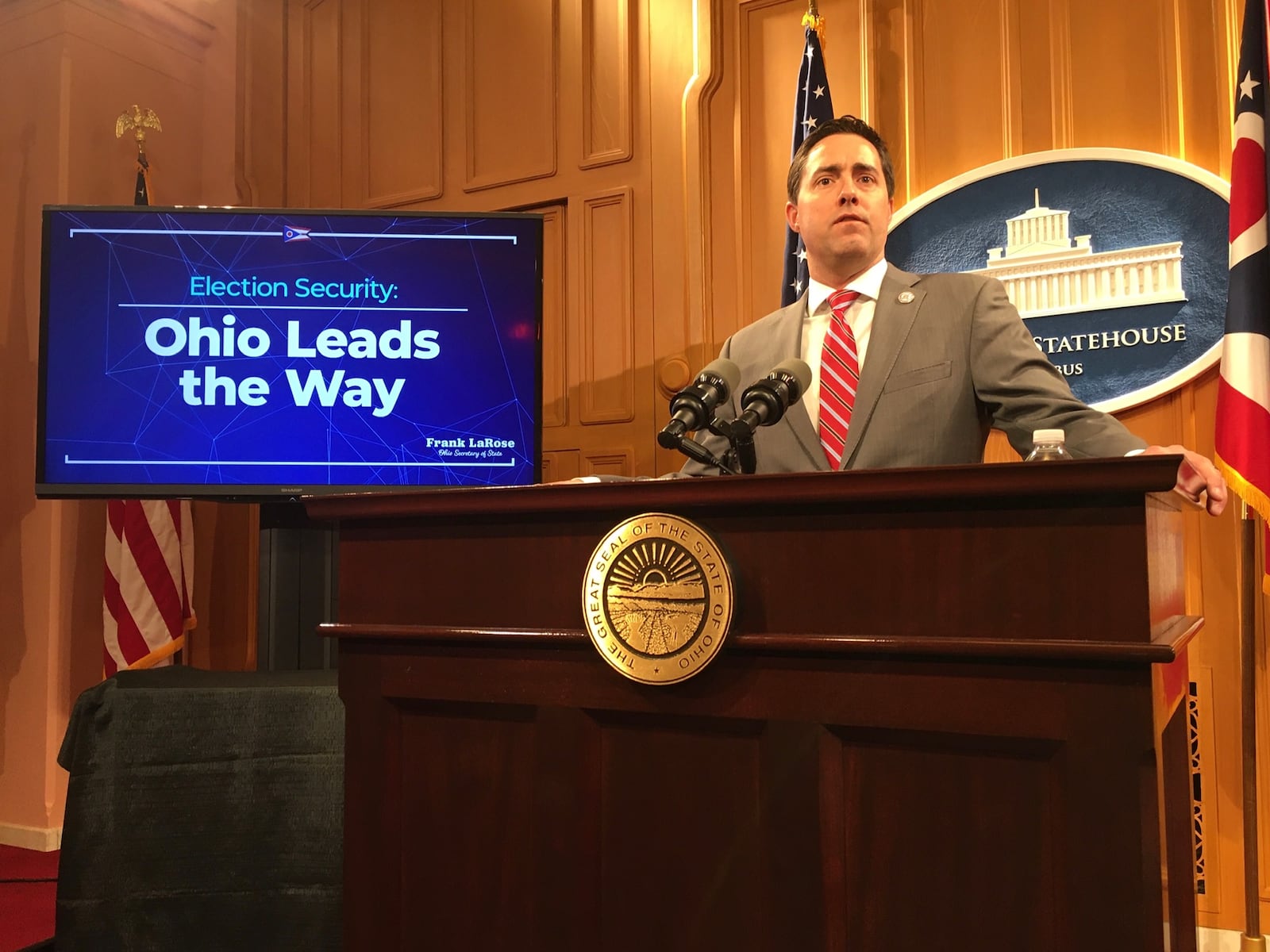
The state of Ohio is taking decisive action to recover approximately $100 million in unpaid fines related to campaign finance violations. During the inaugural meeting of the newly established Ohio Election Integrity Commission, Secretary of State Frank LaRose emphasized that the state can no longer overlook these debts. “If those fines aren’t collected, it becomes a bit of a joke, and that’s not how we’re going to operate,” LaRose stated.
The new commission, which is now situated within the Secretary of State’s Office, represents a significant shift in how Ohio manages election oversight. This restructuring was a key objective for LaRose during last year’s state budget discussions. Terrence O’Donnell, a retired Ohio Supreme Court Justice and the newly appointed chairman of the commission, expressed optimism about the change. “Finally, we put the elections commission where it belongs… This is a great step forward for our state and the citizens of our state,” he said.
Despite the optimism surrounding the commission, some Democratic lawmakers have raised concerns about its independence. Critics argue that placing the commission under the Secretary of State’s control risks partisan influence. In response, LaRose has pointed out that commission appointments will be shared between Republican and Democratic leaders in the state legislature. Yet, the power to appoint the chairperson, who holds the potential for tie-breaking votes, remains with LaRose.
Under the revised commission structure, new powers enable the body to recommend fines and criminal referrals directly to the Secretary of State. These actions will target serious violations, including ballot harvesting, petition fraud, double voting, and voter registration fraud. LaRose noted that many election-related cases tend to languish once they reach county prosecutors, who are often preoccupied with more pressing criminal matters. “County prosecutors who are busy people, who have a lot going on, tend to focus on violent crimes,” he explained. “This body will have the ability to make sure that if someone is doing that, they are charged a fine.”
LaRose also acknowledged the challenges ahead in recovering the full amount of the outstanding fines. Some organizations have dissolved, and certain individuals have passed away, making it impractical to pursue every debt. “It’s time that we figure out which ones those are and write those off as uncollectable,” he stated.
The formation of the Ohio Election Integrity Commission, alongside the renewed focus on collecting campaign finance fines, signifies a pivotal moment in the state’s approach to election governance. With a commitment to enhancing accountability, Ohio officials are poised to reshape the landscape of campaign finance enforcement in the state.