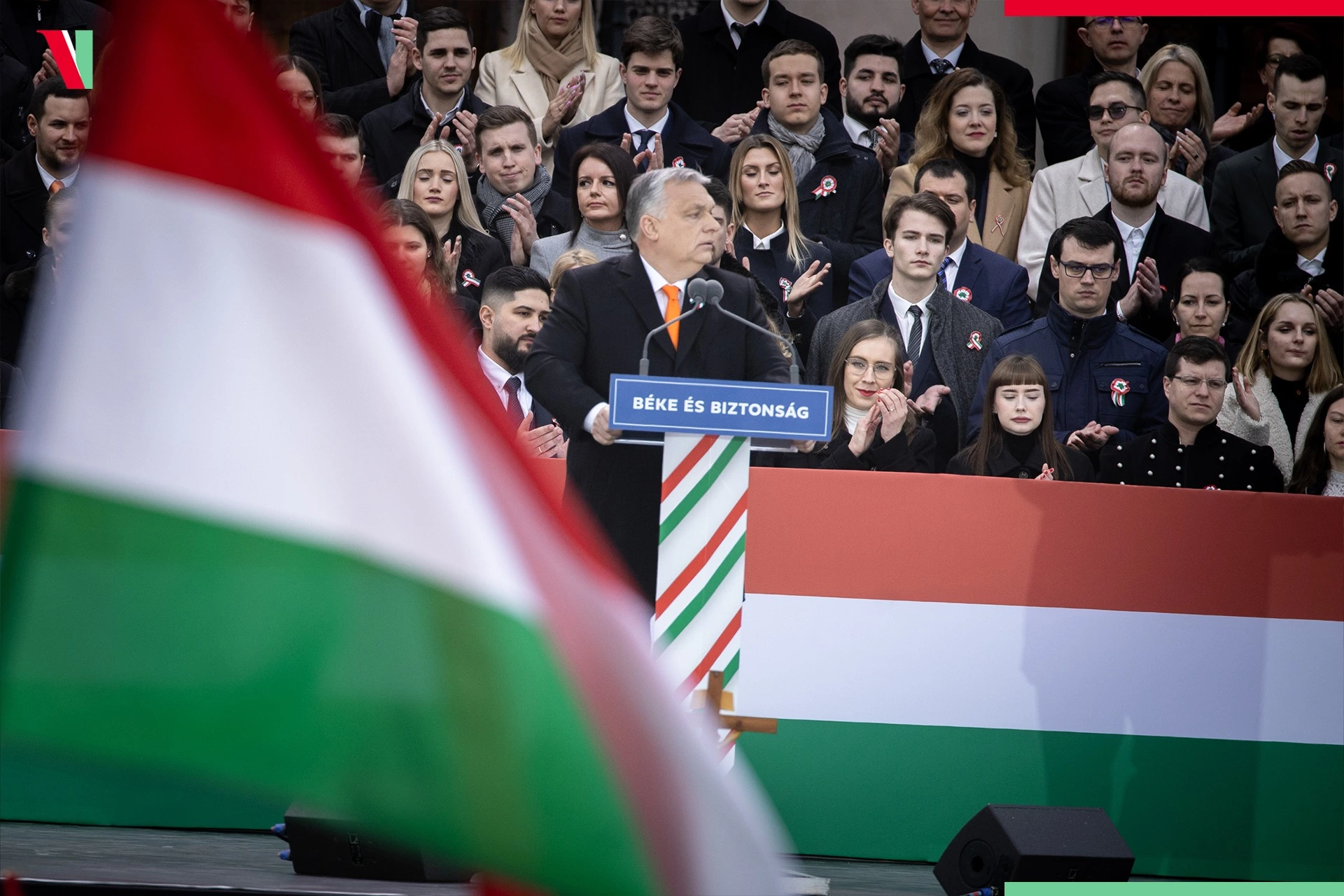
The pro-government civil umbrella group, the Civil Összefogás Fórum – Civil Összefogás Közhasznú Alapítvány (CÖF-CÖKA), has announced the return of its signature “Peace March” to Budapest on March 15, 2024. This date coincides with Hungary’s national holiday, which commemorates the 1848–49 Revolution and War of Independence. The event aims to demonstrate support for Hungary’s sovereignty, peace, and national unity.
During a recent press conference, the organisation’s president, László Csizmadia, stated that the march has already been registered with local authorities. He called on “peace-loving” Hungarians to participate in large numbers, particularly in light of the upcoming parliamentary elections. Csizmadia emphasized the goal of holding the largest Peace March to date, aiming to send a clear message to Europe that Hungary is “on the right path.”
The march will also serve as a show of solidarity with Poland and highlight the enduring friendship between Hungarian and Polish civil communities. This focus on international solidarity underscores the event’s significance beyond national borders.
Criticism of Foreign Policy and Election Oversight
A substantial portion of the announcement addressed foreign policy issues. Csizmadia criticized the European Union’s handling of the war in Ukraine, asserting that Brussels is exacerbating the conflict through arms deliveries and sanctions rather than pursuing diplomatic solutions. He claimed that EU leaders have lost their negotiating leverage, pushing Europe towards increased instability.
Csizmadia also targeted the leadership of the North Atlantic Treaty Organisation (NATO), suggesting that Secretary General Mark Rutte is undermining the alliance and supporting a more centralised European military structure. His comments reflect a growing concern among pro-government groups regarding international influence on Hungary’s domestic affairs.
The event organizers expressed their support for fair and lawful elections. They voiced criticism over a recent report by the Organisation for Security and Co-operation in Europe (OSCE), which they claimed exhibited political bias by relying heavily on opposition figures and what they referred to as “foreign-funded” NGOs. Despite these criticisms, CÖF-CÖKA reaffirmed its commitment to a transparent democratic process, emphasizing that trust in elections hinges on impartial and professional monitoring.
As the date of the Peace March approaches, the pro-government groups are keen to mobilize support. They aim to galvanize public sentiment ahead of the elections, reinforcing their stance on national unity and international solidarity.