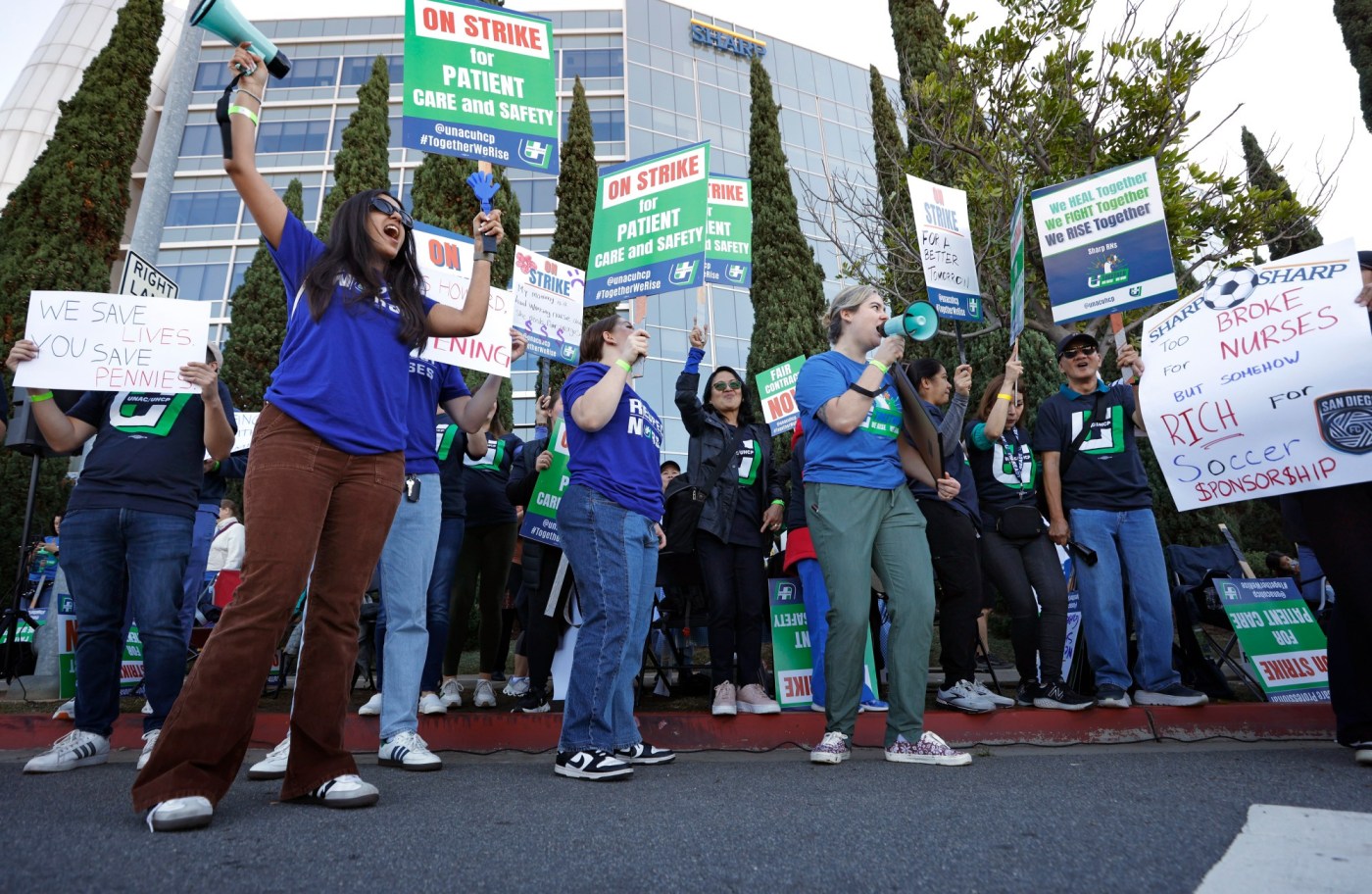
Registered nurses at Sharp HealthCare initiated a three-day strike starting at 07:00 on November 26, 2025, in San Diego, California. Over 5,800 nurses, represented by the United Nurses Associations of California/Union of Health Care Professionals, are protesting for better wages, safe staffing levels, and improved sick leave policies. Picket signs displayed by striking nurses emphasized their commitment to patient care, with slogans such as “On strike for patient care and safety.”
In a press conference held shortly after the strike commenced, Susan Stone, Sharp’s chief nursing executive, challenged the claims made by the striking nurses. She argued that the strike is not truly about patient safety, stating, “We received a 10-day strike notice citing unsafe staffing and patient safety concerns. I want to be very clear: Sharp maintains safe, legally-mandated nurse-to-patient ratios across all of our hospitals and, oftentimes, exceeds those mandated ratios.”
Stone highlighted that Sharp’s facilities are recognized nationally for nursing excellence and patient safety. Despite this, the union insists that their demands are rooted in legitimate concerns. Anna Lawler, chair of the Sharp bargaining unit, responded to Stone’s claims by emphasizing the direct link between fair wages and patient care. “Everything circles back to patient care if our wages aren’t comparable to all other hospitals in the San Diego metro area,” Lawler stated.
While the union’s materials focus on patient care, many nurses are also advocating for fair pay. Stone mentioned that Sharp has put forth a proposal that includes a guaranteed pay increase totaling more than 16% over four years, with nearly 10% in the first two years. According to her, this would raise the average registered nurse salary from $160,000 to $180,000 annually, with the most experienced nurses potentially earning up to $225,000.
Lawler expressed skepticism regarding these figures, stating, “I would love to see their math, because I have no idea where that would come from.” She pointed out that many nurses do not earn those averages, especially less experienced staff. The union argues that competitive wages are vital for retaining nurses, especially in light of a retention crisis experienced in 2022.
Union negotiator Pamela Chandran added that Sharp’s offer does not align with compensation packages at competing hospitals like the University of California and Kaiser, which offer higher salaries for similar positions. “We are losing nurses to those two places because they pay double-digit percentages higher,” she noted.
Another contentious issue is Sharp’s proposed changes to the sick leave policy. The current accrual schedule, which requires nurses to work for ten weeks before earning enough sick time to cover a single shift, has drawn criticism. Stone countered that the latest proposal eliminates accrual, providing each nurse with 70 hours of paid sick time at the beginning of each year.
To manage operations during the strike, Sharp has brought in 950 temporary workers. While picketing is expected to continue throughout the strike, organizers have advised members to minimize demonstrations during Thanksgiving Day, encouraging them to spend the afternoon with their families before resuming picketing the following morning.
This strike marks the first organized work stoppage since nurses unionized in 1996, reflecting growing tensions between healthcare workers and management over working conditions and compensation in a challenging healthcare environment. As both sides continue negotiations, the outcome of this strike may significantly impact the future landscape of nursing in the region.