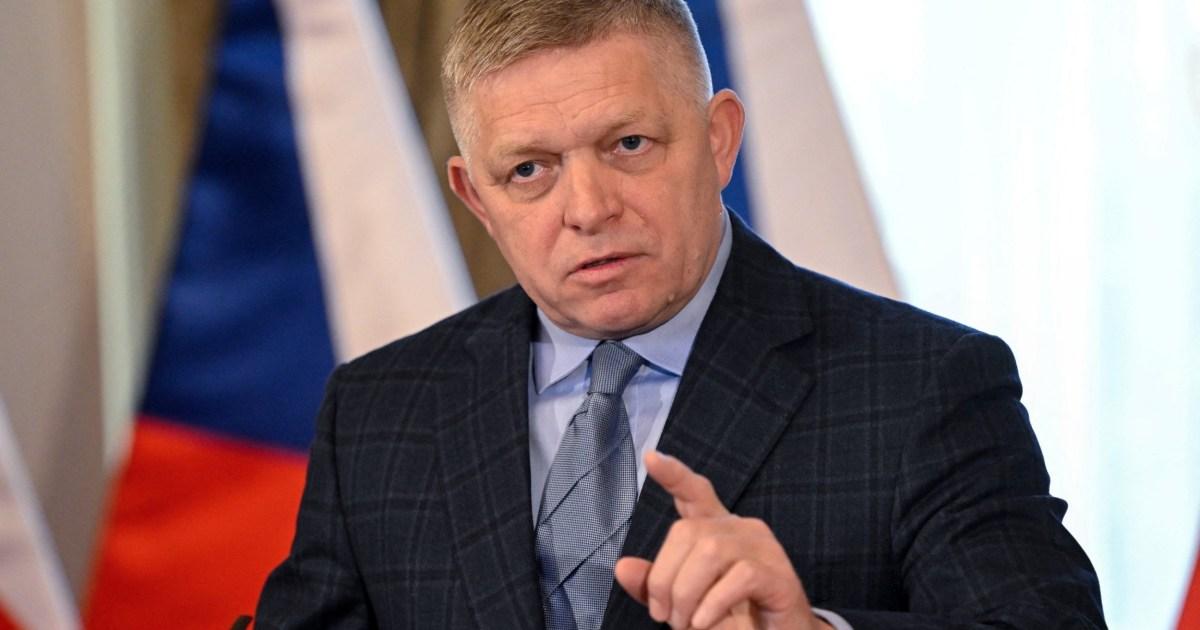
Concerns regarding Donald Trump’s mental state have emerged from an unexpected source. Slovak Prime Minister Robert Fico, who is one of Trump’s prominent allies in Europe, characterized the US President’s psychological condition as ‘dangerous’ following their recent meeting at Mar-a-Lago. This assessment, shared by anonymous diplomats, reflects unease within European political circles about Trump’s state of mind.
Details from the Meeting
The meeting between Fico and Trump took place earlier this month at Trump’s Florida estate. According to reports from Politico, five diplomats described Fico’s comments, in which he expressed serious concerns over Trump’s behavior during their conversation. These diplomats, who chose to remain anonymous to protect their privacy, noted that Fico explicitly used the term ‘dangerous’ when discussing Trump’s remarks.
Fico’s concerns were also echoed during a separate meeting in Brussels on January 22, 2024, where European officials convened to address various geopolitical issues, including Trump’s escalating rhetoric towards Greenland. While Fico did not raise the issue of Trump’s mental state in formal discussions, his apprehensions were apparent in conversations with other EU politicians.
Reactions and Implications
The White House responded to Fico’s remarks, dismissing them as ‘fake news.’ Anna Kelly, a spokesperson for the White House, stated that the meeting was ‘positive and productive,’ criticizing the anonymous diplomats for attempting to exaggerate the situation. Despite the official rebuttal, Fico remains a significant supporter of Trump, frequently aligning with him on contentious issues.
During the Mar-a-Lago meeting, which was not an official diplomatic engagement, Fico and Trump reportedly expressed mutual agreement that the European Union is facing a ‘deep crisis.’ Notably, Marco Rubio, the US Secretary of State, and Slovakia’s Foreign Minister were also present at the gathering.
Fico’s political career has been marked by controversy. He previously served as Prime Minister of Slovakia from 2006 to 2010 and from 2012 to 2018. His resignation in 2018 followed public outrage over the assassination of investigative journalist Ján Kuciak, whose murder highlighted issues of corruption at high levels of government.
Since his return to power, Fico has formed a Eurosceptic coalition that has sought closer ties with the Kremlin and has pressured Ukraine to negotiate peace with Russia. His statements about the ongoing conflict in Ukraine signal a willingness to compromise, which has caused tensions among NATO allies.
In a recent interview with public broadcaster RTVS, Fico remarked, ‘What do they expect, that the Russians will leave Crimea, Donbas and Luhansk? That is unrealistic.’ His administration has faced criticism for its handling of anti-corruption measures, notably the closure of Slovakia’s anti-corruption office, which resulted in widespread protests.
As political dynamics shift both in Europe and the United States, Fico’s candid remarks on Trump’s mental state may reflect broader concerns among European leaders about the future of transatlantic relations and the implications of Trump’s potential return to power in 2024.