A significant shift in campaign dynamics has emerged in two state legislative races in the San Antonio area, as a surge in spending and attack advertising captures attention. Recent campaign finance reports detailing contributions and expenditures from January 23 to February 21 reveal substantial financial backing for candidates vying for key positions in the Texas House of Representatives.
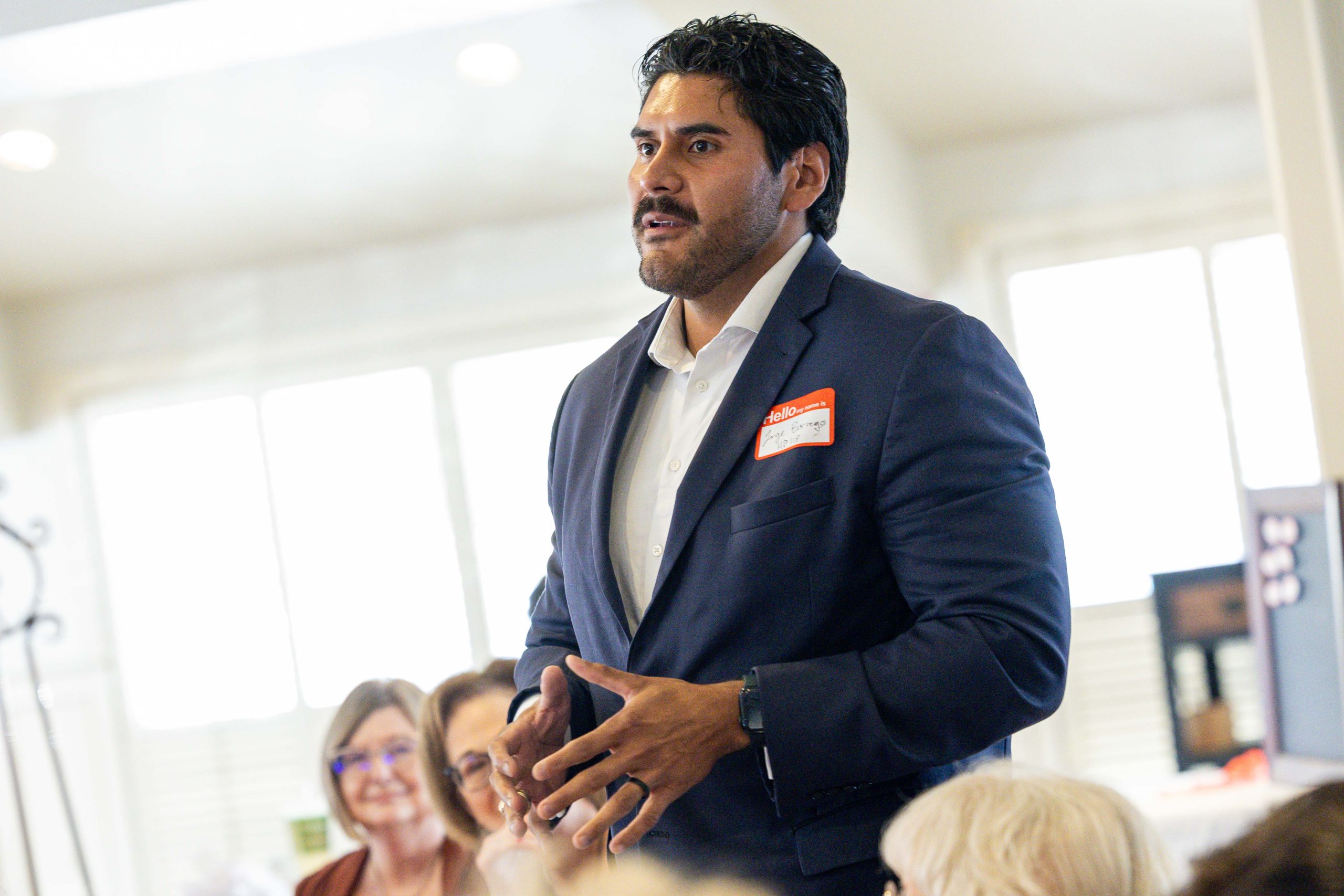
In House District 118, the Republican primary has attracted notable funding, particularly for candidate Jorge Borrego, a 30-year-old former scholar at the Texas Public Policy Foundation. Borrego played a pivotal role in developing Governor Greg Abbott’s Education Savings Account program during the last legislative session. He is competing against attorney Desi Martinez, who was initially favored to secure the party nomination.
The latest finance reports indicate that Borrego’s campaign received a surprising boost, amassing approximately $360,000, largely attributed to support from the statewide group Texans for Lawsuit Reform (TLR). This organization aims to promote candidates aligned with tort reform and has been heavily investing in the race, using attack ads to undermine Martinez’s candidacy. A notable advertisement from the AFC Victory Fund portrays Martinez in a manner reminiscent of the Obama-era hope poster, questioning his past as a Democrat.
Martinez’s campaign has been forced to adapt to this unexpected onslaught. He has publicly stated his opposition to school vouchers, a contentious issue in previous Republican primaries, but it has not featured prominently in this election cycle. As Greg Brockhouse, a consultant for Martinez’s campaign, pointed out, Borrego’s rise seems to be fueled by external financial interests rather than local support, with many contributions coming from outside the district.
The competitive nature of District 118 is underscored by its history. It has been represented solely by the Republican John Lujan, who successfully held off over $1 million in campaign attacks from Democrats during the last election cycle. With Lujan now pursuing a congressional bid, he endorsed Martinez, emphasizing his potential to retain the seat for Republicans.
In another significant contest, Democratic incumbent Liz Campos faces a challenge from up-and-coming candidate Ryan Ayala. Ayala, a 25-year-old attorney, has garnered attention for his familial political connections but remains relatively unknown compared to Campos, who has represented the Southwest side since 2020. With early voting approaching, Campos has increased her spending, reporting $180,000 raised and $115,000 spent in the lead-up to the election.
The campaign has turned contentious, with Campos’s advertisements targeting Ayala’s family connections to lobbyists, suggesting a conflict of interest with public contracts. Ayala has countered these claims, asserting that Campos is resorting to personal attacks instead of addressing key legislative issues.
Both races are indicative of a broader trend in Texas politics, where funding from political action committees is reshaping candidate dynamics. The rise in financial contributions reflects changing voter sentiments and demographic shifts, particularly as new Democratic primary voters emerge in response to national political trends.
As the primaries approach, the stakes continue to rise. The outcome will not only determine the candidates representing these districts but could also signal shifts in political power within the Texas legislature. With national and state organizations heavily investing in these races, candidates must navigate complex political landscapes shaped by both local concerns and broader ideological battles.
In addition to these races, various other contests in the San Antonio area are experiencing heightened financial activity. State Rep. Mark Dorazio and State Rep. Marc LaHood are also facing significant challenges that reflect similar trends of increased spending and external support.
The upcoming elections will undoubtedly be pivotal, as candidates work to address the complex issues at play while responding to the influx of financial influence in their campaigns.