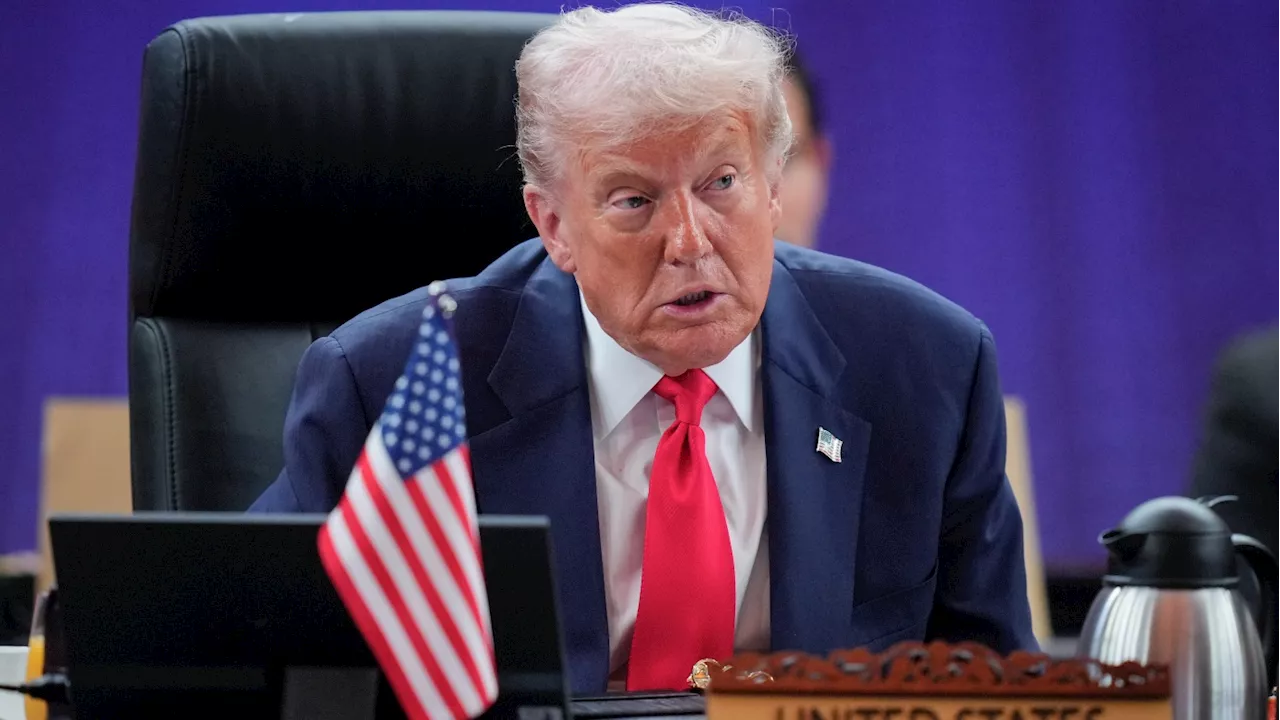
President Donald Trump has reversed his decision to impose tariffs on eight European nations in a bid to assert U.S. control over Greenland. This shift came shortly after announcing a new framework for Arctic security in collaboration with NATO. The announcement, made during his speech at the World Economic Forum in Davos, Switzerland, suggests a potential easing of tensions that could have significant geopolitical ramifications.
In a post on his social media platform, Trump revealed that he and NATO leaders had come to an agreement on a “framework of a future deal” regarding Arctic security. This framework includes ongoing discussions about Greenland and the Golden Dome missile defense program, a comprehensive defense initiative valued at $175 billion aimed at deploying U.S. weapons in space. While specifics remain limited, there are indications that part of the compromise could involve collaboration on establishing additional U.S. military bases in Greenland, as suggested by a European official familiar with the discussions.
Previously, Trump had threatened steep import taxes on Denmark and seven other NATO allies, beginning at 10% next month, escalating to 25% by June. His rationale was to compel Denmark to negotiate a transfer of the semi-autonomous territory. The tariffs were seen as a precursor to a more aggressive U.S. stance in the Arctic, where Trump has underscored the strategic importance of Greenland in countering threats from Russia and China.
NATO Secretary General Mark Rutte reaffirmed the alliance’s commitment to supporting the U.S. during a joint event with Trump, stating, “You can be assured, absolutely,” in response to Trump’s concerns about NATO’s reliability. Following this reassurance, Trump announced the cancellation of the proposed tariffs, a move welcomed by Danish Foreign Minister Lars Løkke Rasmussen, who expressed relief that the prospect of taking Greenland “by force” had been ruled out.
Despite the tariff cancellation, the Danish government reiterated its position on sovereignty, emphasizing that Greenland is not for sale. A Danish official stated that while they were willing to discuss U.S. security concerns, Denmark’s “red lines” regarding sovereignty must be respected. This sentiment was echoed by the Greenlandic government, which has advised residents to prepare for potential crises. Reports indicate that local citizens have begun stocking up on essential supplies, reflecting their concerns over the political climate.
During his Davos speech, Trump described Greenland as “cold and poorly located” and highlighted the U.S.’s historical contributions to Europe, particularly during World War II. He characterized his request for the territory as “a very small ask” in light of these contributions. Nevertheless, he acknowledged that achieving a favorable outcome would require a strong negotiating position, stating, “We probably won’t get anything unless I decide to use excessive strength and force, where we would be frankly unstoppable. But I won’t do that, OK?”
The shifting dynamics surrounding Greenland have sparked varied reactions. In Nuuk, the capital of Greenland, residents like Johnny Hedemann voiced their frustration, suggesting that Trump’s rhetoric reduces the Greenlandic nation to mere political leverage. “It’s insulting to talk about the Greenlandic people as just an ice cube,” he remarked while preparing for potential disruptions.
Market reactions to Trump’s tariff threats had initially been negative, but the announcement of their cancellation led to a rebound in financial markets. Many U.S. officials expressed relief, recognizing that continued aggressive rhetoric could jeopardize broader foreign policy objectives.
Trump’s visit to Davos was initially intended to focus on reducing U.S. housing prices, an issue overshadowed by his remarks on Greenland. Notably, he mistakenly referred to Greenland as Iceland several times during his address, further complicating the narrative surrounding his intentions.
As discussions about Arctic security continue, it remains to be seen how the new NATO framework will influence U.S.-European relations and the strategic landscape in the Arctic. The emphasis on cooperation highlights an evolving approach to international security in the face of global challenges.