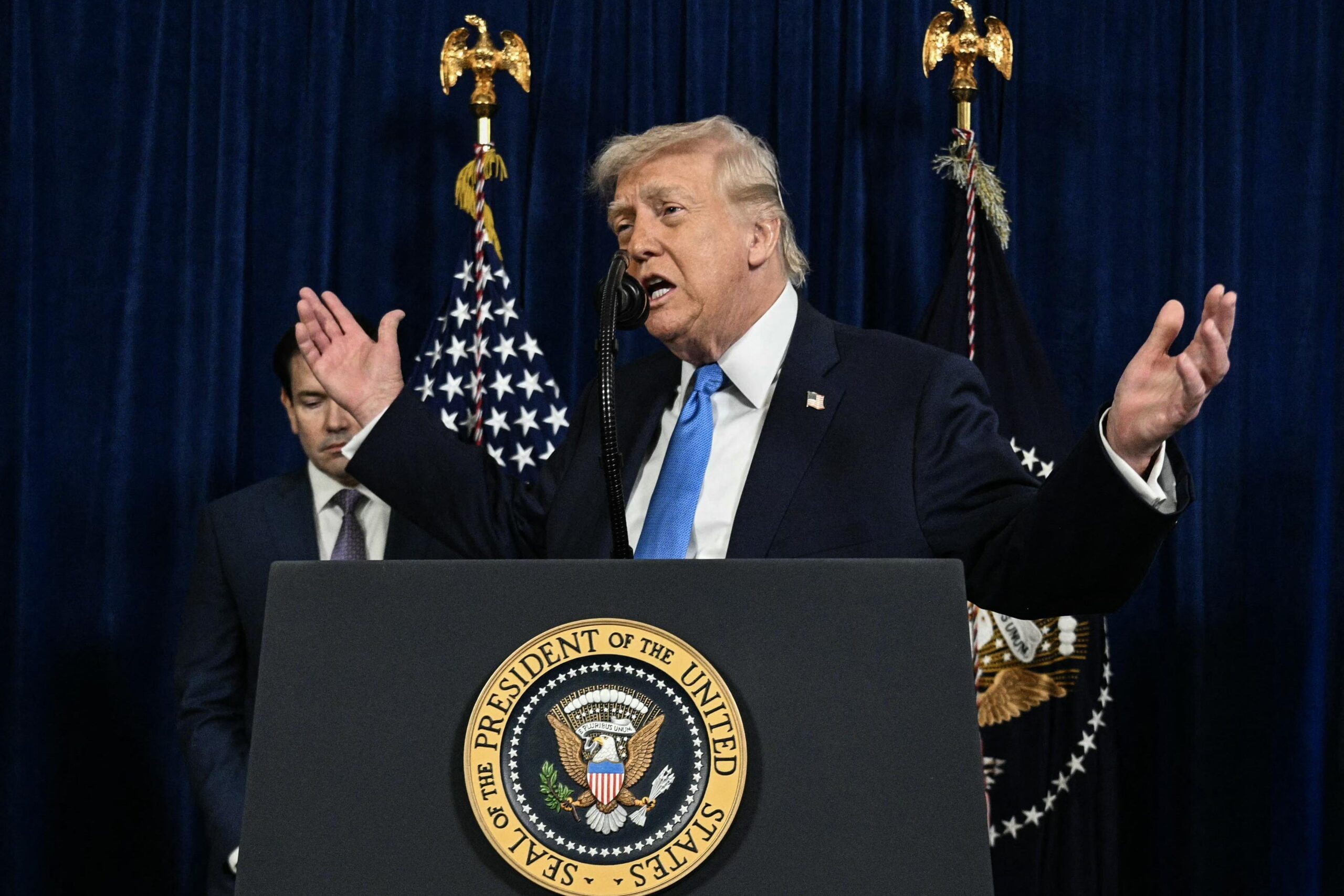
During a press conference on March 16, 2024, President Donald Trump confirmed that the recent U.S. military operation resulting in the capture of Venezuelan leader Nicolás Maduro was primarily aimed at reasserting control over Venezuela’s oil resources. The operation, which involved complex military and intelligence efforts, has been framed by Trump as a response to what he termed “narco-terrorism” and a necessity for restoring democracy in Venezuela.
Trump’s remarks revealed a more straightforward agenda. He stated, “We’re going to run the country until such time as we can do a safe, proper and judicious transition,” emphasizing the intention to involve U.S. oil companies in the reconstruction of Venezuela’s energy infrastructure. He asserted that these companies would invest “billions of dollars” to repair facilities that have suffered under previous governments. “We’re going to have our very large United States oil companies, the biggest anywhere in the world, go in,” he declared.
The implications of this operation extend beyond the immediate capture of Maduro. Historically, U.S. interventions in Latin America have often been criticized for prioritizing corporate interests under the guise of promoting democracy. Trump’s candid acknowledgment of this reality has drawn parallels to past U.S. actions during the Cold War, where the military and CIA played significant roles in supporting regimes favorable to U.S. business interests.
Military and Political Ramifications
As Trump outlined the U.S. plan for Venezuela, he made clear that military force would be employed if deemed necessary. “They always say ‘boots on the ground,’ we’re not afraid of boots on the ground,” he stated, referencing the military presence established during the recent operation. The U.S. has positioned an aircraft carrier and its support fleet near Venezuela, prepared to escalate military actions if required.
Trump’s statements also indicate a shift in U.S. foreign policy, with a focus on reasserting “American dominance in the Western hemisphere.” This approach has raised concerns about the potential for increased tensions with nations like Russia and China, who may interpret these actions as a challenge to their own regional ambitions.
Despite the military’s role in the operation, Trump was dismissive when asked about supporting Venezuelan opposition figures such as Maria Corina Machado, stating, “It would be very tough for her to be the leader.” His focus appeared to remain on securing U.S. interests rather than fostering genuine democratic processes.
Future of Venezuela and Regional Stability
With a population of approximately 28.5 million, Venezuela faces significant challenges in its governance after Maduro’s removal. Many military officers loyal to Maduro remain in their positions, raising questions about the stability of a U.S.-backed government. The presence of over 20,000 Cuban personnel—including military and health workers—adds another layer of complexity, as it remains unclear how their roles will evolve in the wake of U.S. intervention.
The ramifications of this operation are likely to resonate throughout the region. Following Trump’s remarks, observers have noted that authoritarian leaders in other countries may feel emboldened or threatened by U.S. actions. The ongoing situation in Iran also reflects broader geopolitical tensions, as Trump continues to assert that he is prepared to take decisive action if necessary.
As the U.S. military remains on high alert, the world watches closely. The outcome of this operation could set a precedent for future interventions and influence the dynamics of international relations in the Western hemisphere and beyond.