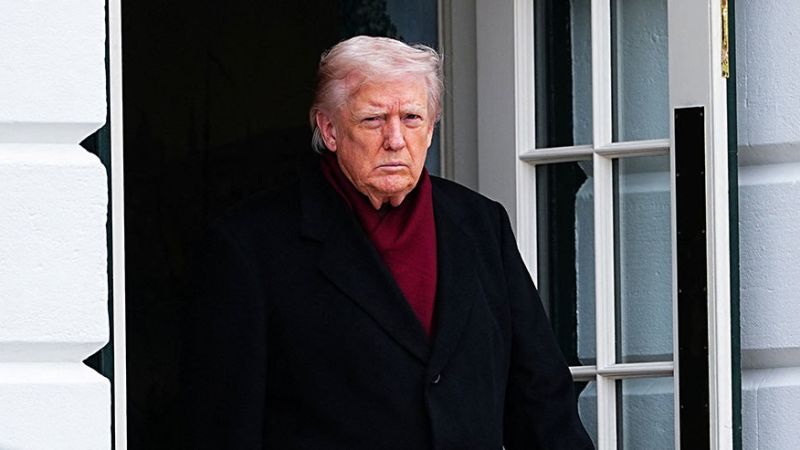
President Donald Trump is set to deliver his economic message during a visit to eastern Pennsylvania on November 7, 2024, a region considered pivotal for the upcoming midterm elections. This marks the beginning of a series of domestic trips aimed at addressing the pressing issue of affordability, which has gained traction among voters across the political spectrum. As financial pressures mount for many Americans, both political parties are eager to shape the narrative and deflect blame regarding the nation’s economic challenges.
“Affordability” has emerged as a key term, with leaders from both parties attempting to claim ownership of the discussion while pointing fingers at one another to explain the financial hardships felt by millions. For Trump, who campaigned on promises of economic prosperity, the upcoming visit serves as a critical test of his administration’s ability to navigate these concerns.
Polling data indicate that many Americans remain skeptical of Trump’s economic achievements. A recent Gallup poll revealed that 40% of respondents rated current economic conditions as poor, an increase from 37% the previous month. Additionally, a Fox News survey found that a staggering 76% of voters view the economy negatively. As Republicans prepare for what could be an uphill battle to retain their House and Senate majorities, Trump’s messaging will be closely scrutinized.
During his speech at the Mount Airy Casino Resort, a pivotal question looms: Will Trump continue to portray the economy as thriving under his leadership, or will he acknowledge the genuine concerns of voters? Acknowledging the significance of affordability, many within the White House have urged Trump to adopt a more empathetic tone. One adviser noted, “You’ve got to feel their pain. You’ve got to talk about it every day.”
The urgency of addressing economic matters has intensified following significant Democratic victories in states like New Jersey, Virginia, and California. These outcomes have highlighted the electorate’s focus on high prices and affordability, prompting Trump to emphasize his economic policies. While he views the issue as largely a perception problem, he has faced mounting pressure from party members to adopt a more relatable narrative.
Representative Brian Fitzpatrick, a Republican from Pennsylvania defending a district that Trump lost in 2024, echoed the importance of addressing affordability. “That trumps everything else,” he stated, emphasizing that the Republican Party has not focused enough on this critical issue. Despite this, Fitzpatrick disagrees with Trump’s characterization of affordability as a “Democratic scam,” asserting that the economic pressures are real and felt by constituents daily.
Trump’s reluctance to fully acknowledge the legitimacy of voters’ concerns has raised eyebrows, particularly as he frequently blames his predecessor, Joe Biden, for the current economic woes. He has often described affordability worries as a “hoax” aimed at undermining his administration’s achievements. In response to these challenges, White House spokesperson Kush Desai labeled the situation as “Joe Biden’s inflation and affordability crisis,” reiterating that improving the economy remains a top priority for Trump.
With less than a year until the midterms, Trump’s strategy will focus on highlighting recent progress, such as the decline in gas prices and potential tax relief set to take effect in the coming months. Senior White House officials are optimistic that many of the policies enacted thus far will eventually yield positive results for voters, even if those benefits are not yet widely recognized.
As Trump prepares for his Pennsylvania trip, aides emphasize the need for a refined message that resonates with voters’ economic realities. Plans are being developed for the president to engage in regular domestic travel to discuss economic issues, aiming to demonstrate tangible progress and reassure Americans that help is on the way.
During a recent roundtable discussion, Trump asserted his commitment to addressing these economic challenges, stating, “It’s a very simple statement: They caused it, we’re fixing it.” As the administration gears up for a critical year ahead, the effectiveness of Trump’s approach to the economy will play a decisive role in shaping the Republican Party’s fortunes in the upcoming elections.