A U.S. military raid on January 3, 2025, resulted in the capture of Nicolás Maduro, the president of Venezuela, and his wife, Cilia Flores. This unprecedented event has plunged the country into a state of fear and uncertainty, particularly in the capital city of Caracas. The raid involved airstrikes that targeted military and civilian areas, shaking the city and leaving many residents in shock.
Aurora Velásquez, a 40-year-old resident of Petare, described hearing her parrot, Kenny, squawking at approximately 2 a.m. that Saturday morning. Shortly thereafter, explosions reverberated through her neighborhood as fighter jets flew overhead. The chaos prompted her family to seek information on social media, where they discovered that the U.S. military had conducted the operation, as confirmed by the Donald Trump administration. Maduro was taken to a prison in New York, marking a significant shift in the political landscape of Venezuela.
The raid occurred shortly before Maduro was set to complete the first year of his third term, following controversial elections in 2024. His regime had declared victory despite opposition claims of widespread electoral fraud. The political climate in Venezuela has been marked by protests against Maduro’s authoritarian rule, resulting in thousands of arrests and numerous fatalities among demonstrators.
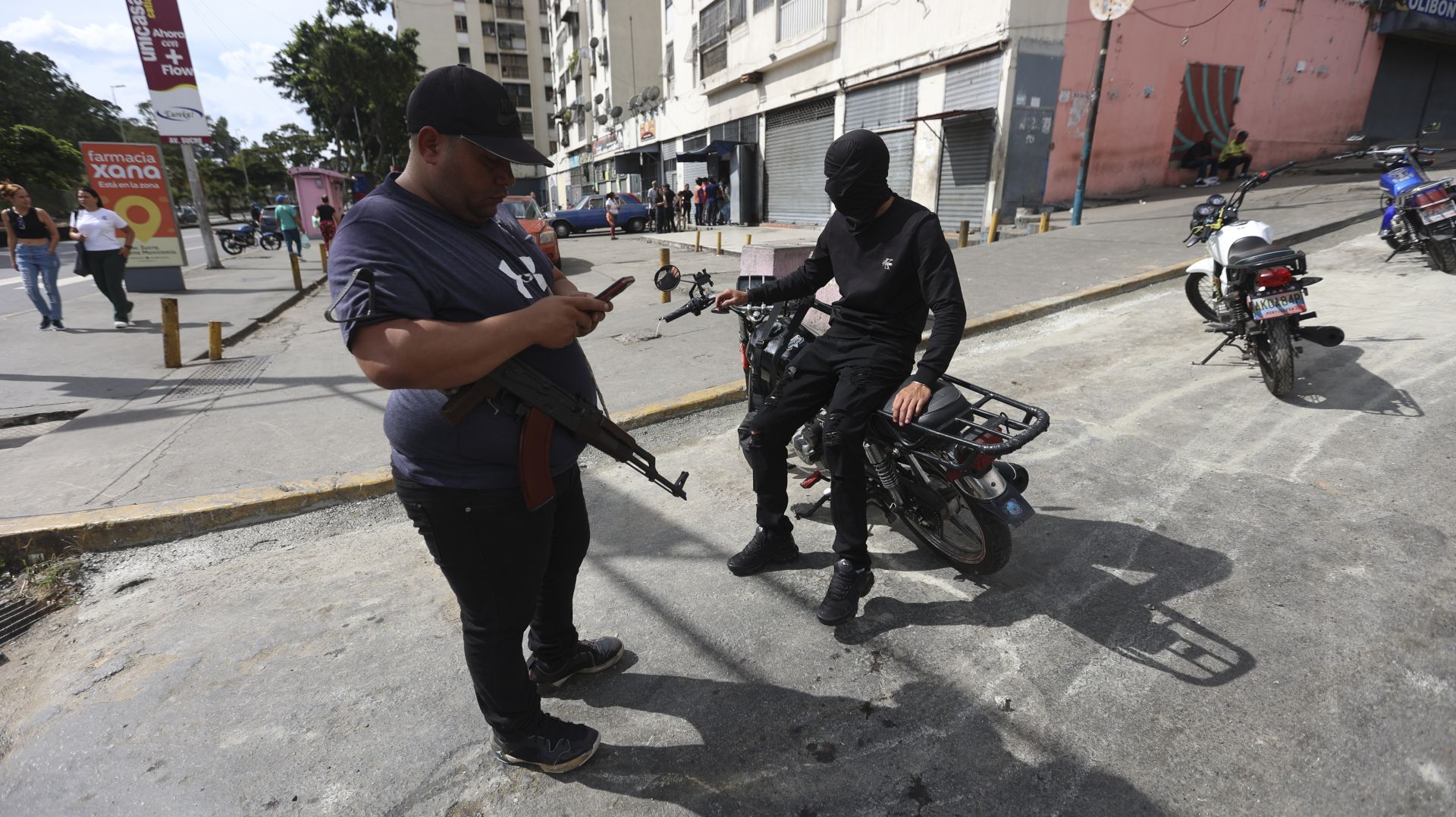
In the aftermath of the raid, Venezuelan authorities declared a “state of external commotion,” granting sweeping powers to the presidency. This decree allows security forces to arrest anyone seen as supporting or promoting the U.S. military action. The government’s response has intensified fears among the populace, particularly in areas like El Valle, which is near military installations targeted during the attack.
Residents of Caracas are taking precautions to safeguard their communications, with many activating auto-delete functions on messaging apps like WhatsApp. Caleidoscopio Humano, a prominent human rights organization, reported that several citizens remain in detention after being accused of celebrating Maduro’s arrest. Meanwhile, police in the city of Merida announced arrests of individuals who expressed support for the U.S. military operation on social media.
Despite the high tension, the response in Caracas has been muted compared to celebrations among Venezuelan exiles abroad. Many residents spent the following days queuing quietly for essential supplies, reflecting a pervasive sense of uncertainty. The economic situation remains dire; inflation rates, while lower than in previous years, are still staggering, leading to widespread reliance on U.S. dollars for transactions.
The Venezuelan economy has faced severe challenges over the past decade, with a reported shrinkage of more than 80% since Maduro assumed power in 2013. The minimum wage is now less than $1.50 monthly, forcing many to seek informal employment. Velásquez, who holds a degree in computer science, has resorted to working as a bartender and in childcare to make ends meet.
Maduro’s capture has not led to a significant change in governance. On January 5, Delcy Rodríguez, Maduro’s vice president, was sworn in as acting president, further solidifying control by the ruling party. Observers note that while the figurehead may have changed, the tactics of repression and control remain consistent.
As Caracas gradually returns to a semblance of normalcy, public transport has resumed and businesses are reopening. Yet, residents like Tito Sánchez express a desire for genuine change and national consensus. “There has to be a transition, there has to be a change,” he stated, echoing the sentiments of many who long for stability and improvement in their lives.
The situation in Venezuela remains fluid, as the implications of Maduro’s capture unfold. The population, grappling with fear, uncertainty, and the legacies of an oppressive regime, continues to navigate a complex and challenging landscape.