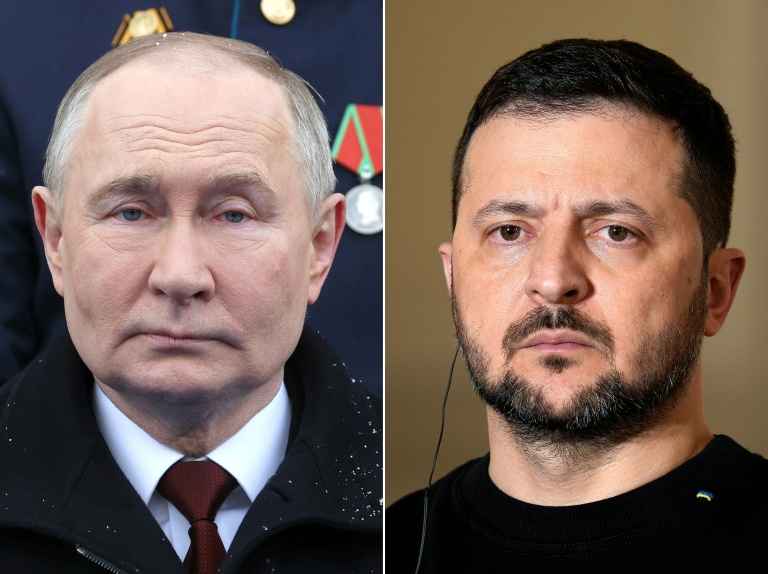
Ukrainian President Volodymyr Zelensky has categorically rejected allegations made by Russian Foreign Minister Sergei Lavrov that Ukraine used drones to target Russian President Vladimir Putin‘s residence. The claims, which surfaced on March 17, 2024, involve accusations that 91 long-range drones were deployed against Putin’s home in the Novgorod region of Russia. Lavrov stated that Russian air defenses intercepted all drones, asserting that there were no injuries or damage from the supposed attack.
Zelensky swiftly dismissed these allegations as “typical Russian lies,” asserting that Ukraine was not involved in any attack on Putin’s residence. He expressed concern that such claims might be intended to justify an escalation of conflict. Zelensky warned, “Everyone must be vigilant now. Absolutely everyone. A strike may be launched on the capital,” indicating that the timing of the accusations might align with Russia’s military strategies.
In a post on X, Zelensky stated, “Russia is at it again, using dangerous statements to undermine all achievements of our shared diplomatic efforts.” He emphasized that the claims were a “complete fabrication intended to justify additional attacks against Ukraine, including Kyiv, as well as Russia’s own refusal to take necessary steps to end the war.”
Ukrainian Foreign Minister Andrii Sybiha also responded to the allegations, asserting that no attack had occurred and that Moscow had yet to provide any credible evidence to support its claims. He noted, “Almost a day passed and Russia still hasn’t provided any plausible evidence to its accusations of Ukraine’s alleged ‘attack on Putin’s residence.’ And they won’t. Because there’s none. No such attack happened.”
Local Reports and International Reactions
A review of local news sources in the Novgorod area found no reports of drone activity or air defense engagement, despite extensive coverage of unrelated events. This absence of evidence has led to skepticism regarding the veracity of Russia’s claims.
The allegations come at a time when Ukrainian and U.S. officials are engaged in peace discussions, including a recent meeting between Zelensky and U.S. President Donald Trump in Florida. In response to the unfolding situation, Trump expressed concern over the timing of the allegations, stating, “I don’t like it. It’s not good. I heard about it this morning… President Putin told me about it… He said he was attacked. It’s no good.” He also mentioned that U.S. intelligence agencies would investigate the matter to determine the existence of any supporting evidence.
International reactions have varied, with statements from countries such as the United Arab Emirates, India, and Pakistan implicitly aligning with Russia’s narrative, despite the lack of verification. Kremlin spokesman Dmitry Peskov acknowledged the absence of evidence, stating, “I don’t think there should be any evidence if such a massive drone attack is being carried out, which, thanks to the well-coordinated work of the air defense system, was shot down.”
As the situation develops, the implications of these allegations could further strain diplomatic relations and affect ongoing peace efforts between Ukraine and Russia. The lack of credible evidence from Russia raises questions about the motivations behind the claims, particularly in light of the ongoing conflict and the complexities of international diplomacy.