In a remarkable discovery, scientists have unearthed the oldest known crocodilian eggshells in Australia, dating back approximately 55 million years. This significant finding took place in Murgon, a small town in southeast Queensland, where researchers from the Institut Català de Paleontologia Miquel Crusafont collaborated with the University of New South Wales to investigate one of Australia’s oldest fossil sites. The study, published in the Journal of Vertebrate Paleontology, reveals vital insights into the reproductive behavior and ecological adaptations of ancient crocodiles.
The findings highlight eggshell fragments named Wakkaoolithus godthelpi, which belonged to a now-extinct group of crocodiles known as mekosuchines. These creatures thrived in Australia’s inland waters long before the arrival of modern saltwater and freshwater crocodiles around 3.8 million years ago. Lead author Xavier Panadès i Blas emphasized the importance of these eggshells, stating, “We can now investigate not only the strange anatomy of these crocs, but also how they reproduced and adapted to changing environments.”
Ecological Insights from Ancient Crocs
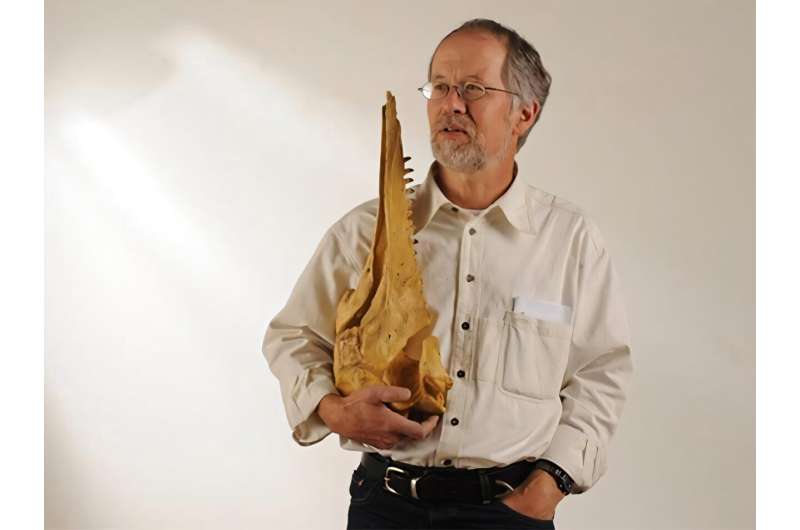
Unlike contemporary crocodiles, mekosuchines occupied unique ecological niches. Michael Archer, a paleontologist at UNSW, noted that some of these ancient reptiles were likely terrestrial hunters, suggesting that they adapted to various habitats, including forests. He indicated that evidence from younger mekosuchine fossils found in the Riversleigh World Heritage Area supports this hypothesis, showing that some riverine species could grow to lengths of at least five meters.
Archer described a fascinating aspect of mekosuchine behavior, stating, “They were perhaps hunting like leopards—dropping out of trees on any unsuspecting thing they fancied for dinner.” This unique behavior further underscores the evolutionary adaptations these crocodiles underwent in their quest for survival.
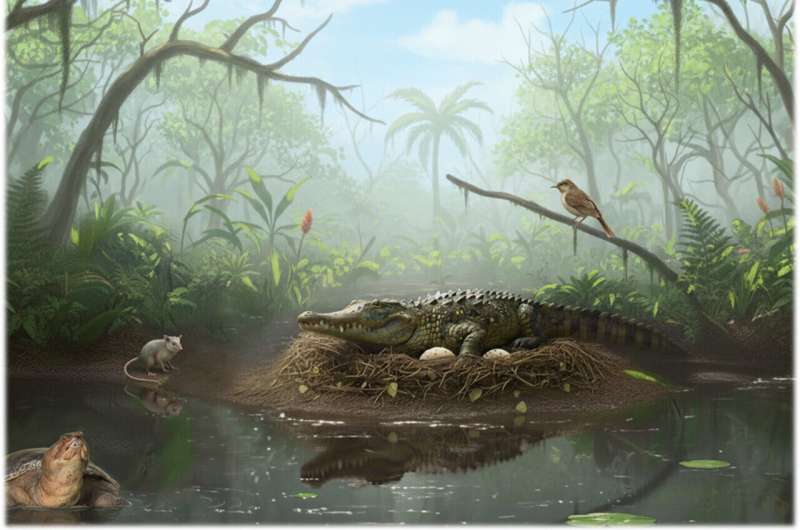
Panadès i Blas also pointed out the underutilization of eggshells in paleontological research. He explained that these fragments preserve critical microstructural and geochemical information that can reveal insights into nesting habits and reproductive strategies. The Murgon fragments indicated that mekosuchines likely laid their eggs near lake margins, adapting their reproductive strategies to changing environmental conditions.
A Window into Prehistoric Ecosystems
The Murgon site offers a glimpse into a lush ecosystem that existed millions of years ago. Dr. Michael Stein, a co-author of the study, shared that the surrounding area was rich in biodiversity. “This forest was also home to the world’s oldest-known songbirds, Australia’s earliest frogs and snakes, a wide range of small mammals with South American links, as well as one of the world’s oldest known bats,” he stated.
The ongoing excavations in Murgon, which began in 1983, have yielded many significant finds, indicating a rich fossil record. Archer recounted how the research team initially approached local landowners to gain access to the site, where they hoped to uncover prehistoric treasures. “We know that with more digging, there will be a lot more surprises to come,” he remarked.
Beyond academic interest, these findings have implications for modern conservation efforts. Archer has been involved in the Burramys Project, aimed at protecting the critically endangered Mountain Pygmy-possum (Burramys parvus). He noted that the fossil record can provide valuable insights into the survival strategies of contemporary species facing threats from climate change.
Archer explained, “The Burramys Project is a demonstration that, at least in some cases, we can develop strategies to save endangered species.” He emphasized the importance of learning from fossils, not only to understand the past but also to secure the future for vulnerable species.
As research continues at the Murgon site, the discoveries promise to deepen our understanding of Australia’s prehistoric ecosystems and highlight the enduring connections between ancient and modern wildlife.