
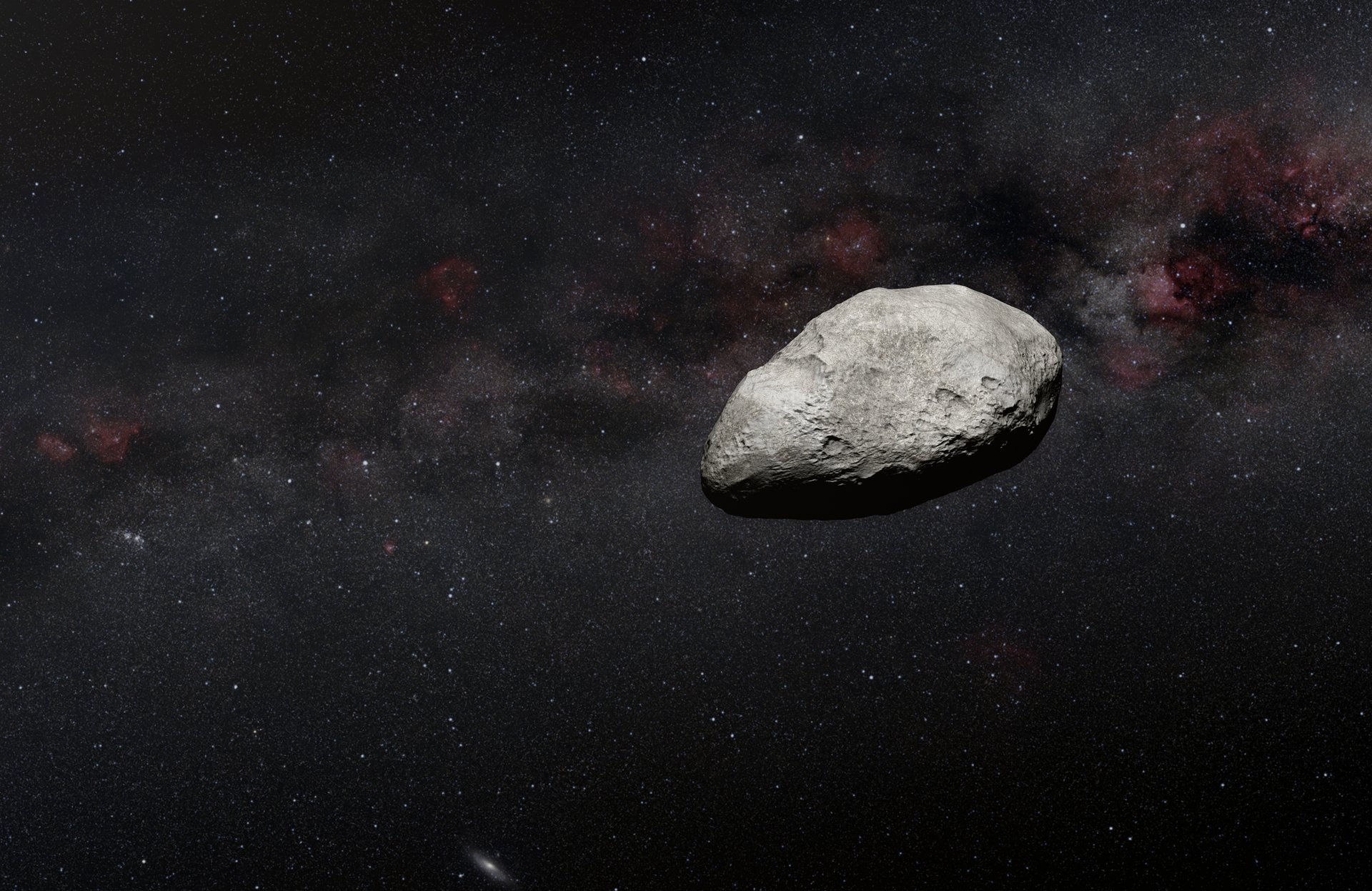
Astronomers recently engaged in a significant test of Earth’s planetary defense systems involving asteroid 2024 YR4. Discovered on December 27, 2024, by the ATLAS survey, this asteroid prompted a comprehensive response from the scientific community when its potential impact risk was identified. A new pre-print paper authored by Maxime Devogèle from the European Space Agency (ESA) details the timeline from discovery to de-escalation, marking this as a critical learning opportunity for future asteroid threats.
The asteroid gained attention starting in early January 2025, as initial observations indicated an increased likelihood of an impact. Unlike the vast majority of newly discovered asteroids, which typically present minimal risk, 2024 YR4’s trajectory initially raised concern. By January 27, 2025, the asteroid was classified as a 3 on the Torino Scale, a system created to categorize asteroids based on their potential threat to Earth.
The Torino Scale, developed by Dr. Richard Binzel of MIT in 1995, ranges from 0 to 10. A classification of 3 represents a greater than 1% chance of causing localized destruction, positioning 2024 YR4 as a subject of significant scientific scrutiny. This ranking was notable, as it marked the first time an asteroid reached this level since the scale’s inception. The asteroid eventually exhibited a 3.1% chance of impact by February 18, 2025.
Importantly, while 2024 YR4 achieved a higher classification than many previous asteroids, it did not surpass the record set by Apophis, which was rated a Level 4 in 2004. However, Apophis was downgraded more swiftly than 2024 YR4, which kept scientists on alert for an extended period. This incident led to the first official notification from the International Asteroid Warning Network, established in 2014 after the Chelyabinsk explosion in 2013.
As astronomers turned their focus to 2024 YR4, a broader awareness of the asteroid’s potential threat began to emerge. The situation garnered public interest, as well as attention from policymakers. This heightened scrutiny encouraged further investigation, enabling astronomers to access “Director’s Discretionary Time” on powerful telescopes including the Catalina Sky Survey, Gran Telescopio Canarias, and the Very Large Telescope.
By early March 2025, these telescopes had successfully gathered critical data about 2024 YR4. Observations revealed that the asteroid had a rapid rotation period of just 19.5 minutes, atypical for “rubble pile” asteroids. Its classification varied between Sq-type and K-type, with ongoing discussions regarding its albedo. These details are vital, especially as the threat to the Moon increased; current assessments indicate a potential 4% chance of impact with the Moon in 2032, raising concerns about possible debris affecting satellites in orbit around Earth.
While the initial threat of 2024 YR4 to Earth has diminished, the planetary defense community remains vigilant. The recent experience serves as a valuable case study, illustrating the effectiveness of existing warning systems and the need for ongoing research and preparedness in the face of potential asteroid threats. As scientists continue to refine their methods and knowledge, the hope is that future responses to similar threats will prove more effective than those depicted in popular films.


