A recent study led by Sebastián Carrazco-Gaxiola, a graduate student at Georgia State University, has made significant strides in identifying stars that may host Earth-like planets capable of supporting life. Carrazco-Gaxiola presented these findings at the January 2026 meeting of the American Astronomical Society in Phoenix, Arizona, marking a pivotal moment in the ongoing search for habitable worlds.
The research, described as the first comprehensive survey of thousands of the Sun’s lower-mass counterparts, focuses on more than 2,000 stars located within 130 light-years of Earth. These stars, known as K dwarfs, are prevalent throughout the universe and are recognized for providing a stable environment for their planetary companions, which may enhance the potential for life to develop.
Carrazco-Gaxiola explained that the study utilized advanced spectrographs on the SMARTS 60-inch mirror telescope at the Cerro Tololo Interamerican Observatory in the Chilean Andes and the Tillinghast Telescope at the Fred Lawrence Whipple Observatory in southern Arizona. This strategic pairing of telescopes allows for comprehensive observations of K dwarfs across the entire sky, ensuring that no potential candidates are overlooked.
Allyson Bieryla, an astronomer at the Center for Astrophysics | Harvard & Smithsonian, highlighted the significance of the complementary instruments used in the study. She noted, “The power of having these two telescopes in opposite hemispheres is that it gives us access to all the K dwarfs across the entire sky.”
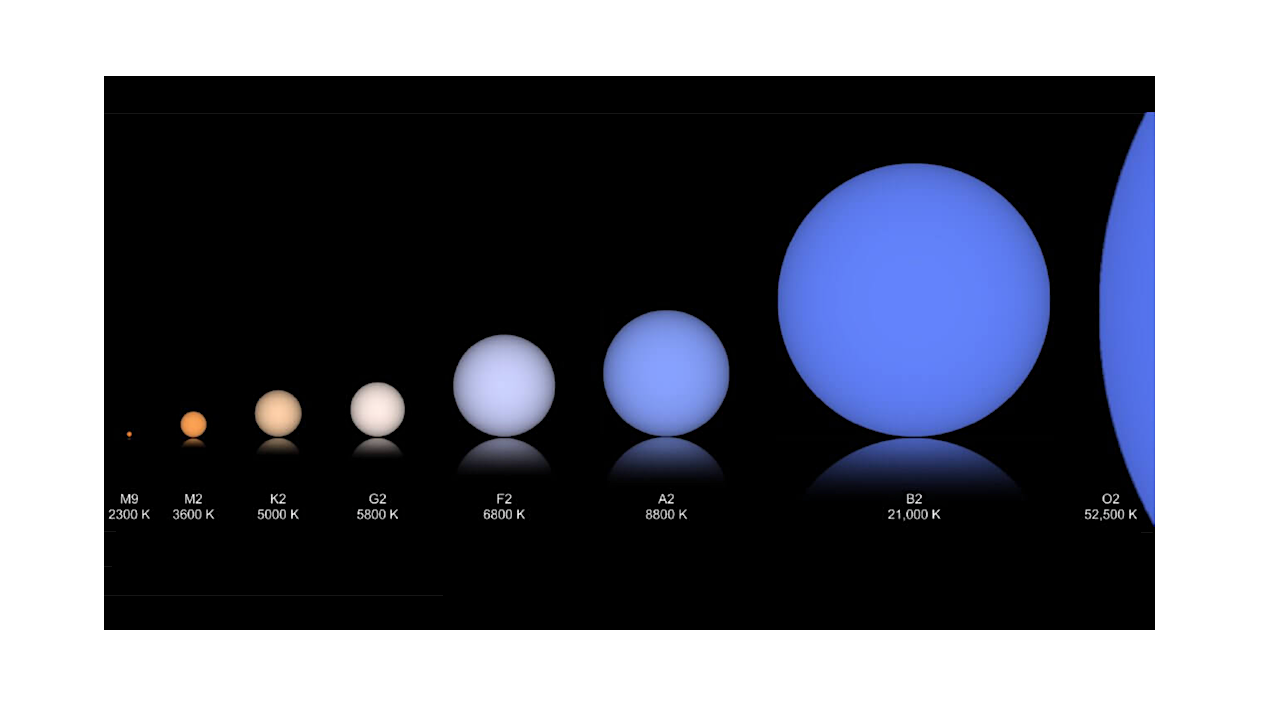
K dwarfs are cooler and fainter than Sun-like stars, but their numbers are impressive—approximately twice as many K dwarfs exist compared to solar-type stars in our local neighborhood. Additionally, these stars have significantly longer lifespans, which could allow life forms on orbiting planets to thrive under stable conditions for extended periods.
The research team conducted meticulous analyses of the spectral data to estimate various characteristics of the stars, including temperature, age, rotation rates, and spatial movements. Certain color emissions also provided insights into the heated upper layers of the stars, influenced by their magnetic fields, which are vital for understanding the environments around potential planets.
“This survey will be the foundation for studies of nearby stars for decades to come,” stated Todd Henry, a Distinguished University Professor of Physics and Astronomy and Carrazco-Gaxiola’s advisor. He emphasized the long-term implications of this research, suggesting that these stars and their planets may become targets for future space exploration missions.
Carrazco-Gaxiola’s survey, titled “An All-Sky Spectroscopic Reconnaissance of More Than 2,100 K Dwarfs Within 40 Parsecs Using High-Resolution Spectra,” was selected for presentation at a dedicated press conference at the American Astronomical Society meeting on January 6, 2026. The project has garnered significant attention due to its broad scientific implications.
Funding for this research comes from the National Science Foundation under grant AST-1910130 and a NASA grant (22-XRP22_2-0187). Institutional support has been provided by Georgia State’s College of Arts & Sciences and the Office of the Vice President for Research and Economic Development.
For further details on the impactful research conducted at Georgia State University, visit research.gsu.edu.