Advancements in DNA technology and forensic genealogy have revitalized cold case investigations, providing long-awaited answers to cases that have remained unsolved for decades. In 2025, several significant breakthroughs highlighted the collaborative efforts of law enforcement, forensic labs, and genealogists across the United States.
Roy G. Benn’s Disappearance and Discovery
One of the most notable cases involved the disappearance of Roy G. Benn, who was last seen on September 25, 1967. At 69 years old, Benn vanished after leaving the King’s Supper Club, where witnesses noted he was well-dressed and appeared to be carrying a substantial amount of cash. Despite extensive searches, no leads emerged until August 10, 2025, when a fisherman on the Mississippi River discovered a vehicle matching the description of Benn’s 1963 metallic blue Buick Electra.
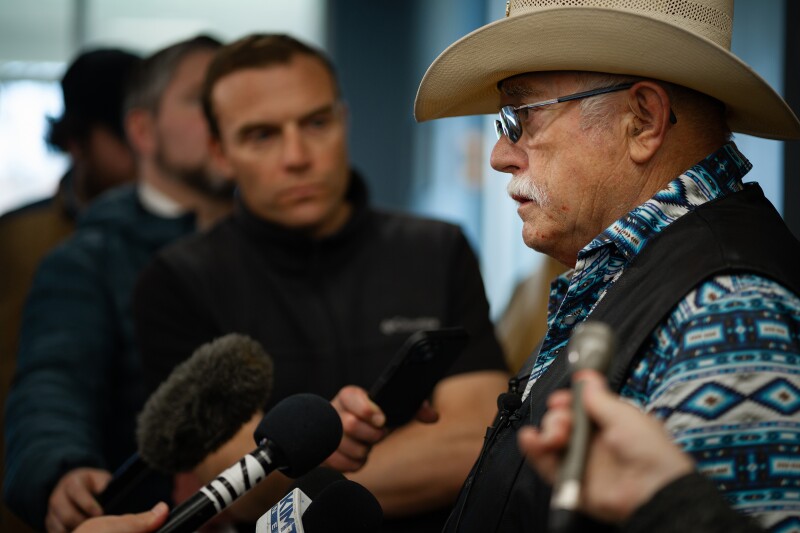
Authorities quickly deployed a dive team to investigate the site near County Road 1 in Sartell, Minnesota. In November, the Stearns County Sheriff’s Office confirmed that human remains found inside the vehicle belonged to Benn. A report from the Medical Examiner’s Office indicated that Benn likely died in a car crash, leading to the vehicle entering the water. Investigators do not suspect foul play in his death.
Revelations in the Rachel Marie Doe Case
Another case that gained closure involved the identity of a newborn baby found abandoned in Blaine, Minnesota, in 1983. Known as Rachel Marie Doe, the infant’s identity was unveiled through advanced DNA testing in 2025. Although investigators were able to locate the baby’s parents, Anoka County Attorney Brad John announced that no criminal charges would be filed, stating that “the evidence and the interest of justice do not support the filing of any criminal charges in this case.”
Rachel was delivered by a teenage girl who, after realizing the baby was not moving, left her in a high-traffic area, hoping someone would find her. The autopsy revealed that Rachel may have been dropped from a vehicle before being struck by a car, but it could not determine if she was alive at the time she was abandoned.
The Case of Baby Angel
The identity of another infant, known as Baby Angel, was also uncovered in 2025, shedding light on a case that had haunted the community of Winona, Minnesota, since 2011. Baby Angel was discovered on September 5, 2011, in a tote bag floating in the Mississippi River, and her identity was revealed to belong to Jennifer Nichole Baechle, an adjunct English professor at Winona State University. Baechle was subsequently charged with two counts of second-degree manslaughter.
The discovery of Baby Angel sparked a community outpouring of grief and support, resulting in a public funeral attended by over 150 people. The case, however, remains unresolved as Baechle’s attorney filed a motion in September 2025 to withhold evidence, citing inconsistencies in the autopsy reports. Central to the case is the question surrounding whether Baby Angel was born alive or stillborn. Her next hearing is scheduled for January 14, 2026.
The significant advancements in DNA technology have not only provided answers but have also sparked new discussions surrounding justice, accountability, and the impact of familial secrets. As law enforcement continues to utilize these tools, it is likely that many more cold cases will receive the attention they deserve, bringing closure to families affected by unsolved tragedies.