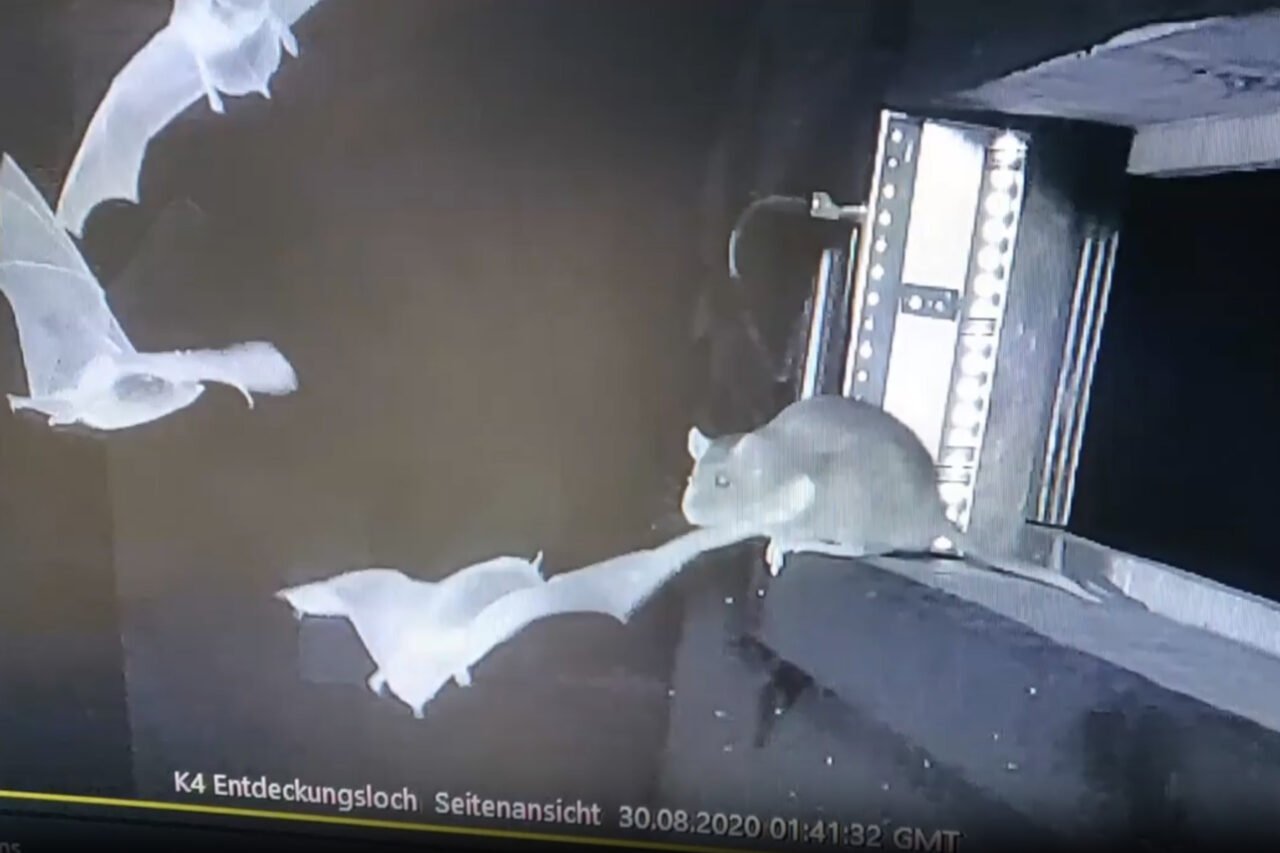
Researchers in Germany have uncovered alarming evidence that brown rats, specifically Rattus norvegicus, are actively preying on local bat populations. This behavior, documented in a study published in the journal Global Ecology and Conservation, reveals a disturbing trend where rats are intercepting bats near their hibernation sites, raising serious concerns about the future of these bat species.
Systematic Predation on Bats
The study focuses on two bat species, Myotis daubentonii and Myotis nattereri, found predominantly in northern Germany. Researchers initially hoped that this predation scenario was an extreme case, limited to a small rat population. However, their findings suggest a much more systematic approach to hunting.
Over several years, beginning in 2020, the team employed infrared surveillance cameras at the Segeberger Kalkberg, one of the key habitats for urban bat populations. During a five-week observation period, they recorded 30 predation attempts, of which 13 resulted in confirmed kills. Furthermore, the researchers discovered the remains of at least 52 bats cached by the rats, indicating not just opportunistic feeding but a consistent hunting pattern.
The videos captured demonstrated two distinct strategies employed by the rats: intercepting bats midair or ambushing them after landing. In both tactics, the rats displayed remarkable precision, positioning themselves strategically to launch a quick, lethal bite. If the initial attack failed, they would use their forelegs to restrain the bat and deliver a follow-up bite.
Concerns for Bat Populations and Ecosystem Health
Follow-up investigations from 2021 to 2024 provided further evidence of rat predation. A cache of bat carcasses was found near the Lüneburger Kalkberg, mirroring the collection methods observed at the Segeberger Kalkberg. Researchers concluded that the brown rats were likely responsible for these collections, reinforcing concerns regarding their impact on bat populations.
While brown rats are not natural predators of bats, their opportunistic feeding habits mean that they will consume whatever prey is available. For example, studies of rats near Japanese fish markets have shown that their diet can consist of up to 86% fish. This adaptability suggests that bats, although not the entirety of the rats’ diet, could represent a significant food source. The implications for bat populations are severe, as bats play critical roles in ecosystems worldwide, including insect control, seed dispersal, and pollination.
This unexpected predation poses risks not only to bats but potentially to humans as well. Both bats and rats are known carriers of various pathogens, including coronaviruses. While the study did not investigate pathogen exchanges directly, it highlighted the potential for a “pathogen exchange between two major wildlife reservoirs,” which could have broader implications for public health.
The findings of this study prompt urgent calls for further research and conservation efforts to protect bat populations in Germany and beyond. The intricate relationships within ecosystems are complex, and the ramifications of this predation could ripple through the environment, ultimately affecting human health as well.