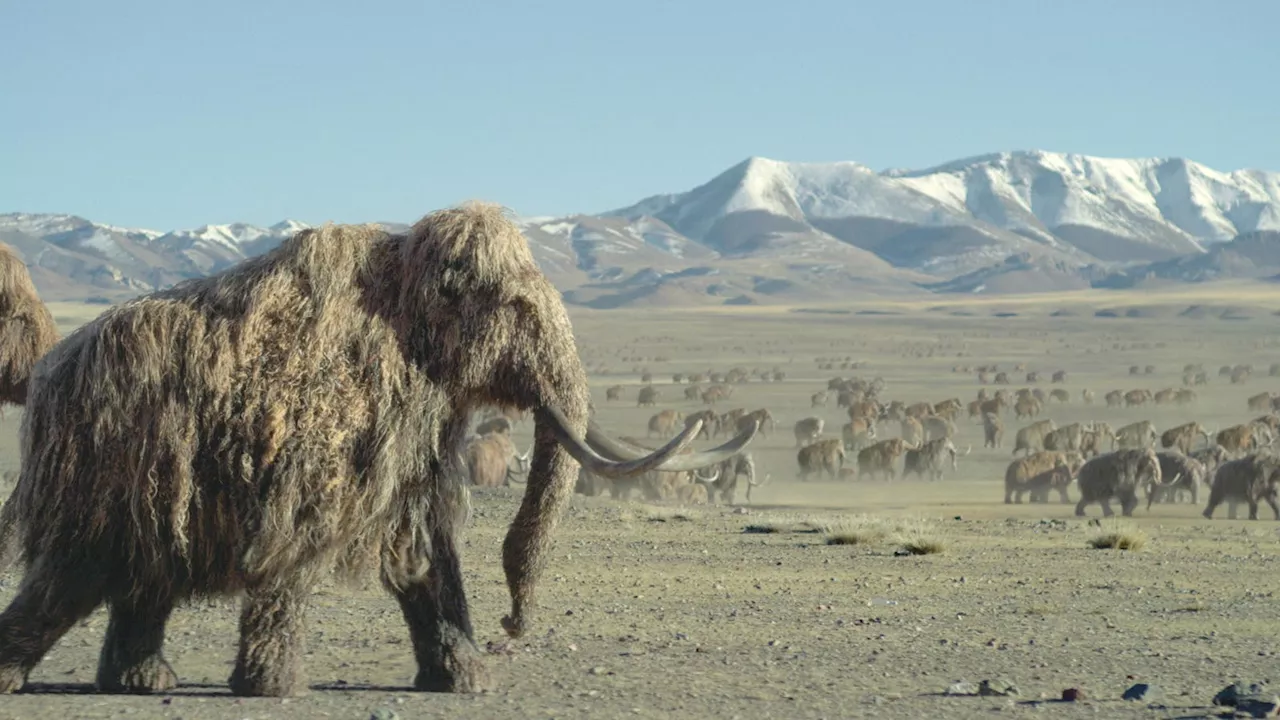
The new documentary series, Prehistoric Planet: Ice Age, debuted on Apple TV+ on November 26, 2023, offering an innovative portrayal of the Pleistocene era. This ambitious project harnesses advanced technology to recreate the Ice Age, bringing to life iconic creatures such as woolly mammoths and dire wolves within a richly detailed environment shaped by climate change and ecological shifts.
This season marks a significant evolution for the franchise, moving from the age of dinosaurs to a time when our ancestors coexisted with large megafauna. The creators aimed to depict a vibrant world characterized by dramatic climatic fluctuations and mass migrations. Executive producer Mike Gunton explained that the Pleistocene was a period of great turmoil, where nature responded in extraordinary ways. He emphasized that the series does not overtly comment on contemporary climate issues, yet the parallels with today’s environmental challenges are hard to ignore.
The series seeks to humanize its prehistoric subjects, presenting them not as mere relics of the past but as complex beings with social structures, instincts, and survival challenges. Gunton expressed his desire for viewers to feel as if they are stepping out of a time machine to witness the lives of these creatures, rather than observing a digital exhibition.
Innovative Techniques Bring the Ice Age to Life
The storytelling in Prehistoric Planet: Ice Age centers on animal behavior rather than solely biological aspects. Each episode explores the lives of various species through their migrations, hunts, and interactions, showcasing the dynamics of survival in an ever-changing environment. Audiences encounter dwarf stegodons, giant storks, and thylacoleo—the marsupial lion—engaging in predatory strategies informed by both scientific research and ancient narratives.
To achieve a high level of realism, the production team employed a combination of cutting-edge technologies. The backbone of the visual experience is built on high-quality visual effects, yet it is the synergy of science, computation, and fieldwork that truly enhances the storytelling. The team utilized high-resolution photogrammetry to scan real landscapes across 15 countries, while drone mapping facilitated the choreography of animal interactions.
Additionally, the series features full-scale puppets that assist camera operators in capturing dynamic shots, providing animators with tangible references rather than working solely with digital concepts. The commitment to realism is evident in the intricate details of animal movement and behavior, which were informed by modern scientific inquiries.
Gunton noted that the needs of the animation team sometimes prompted new scientific insights, highlighting the collaborative nature of the project. This exchange of knowledge between artists and scientists ensured that even the most fantastical creatures were grounded in reality.
Lessons from the Past
The series also cleverly integrates real footage with CGI, creating a seamless blend that challenges viewers to discern reality from animation. Some scenes begin with actual footage of modern creatures before transitioning into their prehistoric counterparts, reinforcing familiarity while enhancing the immersive experience.
Ultimately, Prehistoric Planet: Ice Age is a narrative about adaptability and resilience. It illustrates how certain species thrived while others faced extinction due to rapid environmental changes. The series underscores the importance of understanding these past ecosystems and the lessons they hold for our current challenges.
By vividly reconstructing the Ice Age landscape, the show not only entertains but also serves as a poignant reminder of the fragility of ecosystems in the face of change. The use of advanced technologies—from visual effects to genomic analysis of permafrost remains—enables the series to present a detailed and engaging view of a world that shapes our understanding of nature’s response to disruption. As viewers immerse themselves in this authentic representation of history, they are encouraged to reflect on the enduring relevance of these ancient narratives in today’s context.